
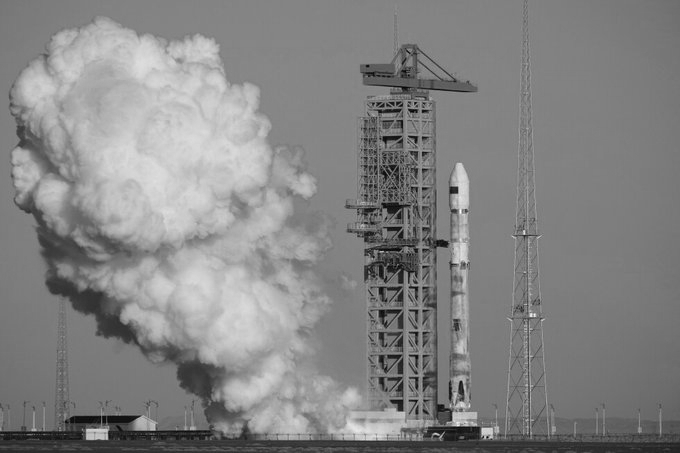
China’s Rocket Reuse Race Accelerates With First Successful Land Recovery
China has taken a major step in the global reusable-rocket race, successfully landing the first stage of a rocket on land after an orbital mission, in a breakthrough that brings its private space industry closer to the capabilities demonstrated by SpaceX.
The achievement came on Wednesday when Chinese startup LandSpace recovered the first stage of its 66.1-metre Zhuque-3 rocket in Gansu province, about 390 km from its launch site. Powered by methane and liquid oxygen, the nine-engine booster used deployable landing legs for its controlled return. Reuters, August 19, 2026, described it as the first ground-based, leg-assisted recovery of an orbital-class booster by a Chinese private company.
The success is particularly significant because it came after LandSpace's first Zhuque-3 recovery attempt failed in December 2025. The rocket reached orbit, but its booster did not complete the landing. Wednesday's mission therefore represents a rapid technological recovery from that setback.
It also marks another stage in China's broader push for reusable launch systems. In July 2026, a state-developed booster was successfully recovered at sea using a net-capture system. The two approaches underline how China's state and private sectors are pursuing different solutions to bring rocket hardware back for reuse.
LandSpace says Zhuque-3's booster is designed to be reused up to 20 times and plans to fly a recovered booster again within six months. The company is also seeking to raise about 7.5 billion yuan ($1.11 billion) through a Shanghai STAR Market listing and aims to become profitable by 2029, Reuters reported.
Yet the bigger test lies ahead. A successful landing does not automatically make launches cheaper. The real measure will be how quickly the booster can be refurbished, how reliably it can fly again and whether repeated reuse can lower launch costs.
SpaceX reportedly launches Falcon 9 missions around 150 times a year and has reused boosters dozens of times. Zhuque-3's 14.2-tonne low-Earth-orbit capacity is also below Falcon 9's 22.8 tonnes.
China has now demonstrated the landing. The next challenge is proving the economics of reuse.