
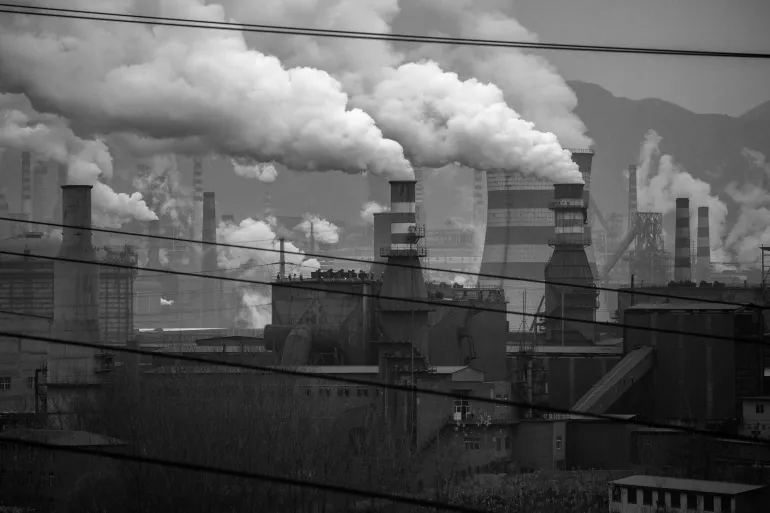
China's new climate commitment - A step forward or a missed opportunity?
In a landmark address at the United Nations Climate Summit, Chinese President Xi Jinping unveiled China's first absolute greenhouse gas emissions reduction target: a 7% to 10% decrease from peak levels by 2035. This pledge positions China as a significant player in global climate efforts, yet its adequacy remains a subject of international debate.
China's emission reduction target
Currently, China accounts for over 31% of global CO₂ emissions, making it the world's largest emitter. The new target aims to curb this share by 7% to 10% by 2035, marking a notable shift from previous intensity-based goals. Additionally, China plans to expand its wind and solar energy capacity sixfold from 2020 levels, reaching 3,600 gigawatts by 2035. The country also intends to promote zero-emission vehicles and establish a climate-adaptive society.
Global reactions and criticisms
While China's commitment is a positive development, it has faced criticism for its perceived insufficiency. The European Union, for instance, labeled the target as "falls well short" of what is necessary to meet global climate goals, emphasizing the need for more ambitious actions to limit global warming to 1.5°C. Similarly, climate advocates and leaders from vulnerable nations, such as the Marshall Islands and Pakistan, have warned that current commitments are still insufficient to prevent catastrophic impacts.
China's Renewable Energy Expansion
China's pledge to increase renewable energy capacity is ambitious. However, analysts note that the new targets may be conservative, as China has previously surpassed renewable milestones ahead of schedule. Greenpeace East Asia and other experts suggest that if current trends continue, China could reach 4,500 gigawatts by 2035. The main challenge lies not in capacity but in curtailment—where renewable energy is not used due to grid limitations. Experts advocate for improvements in grid integration to reduce reliance on coal power.
India's Emission Growth
In contrast to China's pledge, India's carbon emissions increased by 5.3% in 2024, driven by rapid economic growth and increased energy demand. This surge highlights the challenges faced by developing nations in balancing economic development with environmental sustainability.
China's new climate commitment represents a significant step in global efforts to combat climate change. However, the adequacy of the target remains contentious. As the world approaches critical climate thresholds, the international community must continue to press for more ambitious actions to ensure a sustainable future.