
China’s Mega-Dam on Brahmaputra: A Flood Warning From Its Own Researchers
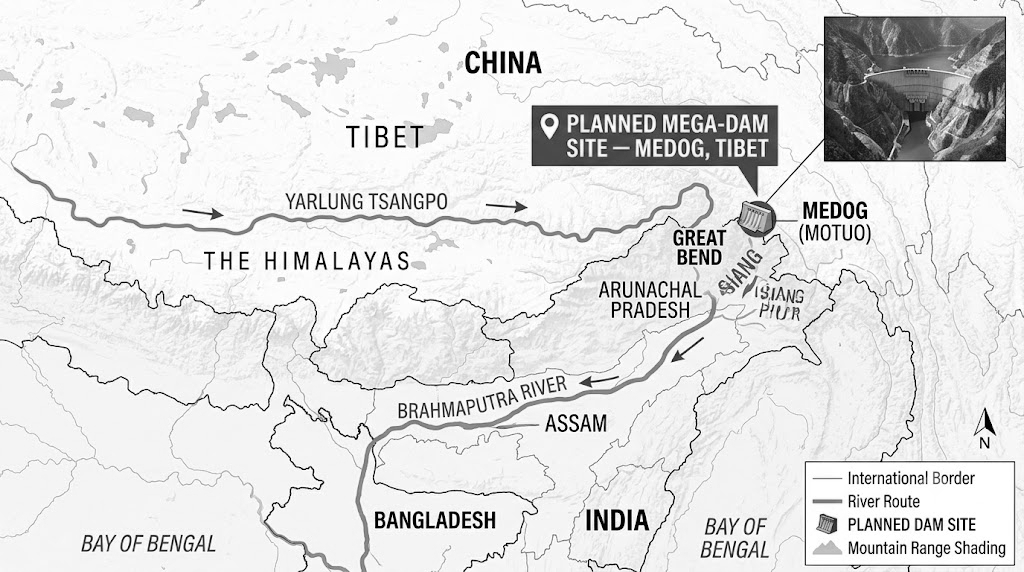
Chinese researchers have warned that climate change could increase runoff and flood risks in the region of the Brahmaputra, raising fresh questions about the safety and downstream impact of China’s planned $168 billion mega-dam on the Yarlung Tsangpo River in Tibet.
The project, planned near Medog at the river’s Great Bend, is expected to generate around 60,000 MW of electricity, nearly three times the capacity of China’s Three Gorges Dam. The river flows into Arunachal Pradesh as the Siang, crosses Assam as the Brahmaputra and continues into Bangladesh, making changes in its flow a concern for millions of people downstream.
The researchers’ warning comes amid concerns over the changing climate in the Tibetan Plateau, which is warming faster than the global average. Rising temperatures could alter runoff patterns and increase pressure on river systems. The region is also prone to earthquakes, adding another safety consideration for a massive infrastructure project in the Himalayas. However, seismic activity alone does not establish that the dam will be unsafe; the actual risk depends on its design, construction and operating safeguards.
China has defended the project as a sovereign development initiative, saying it will generate clean energy without harming downstream countries. Beijing has also cited safety assessments and argued that regulating river flows could help with flood management. These assurances, however, have not fully addressed India’s concerns about the project’s design, water releases and emergency preparedness.
India has raised the issue through diplomatic channels and sought technical information and reliable river-flow data. The existing arrangement for sharing Brahmaputra hydrological data expired in June 2023, complicating flood forecasting. India needs timely information on river levels and significant water releases, along with advance warnings during emergencies.
An unannounced release of large volumes of water could potentially worsen flooding downstream, particularly during heavy monsoon rainfall or when the river is already swollen. The scale of any impact would depend on the volume and timing of the release, existing river conditions and rainfall. Reliable data-sharing, advance warnings and clear emergency procedures would therefore be important safeguards for communities in Arunachal Pradesh and Assam.