
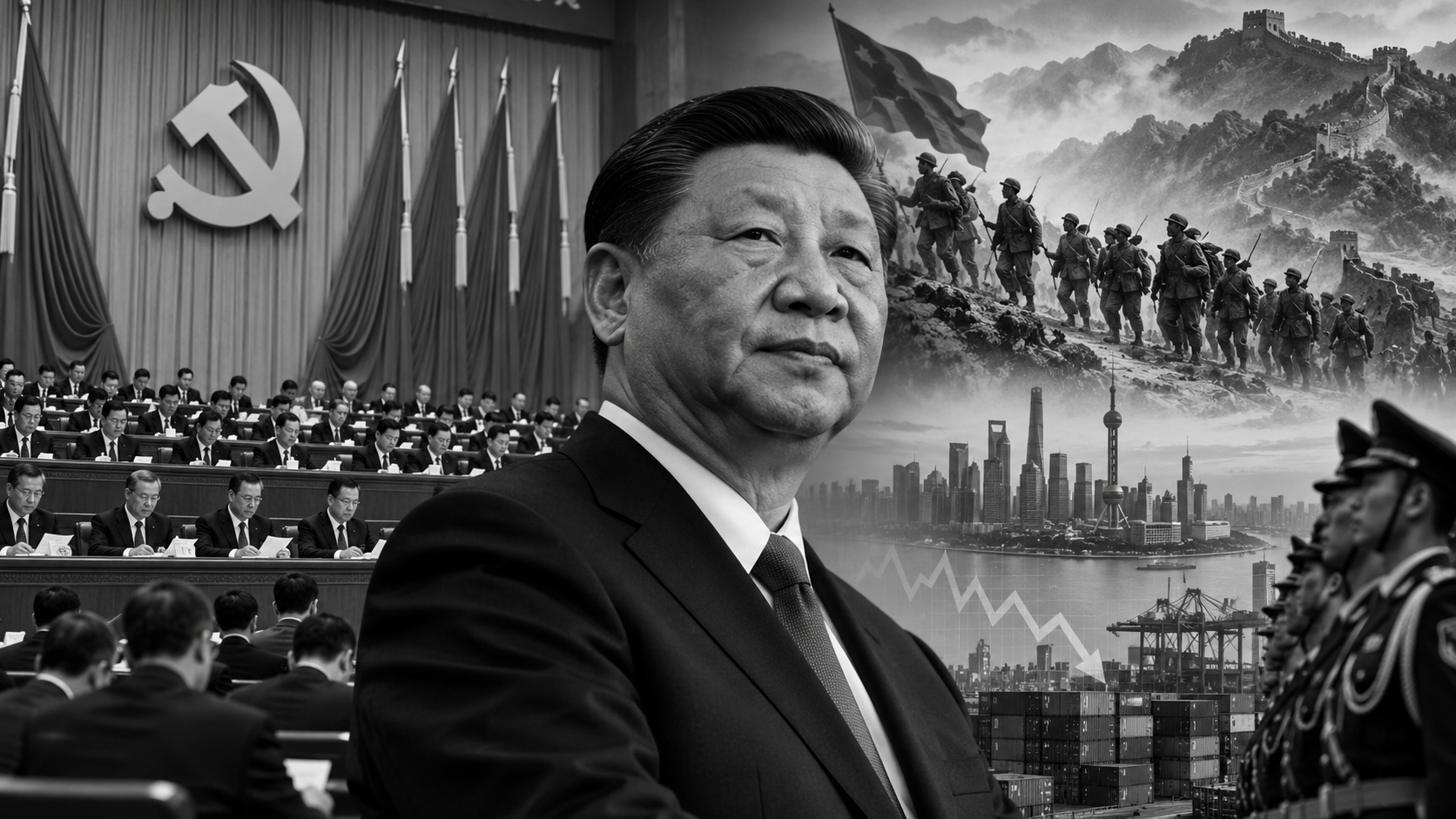
China’s Crucial Communist Party Plenum Shapes Roadmap for Xi Jinping’s Fourth Term
China’s ruling Communist Party on Monday began a four-day high-level plenary session expected to lay the groundwork for President Xi Jinping’s unprecedented fourth five-year term, while reinforcing party discipline, tightening control over officials and reviewing the mechanisms through which the leadership maintains its political dominance.
The meeting, running from October 26 to 29, comes ahead of the party’s once-in-five-year National Congress in 2027, when a new leadership team will be selected. Xi, 73, is serving his third five-year term as head of the party, the state and the military. He is widely expected to seek another term, although his formal reappointment will be determined through the party’s leadership process.
Xi delivered a work report on behalf of the powerful Political Bureau and explained a draft resolution on strengthening full and rigorous party self-governance, state-run Xinhua news agency reported. The plenum comprises 205 full members and 171 alternate members and is reviewing strategies to strengthen party discipline and governance.
The meeting assumes significance as Xi consolidates his position as the party’s central leader. He is the only Chinese leader after Mao Zedong to move beyond the two-term convention followed by his predecessors, following the removal of presidential term limits in 2018.
Xi’s anti-corruption campaign, launched in 2013, has resulted in thousands of officials being punished or removed, including more than 100 generals, according to the PTI report. While the government presents the drive as an effort to eliminate corruption, it has also reinforced central authority and weakened potential rival power centres.
The party’s mouthpiece, People’s Daily, published a commentary stressing discipline, including action against improper dining and drinking, unauthorised gifts and ineffective projects designed to boost officials’ political standing. It also emphasised obedience to the Central Committee and the “Two Establishes”, recognising Xi as the party’s core and his political thought as its guiding ideology.
Unlike India’s competitive multiparty system, China has no independent opposition party capable of replacing the Communist Party through genuinely competitive national elections. Other recognised parties operate under Communist Party leadership. Internal disagreements may emerge among senior officials, but political challenges generally remain within party structures.
The government also uses media censorship, surveillance and restrictions on independent political organising to limit organised opposition. Activists challenging party authority may face investigation, detention or prosecution, although local protests over wages, housing and administrative grievances sometimes occur.
Ahead of the meeting, Xi called for a “New Long March”, invoking the 1934–36 retreat that helped preserve the Communist movement and consolidate Mao’s leadership before the Communist victory in 1949.
Meanwhile, the International Monetary Fund lowered China’s 2026 growth forecast to 4.5 per cent, from 4.6 per cent, citing sluggish domestic demand and weakening reliance on exports to sustain growth.
China’s global influence remains significant. During Xi’s recent Washington visit, US President Donald Trump personally welcomed him at the airport, an unusual diplomatic gesture.
The plenum is expected to strengthen party discipline ahead of the 2027 Congress. With economic challenges mounting and political competition tightly restricted, Xi’s leadership faces the task of maintaining central control while sustaining public confidence and economic stability.