
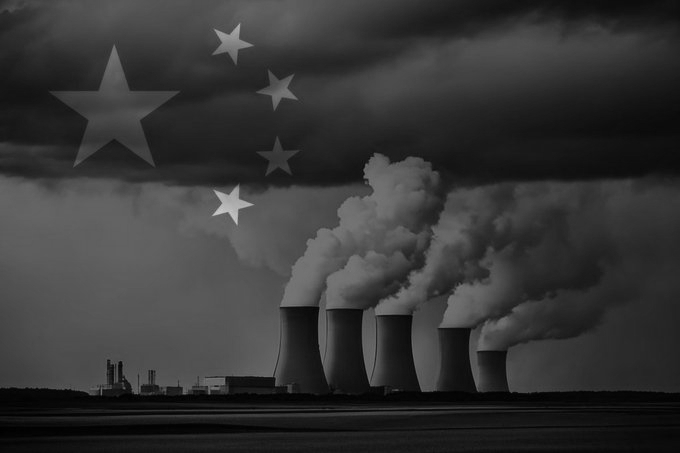
China Scales Up Nuclear Ambitions, Says It Can Build 50 Reactors Simultaneously
China is accelerating a major nuclear expansion, with its combined pipeline of operational, under-construction and approved reactors exceeding 100 units , as it aims to overtake the United States in installed nuclear capacity by 2030.
The country currently operates around 60 nuclear reactors , while nearly 40 are under construction and over 10 have been approved , making it the world’s largest nuclear construction programme. Officials say China can build up to 50 nuclear reactors simultaneously , supported by a fully integrated industrial system covering design, manufacturing and construction.
China’s installed nuclear capacity stands at about 125 gigawatts , with projections ranging between 110 GW and 200 GW by 2030–2040 , depending on construction speed and approvals. The expansion has made China responsible for more than half of global nuclear reactors under construction .
Analysts say the strategy is not driven by immediate shortages but by long-term planning. “They’re not reacting to power demand. They’re planning ahead of it. While others deal with grid delays and shortages, China is locking in long-term baseload power,” experts note.
This approach is closely linked to future demand from AI infrastructure, semiconductor manufacturing, electric vehicles and large-scale electrification , all requiring stable, uninterrupted electricity supply. “This isn’t about today’s demand. It’s about controlling tomorrow’s supply,” analysts said.
By comparison, the United States operates about 94 reactors , the largest fleet globally, but has limited new construction, focusing instead on life extensions and next-generation reactor development. India operates around 20–25 reactors , with several under construction, and is pursuing expansion as part of its long-term clean energy strategy.
A major factor in China’s expansion is its strong domestic supply chain, with over 90% of nuclear components now locally produced . China also secures uranium through imports from Kazakhstan, Namibia, Uzbekistan and Canada , while building strategic stockpiles and overseas mining investments.