
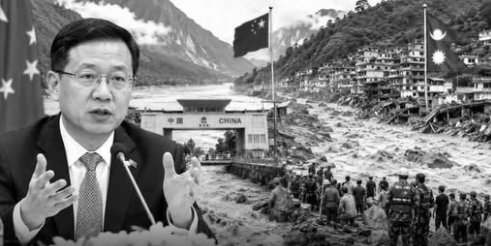
China Rejects Claims Linking Tibet Hydropower Projects To Nepal Flash Flood
China has rejected criticism linking its hydropower projects in Tibet to the devastating flash flood that has killed more than 1,000 people across Nepal and Tibet, calling the allegations “malicious speculation” and insisting the disaster was caused by a natural glacial collapse.
The August 26 disaster began after a massive chunk of glacier ice and rock detached from a mountain near the Nepal Tibet border and plunged into the Langde Khola river system. The resulting flash flood reached Gyirong, a key Nepal Tibet border crossing, before merging with the Trishuli River and sweeping downstream into Nepal.
Nepal’s latest figures put the death toll at 987, with 3,916 people still missing, while China has reported 16 deaths and 546 missing in Tibet. At least four villages in Tibet were devastated and hundreds of homes destroyed. Nepal says more than 11,800 people have been rescued, while rescue teams continue searching through mud, debris and collapsed infrastructure.
The disaster has drawn particular attention to hydropower projects in the region. Around 900 workers connected to 12 hydropower projects in Nepal remain missing, with many feared trapped inside tunnels. Nepalese and Indian rescue teams are working to reach affected areas.
Beijing, however, has firmly rejected claims that hydropower infrastructure contributed to the flood. Chinese Foreign Ministry spokesman Guo Jiakun said preliminary assessments by Chinese and Nepali experts indicate that the mudslide was triggered by the collapse of a high altitude glacier. China has also dismissed allegations that it is concealing the scale of the disaster, saying information has been released openly and promptly.
The controversy comes amid growing scrutiny of China’s massive hydropower expansion across Tibet, an ecologically fragile and earthquake prone region. China is also developing a huge hydropower project on the Brahmaputra, estimated to cost around $167.8 billion. Beijing maintains that such projects are being constructed according to the highest industrial standards.
Questions over transparency have added to the controversy. Critics say foreign journalists have limited access to Tibet, while flood footage circulating online has reportedly been removed or restricted. Chinese authorities have described some footage and claims as false information. Beijing has also defended its rescue operations against accusations online that some footage appeared staged.
Nepal has previously sought greater cross border data sharing on hazards including floods, landslides and glacier related disasters. China issued a rainfall warning 12 days before the August 26 disaster, but a rainfall advisory is not the same as a specific warning about an impending glacier collapse.
Adding to the questions, China conducted a flood evacuation drill in the broader area about 20 days before the disaster. The drill does not prove authorities knew a flood was imminent, but it has intensified calls for greater transparency about what risk assessments were available.
For now, scientific evidence points to a natural disaster caused by glacial collapse, not a deliberately engineered flood. But China’s rejection of the hydropower link has not ended the debate over whether Beijing shared enough information about risks in the Himalayas.