
China Opens Air Force Centre In Laos, Expands Overseas Military Footprint
China has opened a joint air force support and training centre in Laos, giving the People’s Liberation Army its third overseas military facility and its first acknowledged overseas facility focused on air power. The China-Laos Joint Support and Training Centre and the China-Laos Friendship Aviation Academy began operations at Ban Keun Airport in Vientiane province on September 29.
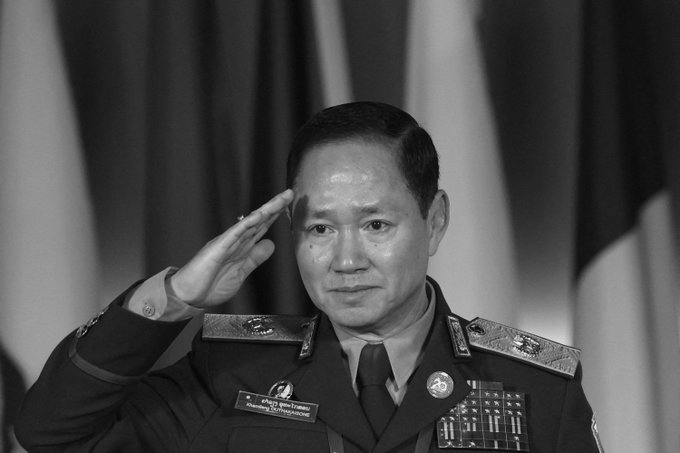
The facilities will be jointly maintained and operated by China and Laos and are intended to strengthen training for Lao Air Force pilots. Lao Deputy Prime Minister and Defence Minister Khamlieng Outhakaysone attended the inauguration, along with a Chinese People’s Liberation Army delegation.
China’s Defence Ministry said the centre was established through mutual respect and equal consultation, complies with the domestic laws of both countries and international law, and is “not directed against any third party”. Beijing said it would deepen military cooperation and contribute to regional peace and stability.
However, China has not disclosed how many Chinese personnel, aircraft or other military equipment will be based at Ban Keun. Reuters reported that commercial satellite imagery shows the site was transformed from agricultural land over the past year. Construction on the new airfield began in late 2025 and was still underway in early September.
The imagery shows a roughly 2,000-metre runway, a parallel taxiway, an aircraft apron and multiple new buildings, including five hangars. The facility is around 50 km north of Vientiane and partly occupies the site of a former US-era airstrip known as Lima Site 44, used during the Vietnam War era.
Brian Hart of the Center for Strategic and International Studies described Ban Keun as China’s first acknowledged overseas military facility centred on air power. China already operates a military logistics base in Djibouti, opened in 2017, and a joint support and training centre at Cambodia’s Ream Naval Base, which began operations in 2025.
The development has also drawn attention from neighbouring Thailand. A Thai Defence Ministry spokesperson said Bangkok regarded the decision as Laos’ sovereign right but would continue monitoring developments, particularly efforts to build mutual trust.
Analysts differ on the facility’s strategic significance. Rachel Vandenbrink of the Australian Strategic Policy Institute said it remains unclear what military capability China could project from Laos that it could not already deploy from neighbouring Yunnan, while noting that the centre could give Beijing a more persistent presence and deepen institutional ties with the Lao military.
Laos has a small air force that operates mainly Chinese and Russian aircraft, and its personnel have historically travelled to countries including China, Russia and Vietnam for advanced training. The new academy could allow some of that training to take place domestically.