
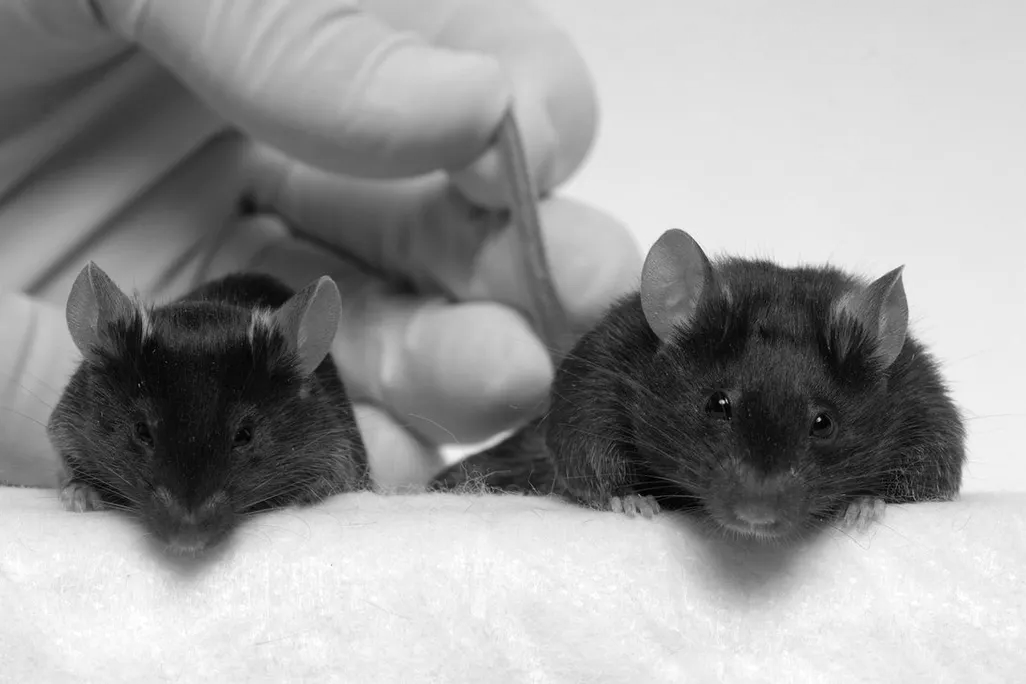
China brings back four mice from space biology mission
China’s latest space-biology mission has returned to Earth, bringing back a capsule carrying laboratory mice after several days in orbit. The experiment, flown aboard the Shenzhou-21 return capsule, did not carry any astronauts and was operated as an unmanned science mission dedicated entirely to biological research. It is part of Beijing’s broader push to understand how living organisms respond to microgravity and cosmic radiation, knowledge considered essential for the safety of future astronauts on long-duration missions.
The mission continues a long tradition. China has been conducting biological research for space since the 1960s, beginning with early sounding-rocket tests before moving on to recoverable satellites, Tiangong space-station modules, and now more complex studies involving small mammals. Over the decades, China has steadily expanded these efforts, transitioning from simple survival tests to highly targeted biological investigations that track genetic, cellular, and physiological changes in space.
In recent years, China has significantly increased the scale and sophistication of its experiments. On the China Space Station, scientists now run continuous biological cycles, from breeding fish and plants in orbit to observing microbial behaviour and tissue regeneration under microgravity. The station also hosts specialised payloads that monitor radiation effects on DNA, immune responses, and organ development. These experiments are designed to mirror the challenges astronauts will face on missions far beyond low-Earth orbit.
Globally, China joins only a few major nations with long-standing space-life science programmes. The Soviet Union (now Russia) began such experiments in the late 1940s, sending animals on suborbital flights well before human space travel. The United States followed in the 1950s, using fruit flies and animals to study radiation and microgravity before advancing to Skylab, the Space Shuttle, and the International Space Station (ISS). The European Space Agency (ESA) entered the field in the 1970s, contributing plant, cell, and human physiology research, while Japan (JAXA) began in the 1980s, later becoming a major contributor to ISS life-science experiments. China, though a later entrant, is now among the few countries operating an independent space station capable of long-duration biological studies.
In the latest mission, the returned samples, including mice, zebrafish, hornwort, streptomyces, planarians, and brain organoids, have been handed over to scientists for detailed investigation. China’s researchers will examine how microgravity and radiation affected the animals’ organs, genes, and cellular behaviour. These findings are expected to help clarify how the human body might respond during long stays on the Tiangong space station or future lunar and Mars missions.
However, scientists note that the study also has limitations. Mice are biologically similar to humans but not identical, meaning their responses cannot perfectly predict those of astronauts. The short exposure time gives only a partial view of long-term risks. The small sample size limits broader conclusions. Re-entry stress may also influence certain measurements, while radiation and microgravity interact in complex ways that remain only partly understood.
For future human missions, these gaps make further research essential. China plans more animal missions, cell-based studies, and eventually human-focused biomedical experiments as it builds toward its long-term goal of crewed lunar bases and Mars exploration. Longer missions, larger sample groups, and more advanced biological payloads will be crucial before designing reliable radiation shields, medical systems, and life-support for deep-space crews.
Even with these challenges, the mission marks another meaningful step in China’s human spaceflight roadmap, a carefully measured attempt to decode how life behaves beyond Earth, reinforcing China’s ambition to become a major scientific power in deep-space exploration.