
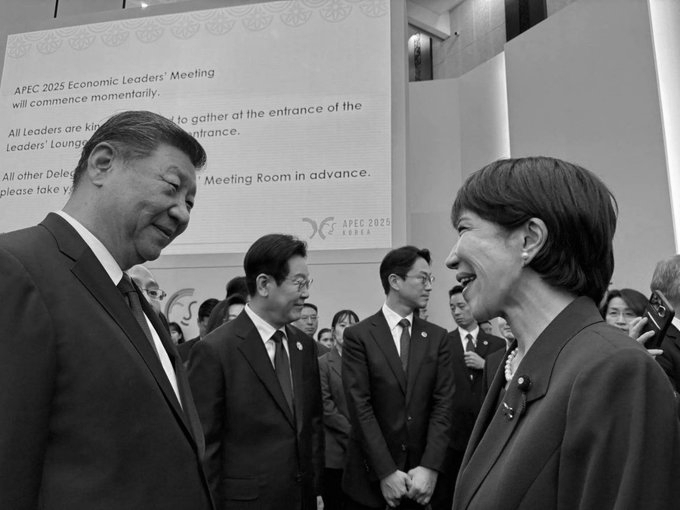
China bans dual-use exports to Japan, warns militarism must not resurge
China on Tuesday announced a ban on dual-use goods to Japan, a move widely seen as weaponising trade amid rising diplomatic and security tensions over Taiwan .
Dual-use goods, which can serve civilian and military purposes , include chemicals, sensors, electronics, aerospace parts, and shipping equipment. Analysts warn that China could use the ban to implement a full-scale export freeze, potentially leaving Japan struggling to obtain even basic goods . The ban’s wording is intentionally vague, giving Beijing flexibility to target civilian imports and exert broader economic pressure.
Rare earth metals and semiconductors are the most critical for Japan’s manufacturing sector, supporting industries from automobiles and electronics to robotics, clean energy, and defence. China first used export controls in 2010 during the Diaoyu/Senkaku Islands dispute , when it stopped rare earth shipments to Japan after Tokyo detained a Chinese fishing captain. The move caused widespread disruption in Japan’s manufacturing sector. Fifteen years later, Japan remains heavily dependent on China for these materials, with nearly 70 per cent of rare earths still imported from Beijing. Rare earths are considered dual-use because they are essential for both smartphones, electric vehicles, and other civilian tech, as well as missiles, jets, and drones.
China’s foreign ministry spokeswoman Mao Ning framed the ban within historical and security concerns, stating - “The painful lessons of history remind us that Japanese right-wing forces’ remilitarization attempt has already posed a threat to regional and world peace and tranquility. China, together with peace-loving countries and peoples around the world, will never allow Japanese right-wing forces to reverse the course of history and will never allow militarism to resurge.”
Japan responded cautiously. Masaaki Kanai, head of Asia Oceanian affairs at Japan’s foreign ministry, lodged a strong protest, calling the ban unacceptable and a deviation from international norms . Tokyo says it is assessing the situation, though officials acknowledge that pressure is clearly growing.
The dispute escalates from tensions over Taiwan. In November 2025, Prime Minister Sanae Takaichi told parliament that Japan could be compelled to respond militarily if China attacked Taiwan. Beijing retaliated with travel advisories, cancelled flights, seafood import bans, and military confrontations, including mid-air standoffs, naval faceoffs in the East China Sea, and China’s largest military drills around Taiwan.
President Xi Jinping reinforced China’s position in his New Year’s address, declaring - “China’s reunification with Taiwan is unstoppable. Compatriots on both sides of the Taiwan Strait are bound by blood ties thicker than water, and the historical trend toward national reunification is unstoppable.”
The message was clearly directed at Japan. Despite pressure, Prime Minister Takaichi has refused to retract her Taiwan remarks, bolstering her domestic popularity. However, the new export restrictions show China is escalating the dispute from a diplomatic spat to a broader, long-term confrontation, testing Japan’s resilience and heightening regional tensions.