
China And ASEAN Agree On 80% Of South China Sea Pact, But Big Hurdles Remain
China and the Association of Southeast Asian Nations (ASEAN) have made significant progress towards a long-awaited South China Sea Code of Conduct, provisionally agreeing on around 80 per cent of the proposed agreement. However, decades of negotiations will continue into 2027, with disagreements over key provisions preventing the two sides from meeting their December 2026 deadline.
Three senior Southeast Asian diplomats familiar with the negotiations told the Associated Press that the latest round of discussions, held last month, resulted in provisional agreement on about 80 per cent of the paragraphs. The remaining disagreements concern the geographic scope of the agreement, definitions of sensitive terms and whether the pact should be legally binding.
China and ASEAN began negotiating the proposed code in 2005 to prevent confrontations in the disputed waters from escalating into a wider conflict. The agreement is intended to encourage self-restraint and discourage aggressive actions that could trigger clashes along one of the world's busiest global trade routes.
In 2023, both sides agreed to accelerate negotiations and conclude them by 2026. The Philippines, which holds ASEAN's rotating chairmanship this year, increased the frequency of meetings to at least once a month. China and Malaysia, which oversees ASEAN's relations with Beijing, jointly led at least 10 major rounds of negotiations.
Talks will continue next year when Singapore takes over ASEAN's leadership. The negotiations and continuing maritime incidents are expected to feature prominently at the ASEAN summit in Manila starting this weekend, where regional leaders will also engage with representatives from the United States and China.
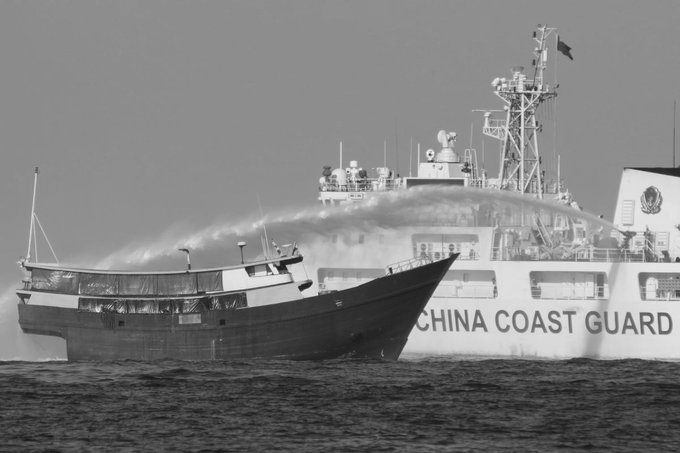
Tensions remain particularly high between China and the Philippines. The Philippine military recently reported monitoring 29 Chinese naval and coast guard vessels across several disputed areas between November 3 and 8.
China, Brunei, Malaysia, the Philippines and Vietnam have overlapping territorial claims in the South China Sea, alongside Taiwan. The waters are also believed to contain significant undersea oil and gas reserves.
The dispute remains a sensitive front in the US-China rivalry. Washington has repeatedly said it is obligated to defend the Philippines if its forces face an armed attack, while Beijing has warned the US against interfering in what it describes as an Asian dispute.