
Chile's Deadly El Nino Disaster: 10 Killed, Over 100,000 Cut Off by Devastating Floods
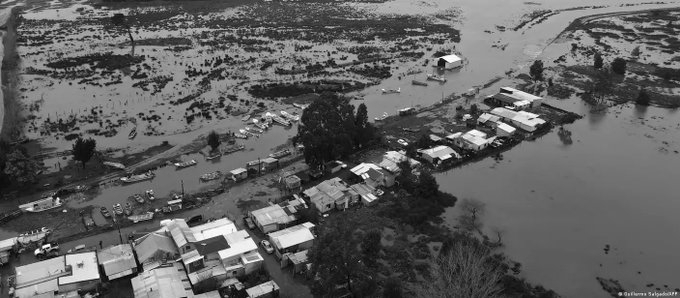
Chile is grappling with one of its worst weather disasters in decades after relentless El Nino-driven rainstorms triggered widespread flash floods, killing at least 10 people and leaving more than 100,000 residents stranded across the country.
The weeklong downpour has battered the usually arid northern regions of Atacama and Coquimbo, prompting President Jose Antonio Kast's government to declare a state of emergency as rescue teams race to reach isolated communities.
Authorities said 16 people have been injured, while over 4,000 residents have been displaced. Among them, 1,031 people are taking shelter in emergency relief centres. Thousands of households have also been left without electricity and safe drinking water, adding to the humanitarian challenge.
The destructive weather has destroyed 81 homes and damaged more than 20,000 houses, leaving many families uncertain about when they can return. Swollen rivers, washed-out roads and overflowing streams have cut off access to several towns, making rescue and relief operations increasingly difficult.
According to Chile's National Disaster Response Service (Senapred), 104,271 people remain isolated due to flooded roads and overflowing rivers. The agency has issued hundreds of evacuation alerts across 10 of Chile's 16 regions, warning that river levels may continue to rise even after the rainfall subsides because water from mountainous areas continues flowing downstream.
Meteorologists have linked the extreme weather to the return of El Nino, the naturally occurring climate phenomenon that warms the Pacific Ocean and increases the likelihood of heavy rainfall and extreme weather across parts of South America.
With rain and strong winds continuing in several areas, emergency responders remain on high alert as authorities work to restore essential services and prevent further loss of life.