
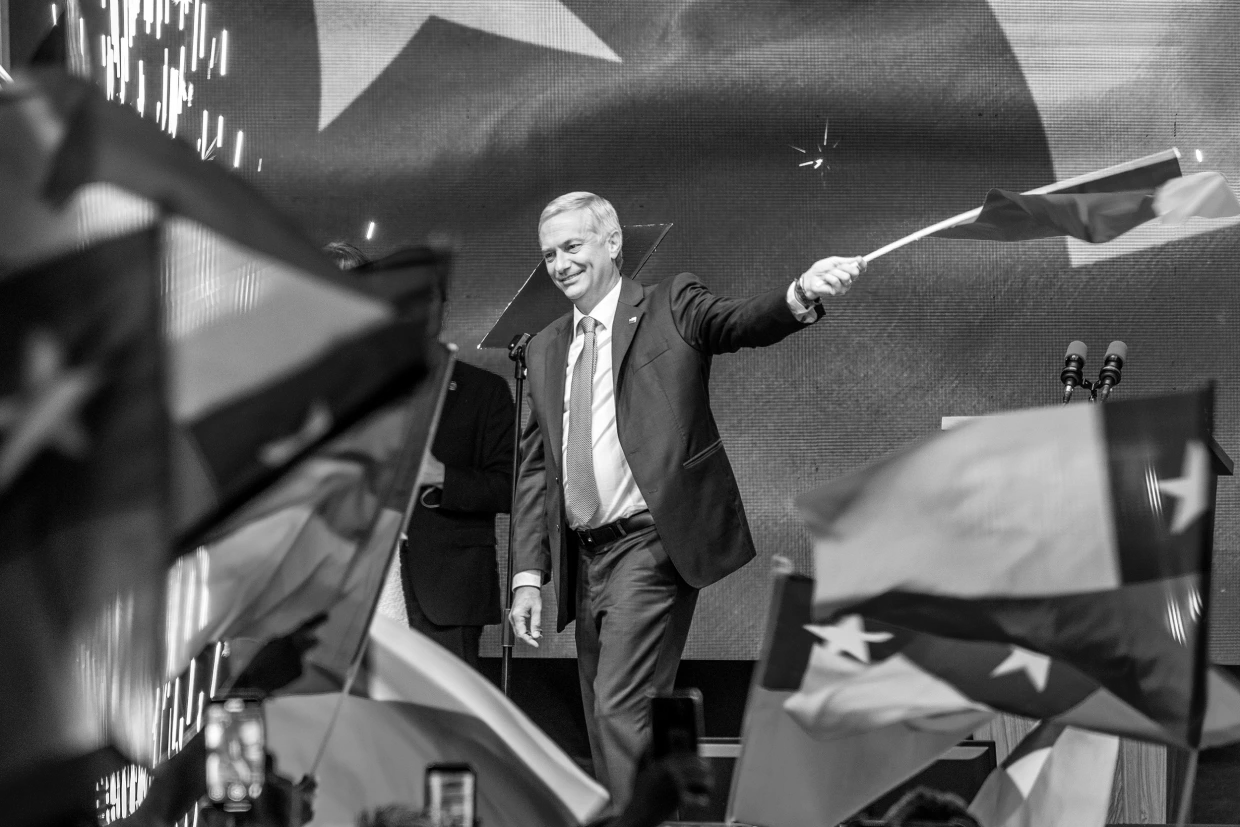
Chile elects first far-right President since Pinochet as Kast wins big
Chile’s ultra-conservative former lawmaker Jose Antonio Kast won a decisive victory in Sunday’s presidential election, securing 58.2% of the vote against centre-left candidate Jeannette Jara , who received 41.8%. Kast’s win marks the first far-right presidency in Chile since the country returned to democracy in 1990.
Kast’s campaign focused heavily on public safety, immigration, and economic revitalisation , issues that resonated across key voter demographics. Rising concerns over crime , including organised gangs, street violence, and carjackings, drove support among middle-class families and urban residents seeking a hard-line approach. Illegal immigration also emerged as a pivotal factor, with Kast promising mass deportations of undocumented migrants and stricter border controls, appealing to voters worried about social services, employment competition, and national security.
While economic concerns were less dominant, Kast’s free-market proposals , including tax reforms and measures to encourage private investment, attracted business owners and upper-middle-class voters . Kast’s moral conservatism, including opposition to abortion and same-sex marriage, mobilised socially conservative and religious communities , although these issues were less central than security and immigration.
Jara, a lifelong Communist Party member and former labour minister in President Gabriel Boric’s centre-left government, hailed from a working-class family that resisted the Pinochet dictatorship. She focused on social welfare and inclusive economic policies , while also proposing crime prevention strategies, but struggled to overcome widespread public anxiety over safety and migration. After acknowledging Kast’s lead, Jara congratulated him and urged her supporters to remain resilient, stating, “It is in defeat that we learn the most.”
Kast’s supporters celebrated in Santiago’s streets, some holding images of former dictator Augusto Pinochet , reflecting the strong ideological divide in the country. His campaign spokesman, Arturo Squella, described the victory as a “tremendous responsibility” to address Chile’s crises.
Analysts note that Kast’s triumph reflects a broader regional trend toward right-wing leaders across Latin America, including Argentina and Bolivia. The United States was among the first to congratulate him, with Secretary of State Marco Rubio highlighting priorities such as public security, immigration management, and commercial partnerships.
Chile’s political history since the Pinochet era has been characterised by a stable alternation of centrist left and right governments , with the centre-left Concertación and centre-right coalitions sharing power for over three decades. Kast’s election, however, signals a shift toward polarisation and far-right leadership , driven by public concerns over security, immigration, and economic stagnation.