
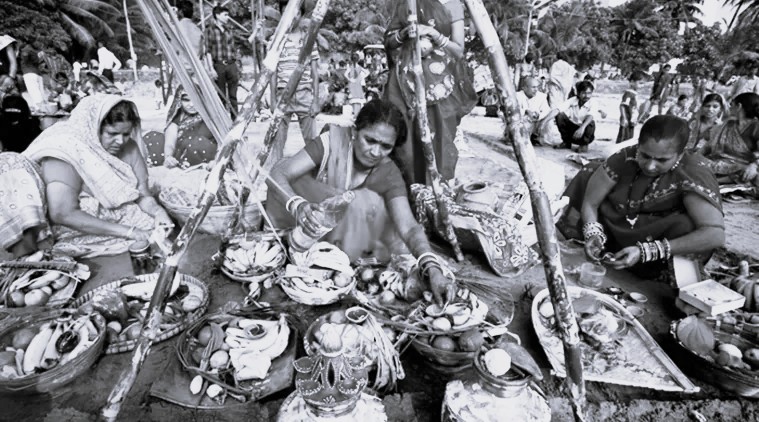
Chhath Puja - A Stream of Devotion on the Banks of the Ganges
Among the festivals celebrated with utmost devotion during the Kartik month in India, Chhath Puja is one. This Chhath Puja is also known as Dala Chhath, Chhati, and Surya Shashthi. It is a festival observed to express gratitude to the Sun God for sustaining life on Earth. The people in North India strongly believe that performing this worship also and miseries of Life . However, the heart of this festival lies in Bihar and Uttar Pradesh. It is not just a festival; it is a culture born on the banks of the Ganges, a sacred flow linked to Sun worship, and an embodiment of maternal devotion, sacrifice, and gratitude.
According to mythological narratives, this holy Chhath Puja, dedicated to the Sun God, was performed by the Pandavas and Draupadi. Besides Bihar, it is also celebrated in parts of Jharkhand, Madhya Pradesh, Uttar Pradesh, Gujarat, Ranchi, Delhi, and Mumbai. Non-resident Indians settled abroad also celebrate this festival grandly. It is particularly celebrated on a large scale in the states of Bihar and Uttar Pradesh. As this festival involves the worship of the Sun on the Shukla Shashthi of the Kartik month, it is also called Shukla Shashthi. The main purpose of this puja is to offer food to the Sun and express thanks. During this four-day festival, devotees observe strict rituals and perform a Nirjala Upavas (fast without water), meaning they continue the fast without even drinking water.
Earth, River, Sun - The Holy Trinity of Bihari Devotees' Lives
In the lives of the people of Bihar, the Ganges River, the Sun God, and nature are intertwined in every element. The Sun provides light for the crops, and the Ganges is the soul of life. Expressing gratitude to both of these and offering reverence for the gifts of life is the custom of Chhath Puja. During this festival, every home and every village is filled with golden light. The riverbanks transform into a paradise under the glow of lamps. The moment when women devoutly stand in the river and offer water to the Sun is a sacred experience beyond words.
Four Days of Chhath Puja - Devotion and Discipline
Day 1 - Nahay Khay: The start of the festival. Devotees take a holy dip in the river to attain purity. On this day, they consume "Satyaharam," which is pure food prepared in the name of God. In the villages of Bihar, every house is fragrant with incense, lamps, and flowers on this day. Women purify their homes because it is a day of self-purification. Also people are invited to share and eat the food together.
Day 2 - Kharna: This day involves fasting until the evening. After sunset, they break the fast by offering and consuming food consisting of Gur (jaggery) Payasam (kheer), roti (flatbread), milk, and fruits. This symbolizes family love and maternal devotion. On this day, women pray, "Hamar Suraj Deva, Parivar ke Sukh Shanti De," meaning, "Oh Sun God! Grant peace and happiness to my family."
Day 3 - Sanjha Arghya (Evening Offering): In the evening, the banks of the Ganges are illuminated with devotional lamps. As the golden Sun slowly sets, the devotees observing the fast stand waist-deep in the Ganges, holding a Bamboo Daura (basket) containing fruits, bananas, coconuts, and jaggery-based delicacies, and offer water to the Sun. The air resonates with chants of "Chhathi Maiya Ki Jai." That moment reflects the boundless affection, devotion, and respect in the hearts of the people of Bihar. Women prepare Thekua prasad to offer 'Arghya' to the setting Sun on the third day of Chhath Puja.
Day 4 - Uday Arghya (Morning Offering): Early in the morning, the devotees observing the fast stand in the Ganges again and offer Arghyam (offering of water) to the rising Sun. At that moment, the Earth is silent, the Ganges flows gently, the Sun rises, and the tears of gratitude from the devotees mix with the water. This is not just a puja; it is a time when the heart communicates with nature. As soon as the Sun rises, the devotees offer their salutations and conclude their fast.
Women's Power in Chhath Puja
Women play the central role in Chhath Puja. They perform this vow not only for their families but also as a gesture of thanks to nature and for the peace of society. The faith in "Chhathi Maiya" in the villages of Bihar is incredible. (Chhathi Maiya Ma Suraj Ka Roshni Se Hamara Jeevan Basa Ba) "Mother Chhathi, our life is sustained only by the light of the Sun." This is a symbol of women's devotion, sacrifice, and discipline. Those who perform this puja undertake the Deeksha (vow) and abstain from even water for 36 hours. They sleep on the ground, as a sign of great devotion.
Nirjala Upavas (Waterless Fast): A 36-hour waterless fast is not easy. If the body lacks sufficient energy and moisture, there is a risk of problems like fatigue and dehydration. Therefore, it is considered very important to prepare the body properly before starting the fast. Many people face problems like dizziness or weakness during the waterless fast. Hence, consuming jaggery water before the fast is believed to reduce fatigue during the fast. They also consume coconut water and fresh fruit juices the day before. Considering rest is as important as food, they strictly and diligently adhere to all these practices. This is what enables them to perform the waterless fast easily. In Chhath Puja, devotees make offerings to the Sun during sunrise and sunset. Devotees believe that being physically prepared helps them experience the spiritual feeling more profoundly.
The Essence of Chhath Puja
Chhath Puja teaches us one thing: Respect nature and live with gratitude. This is not a festival of wealth; it is a festival of peace of mind. Every lamp lit on the banks of the Ganges is a prayer, a message that "light should come into our hearts." Chhath Puja remains in the hearts of the people of Bihar and Uttar Pradesh as affection, respect, and devotion. It is a part of their lifestyle, their identity. Every year during the Kartik month, this Chhath Puja arrives, meaning the banks of the Ganges awaken again, the Sun shines brighter, and the hearts of women become purer.