
Chandigarh University Students Discover Two Asteroids, Earn NASA Honour
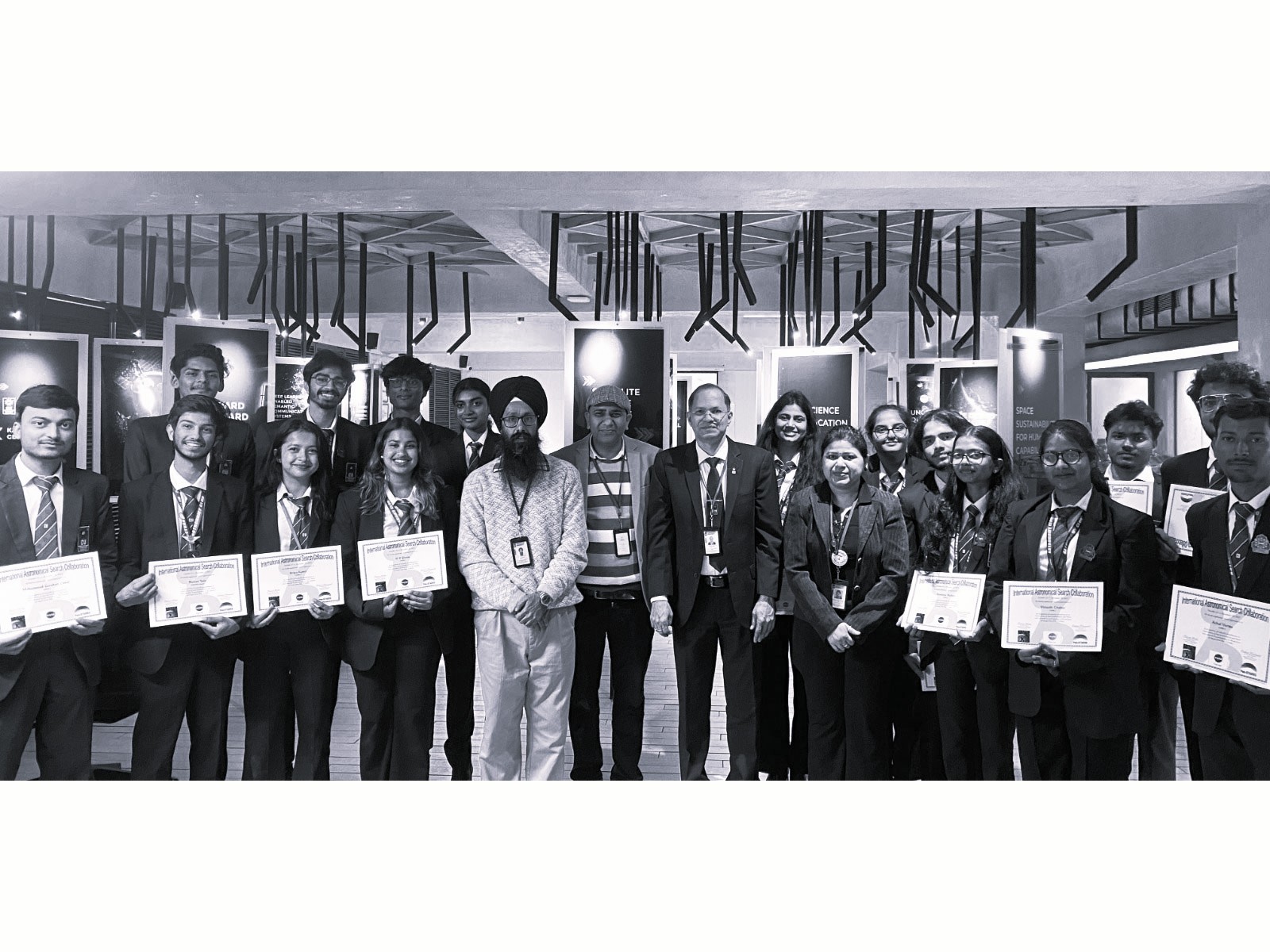
In a remarkable achievement that highlights India’s growing footprint in space science, students from Chandigarh University have earned global recognition for their contributions to asteroid research. Eighteen students were awarded the prestigious NASA Citizen Scientist designation after successfully participating in an international research programme supported by the U.S. space agency NASA.
What makes this accomplishment even more extraordinary is that the student team discovered two previously unidentified asteroids during the project. The celestial objects have been given the provisional designations DIV/1111 and ANC/0505 . After further verification and orbital confirmation by global astronomical bodies, such discoveries may later receive permanent catalogue numbers and official names. Identifying asteroids at the student level is considered a major scientific achievement and demonstrates the valuable role citizen scientists can play in real-world research.
The discoveries were made under the International Asteroid Search Campaign (IASC) , a NASA-supported citizen science initiative coordinated with asteroid research programmes in the United States. The campaign provides authentic telescope data to selected participants worldwide, allowing them to detect asteroids using methods similar to professional astronomers.
A total of 26 members of the Chandigarh University Astronomy Club took part in the campaign, analysing deep-space data over a period of about 45 days . Students examined sequential astronomical images, tracked moving objects against fixed star fields, and identified motion patterns that indicate asteroid movement. Of the participants, 18 met NASA’s strict validation standards and received certification.
The students used the professional astronomical software Astrometrica to analyse real observational data captured by Pan-STARRS (Panoramic Survey Telescope and Rapid Response System) in Hawaii. This advanced sky-survey system plays a crucial role in detecting near-Earth objects (NEOs) and other celestial bodies. By studying high-resolution telescope imagery, the students submitted precise measurements that contribute to refining asteroid orbits and strengthening global planetary defense efforts .
Among the recognized students, 15 are from Aerospace Engineering , two from Science , and one from Computer Science Engineering , reflecting interdisciplinary collaboration combining physics, astronomy, and data analysis.
Their work carries real-world significance. NASA’s planetary defense initiatives rely on global observational data to track asteroids and assess potential impact threats. With more than 32,000 near-Earth asteroids identified so far and many smaller ones still undetected, contributions from trained student researchers are increasingly valuable.