
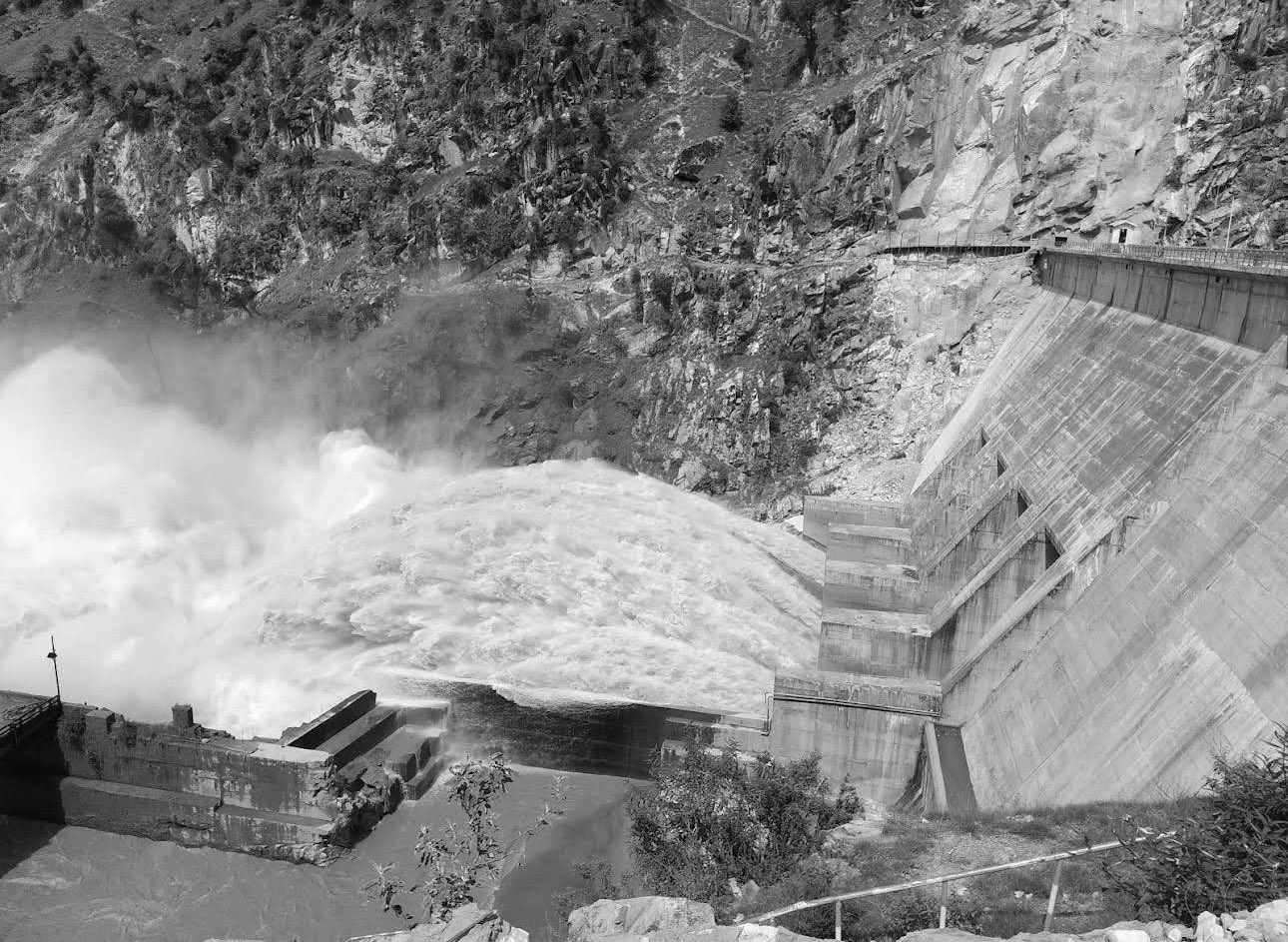
Centre’s green panel clears Dulhasti hydel power project on Chenab
A new hydropower project proposed on the Chenab river in Jammu and Kashmir, though modest in size, adds to a growing list of hydel projects being cleared in the Indus basin as India steps up utilisation of rivers that were earlier largely constrained by the Indus Waters Treaty.
The Centre has approved the 260-megawatt Dulhasti Stage-II hydropower project in Kishtwar district of Jammu and Kashmir at an estimated cost of ₹3,277 crore . The project has also received clearance from an expert panel under the Ministry of Environment, paving the way for floating construction tenders.
Officials said the project will use Chenab river water and is a run-of-the-river scheme , planned as an extension of the existing 390 MW Dulhasti Stage-I hydropower plant, which has been operational since 2007.
While not among the largest hydel projects in the region, Dulhasti Stage-II assumes significance as part of a broader push to expand hydropower capacity on the Indus, Chenab and Jhelum rivers. Since the suspension of the Indus Waters Treaty earlier this year, the Centre has accelerated approvals and planning for multiple projects in these river basins.
Government sources said India is moving ahead with several hydroelectric projects on rivers that were earlier allocated to Pakistan under the treaty, including Sawalkote, Ratle, Bursar, Pakal Dul, Kwar, Kiru, and Kirthai-I and II . The emphasis remains on run-of-the-river projects aimed at enhancing power generation while strengthening India’s control over water resources in Jammu and Kashmir.
According to project details, Dulhasti Stage-II will divert water from the existing power station through a separate tunnel to an underground powerhouse housing two units of 130 MW each. The project will require 60.3 hectares of land , including 8.27 hectares of private land from two villages in Kishtwar district.
The Indus Waters Treaty , signed in 1960 with the World Bank as a guarantor, governs the sharing of waters of the Indus river system between India and Pakistan. Under the treaty, Pakistan was granted rights over the Indus, Jhelum and Chenab rivers, while India retained rights over the Ravi, Beas and Sutlej, with limited non-consumptive use of the western rivers permitted. India suspended the treaty in April following the Pahalgam terror attack, marking a shift in its approach to water resource development in the Indus basin.