
Centre reviews Madhya Pradesh’s progress in ULLAS literacy programme
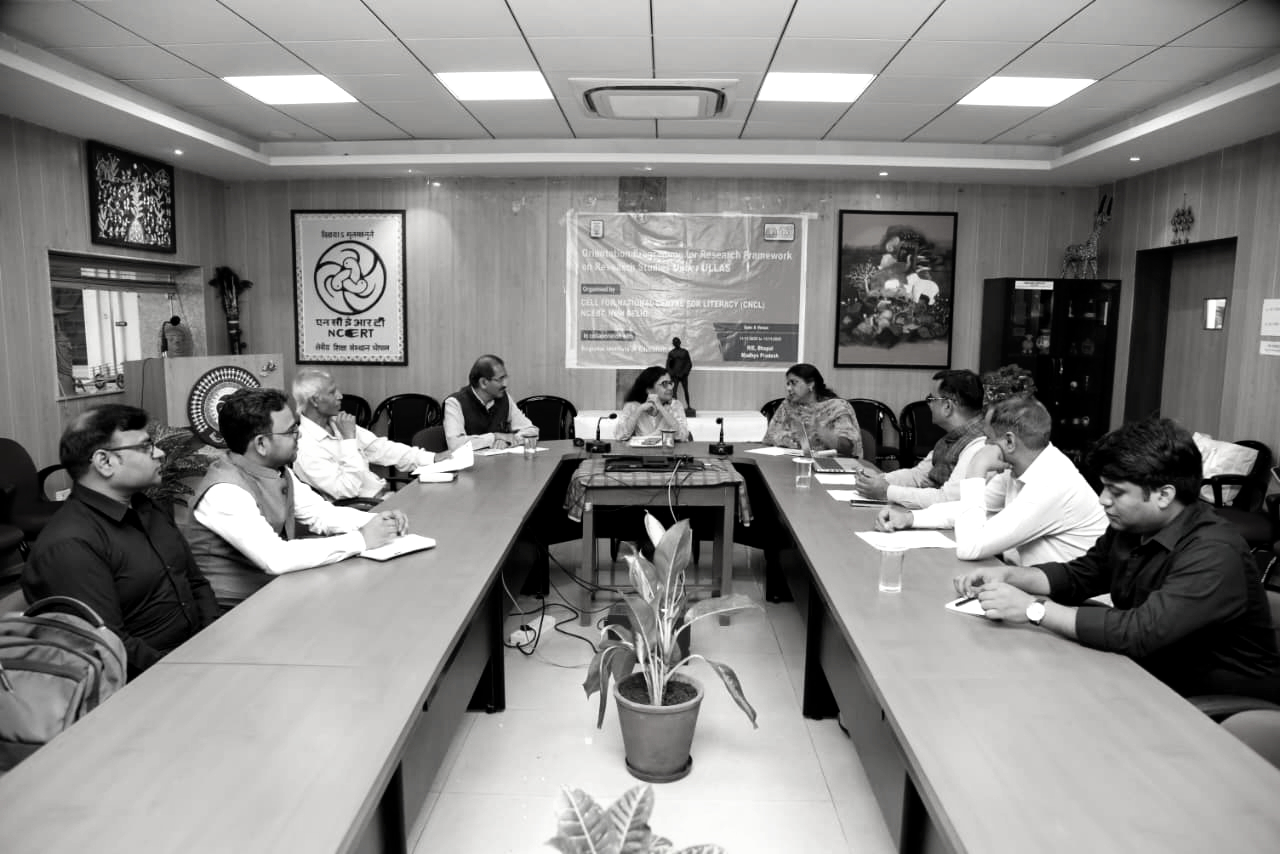
A review meeting on the implementation and progress of the ULLAS – Nav Bharat Saaksharta Karyakram was held on November 10, 2025, at the Regional Institute of Education (RIE), Bhopal. The meeting was chaired by Smt. Archana Sharma Awasthi, Joint Secretary (SS-I & AE), Department of School Education and Literacy, Ministry of Education, Government of India, in the presence of Prof. S.K. Gupta, Principal, RIE, Bhopal.
The session was convened by Prof. Usha Sharma, Incharge of the Cell for National Centre for Literacy (CNCL), NCERT, as a preparatory discussion ahead of the three-day national workshop scheduled from November 11 to 13, 2025. The deliberations were focused on reviewing Madhya Pradesh’s progress under the ULLAS scheme, strengthening the roles of Teacher Education Institutions (TEIs), SCERT, and State Literacy Mission Authorities (SLMAs), and encouraging the development of digital learning tutorials and teaching-learning materials for improved literacy outcomes.
Overview of the ULLAS Scheme
The ULLAS (Understanding Lifelong Learning for All in Society) programme, officially known as the Nav Bharat Saaksharta Karyakram (2022–2027), has been implemented as a Centrally Sponsored Scheme by the Ministry of Education since April 2022. The initiative has been designed to provide foundational literacy, numeracy, and lifelong learning opportunities for adults aged 15 years and above who missed formal schooling.
The scheme has been aligned with UN Sustainable Development Goal 4 (Quality Education) and the national vision of achieving universal literacy by 2030. Five major components have been included under the scheme: foundational literacy and numeracy, critical life skills, vocational skills, basic education, and continuing education.
Implementation and Hybrid Learning Model
The ULLAS scheme has been implemented through a hybrid model that combines both online and offline methods.
In the digital mode, the ULLAS mobile app and web portal have been used for registration of learners and volunteers. Digital learning materials, known as ULLAS Primers, have been made available in 22 Indian languages through the DIKSHA portal. The Online Teaching, Learning and Assessment System (OTLAS) has been adopted for assessments, while educational content has been shared through television, radio, and social media platforms.
In the offline mode, Samajik Chetna Kendras (Community Learning Centres) have been set up in schools, Panchayat offices, community halls, and libraries to provide face-to-face learning opportunities. Training and orientation programmes for volunteers and stakeholders have also been organised in physical settings. This blended structure has ensured that learners without digital access are equally benefited while technology has been effectively used for broader outreach.
Funding Structure
The ULLAS programme has been implemented as a Centrally Sponsored Scheme with a total financial outlay of ₹1,037.90 crore for the period 2022–2027. Out of this, ₹700 crore has been contributed by the Central Government, while ₹337.90 crore has been borne by the State Governments. Funds have been released following established cost-sharing norms to ensure joint financial participation and accountability.
Progress in Madhya Pradesh
In Madhya Pradesh, the ULLAS scheme has been operational since its national launch in April 2022. Implementation support has been provided by the State Council of Educational Research and Training (SCERT) and Teacher Education Institutions (TEIs). The Periodic Labour Force Survey (PLFS) 2023–24 has indicated that the state’s literacy rate has improved to 75.2%, compared with 69.3% recorded in the 2011 Census, reflecting tangible progress under the literacy mission.
National Implementation and Achievements
Nationwide implementation of the scheme has been observed across all states and Union Territories. As of November 11, 2025, substantial progress has been achieved.
More than 3 crore learners have been enrolled, and over 42 lakh volunteers have been mobilised. Around 1.7 crore learners have appeared for the Foundational Literacy and Numeracy Assessment Test (FLNAT), maintaining a pass rate of nearly 90%. The ULLAS mobile app, which has registered 2.37 crore learners, has served as the key platform for coordination, monitoring, and content delivery.
The programme’s expansion has reflected a clear evolution—from policy formulation and digital infrastructure creation to community mobilisation and measurable learning outcomes—demonstrating steady progress toward achieving functional literacy nationwide.
Milestones in States and Union Territories
Significant milestones have been achieved across several regions. Mizoram became the first state to be declared fully literate under the ULLAS initiative in May 2025, achieving a 98.2% literacy rate. Goa and Tripura followed with 100% and 95.6% literacy, respectively. Ladakh became the first Union Territory to be declared fully literate in June 2024, reaching over 97% literacy.
The ULLAS scheme has been viewed as a transformative and inclusive initiative, receiving broad recognition for its potential to make India fully literate by 2030.
Positive Aspects
The scheme has redefined literacy in a holistic sense, extending beyond reading and writing to include numeracy, digital, financial, legal, and health literacy. Its hybrid model and multilingual resources have been praised for accessibility and flexibility. The emphasis on volunteerism has fostered a “Jan Andolan” (People’s Movement), promoting community ownership and social responsibility.
Special focus has been given to women (who comprise around 65% of non-literates), marginalised communities, and educationally backward regions, promoting equity and inclusion.
Challenges Highlighted
Certain challenges have been identified, including volunteer motivation, digital divide issues in remote areas, and monitoring limitations at local levels. Socio-economic constraints have also been noted as barriers for adult learners managing work and family responsibilities alongside their studies.
The ULLAS scheme has been recognised as one of the largest community-based literacy missions undertaken in India. Through its hybrid learning structure, shared funding model, and nationwide volunteer engagement, the scheme has strengthened the foundation for lifelong learning and social empowerment.
Continued success is expected to depend on sustained volunteer support, effective local coordination, and expansion of digital access. With ongoing participation from states like Madhya Pradesh and strong national momentum, the initiative is moving India closer to the goal of becoming a Literate, Inclusive, and Empowered Bharat by 2030.