
Centre rebrands MGNREGA as ‘Pujya Bapu Gramin Rozgar Yojana’
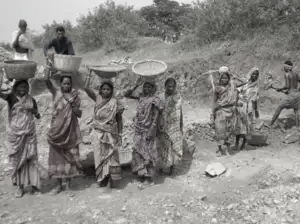
The Union government has renamed the Mahatma Gandhi National Rural Employment Guarantee Act (MGNREGA) as the Pujya Bapu Gramin Rozgar Yojana, marking a major rebranding of India’s largest rural employment programme. Alongside the new name, the government has announced an increase in guaranteed workdays from 100 to 125 and a minimum wage revision to ₹240 per day.
While the Centre has officially presented the move as a routine renaming and part of a broader update to the rural employment guarantee framework, the decision has triggered political and public discussions over the rationale behind the change. According to sources familiar with the development, sections of the bureaucracy and political observers believe the government was keen to phase out the widely recognised “Mahatma Gandhi” label from the scheme, which has enjoyed strong public recall for nearly two decades. These sources say the renaming was executed “quietly” to avoid pushback, though the programme still indirectly references Gandhi through the phrase “Pujya Bapu.”
Despite the name change, officials and analysts note that there is no substantial structural transformation in how the scheme operates. Its legal framework, rights-based nature, types of permissible works, and administrative processes remain fundamentally the same. The increase in workdays and wages is seen as an incremental update rather than a redesign of the programme.
Introduced in 2005, MGNREGA has long been regarded as one of the world’s largest social-security initiatives, guaranteeing rural households a minimum number of days of unskilled manual work each year. With the new title now in place, questions remain over whether the rebranding will influence public perception, political messaging, or the administration of the scheme. For now, officials insist that the essence of the programme remains intact, even as its long-familiar name is set to disappear from future government communication.