
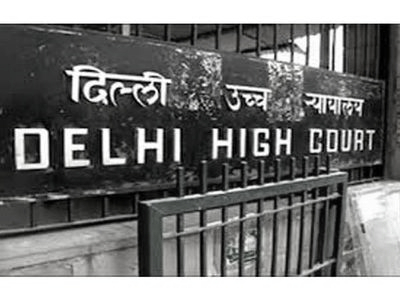
Centre moves Delhi HC against order allowing posthumous reproduction
The Centre has approached the Delhi High Court challenging a ruling that allowed the parents of an unmarried deceased man to access his frozen sperm for posthumous reproduction, raising complex legal and ethical questions around assisted reproductive technology in India.
A division bench of Chief Justice D.K. Upadhyaya and Justice Tejas Karia on January 29 issued notice to the parents while hearing the Centre’s appeal against a 2024 single-judge order. The bench has listed the matter for hearing on February 27 and asked the Centre to explain a delay of over a year in filing the appeal.
The case stems from a petition filed by the parents of a man who had frozen his semen at a private hospital in June 2020 before undergoing chemotherapy for cancer, after doctors warned that the treatment could lead to infertility. The man later died. His parents subsequently sought release of the frozen gametes to conceive a child through assisted reproductive technology.
In October 2024 , a single judge of the High Court directed Sir Ganga Ram Hospital to release the frozen sperm to the parents, holding that there was no express legal prohibition on posthumous reproduction if the consent of the sperm or egg owner could be established. The judge observed that a sperm sample constituted part of a person’s biological material and could be treated as property or estate after death.
The court noted that the deceased had knowingly consented to semen freezing for fertility preservation, and ruled that a child could be conceived either through an identified surrogate mother or by fertilisation with a consenting woman chosen by the parents through IVF.
Challenging the ruling, the Centre argued that the decision ran contrary to existing laws governing assisted reproduction and surrogacy. Appearing for the government, counsel submitted that the Assisted Reproductive Technology Act and the Surrogacy (Regulation) Act do not recognise grandparents as “intending parents” and do not permit them to commission IVF or surrogacy.
The bench was also informed that the frozen gametes have not yet been released despite the single judge’s order, and that a contempt petition filed by the parents is pending before the High Court.
The single judge had earlier asked the Union Ministry of Health and Family Welfare to consider whether specific laws or guidelines were required to address posthumous or post-mortem reproduction.
The appeal now places before the court a rare and unsettled question: whether Indian law permits the creation of life using assisted reproductive technology after the death of an unmarried individual and who, if anyone, can claim the right to become the child’s legal parents.