
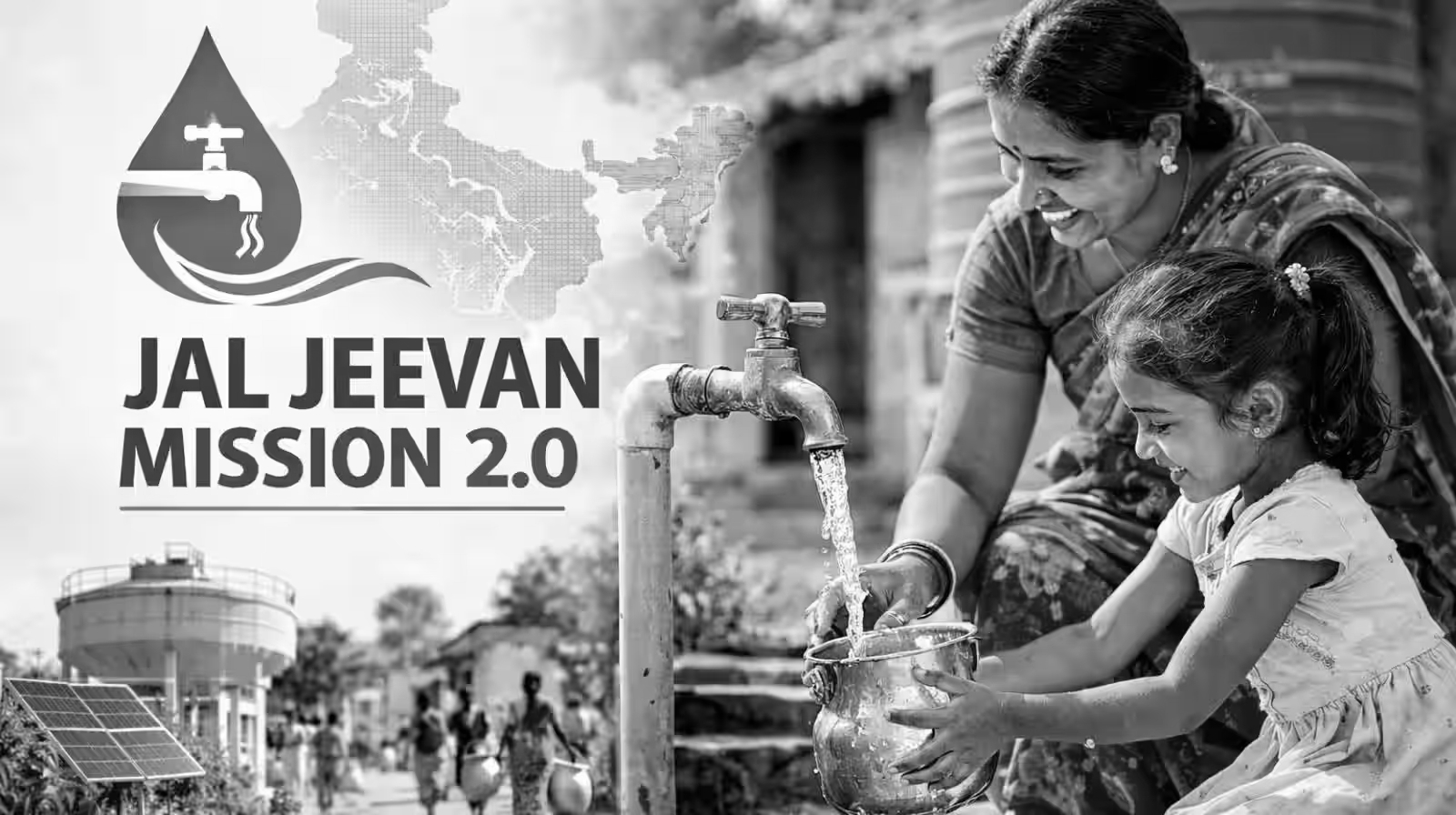
Centre extends Jal Jeevan Mission till 2028, pushes for stronger rural water systems
The Union Government has officially extended the Jal Jeevan Mission till December 2028 , marking a major policy shift that moves the flagship rural water programme from rapid expansion to long term sustainability and improved service delivery.
Launched in 2019, the Jal Jeevan Mission aims to provide Functional Household Tap Connections to every rural household in the country. Over the years, the scheme has achieved large-scale expansion, with around 15.7 to 15.8 crore rural households already receiving tap water connections. This accounts for nearly 80 to 82 percent of total rural households , while more than 2.7 lakh villages have reported full saturation status under the programme. Several states have also made significant progress under the Har Ghar Jal certification initiative.
Despite this strong progress, the government has acknowledged that achieving full universal coverage and ensuring long term functionality of water systems still requires sustained effort. The extension of the mission till 2028 reflects this need to bridge remaining gaps while strengthening the quality of delivery.
Officials from the Ministry of Jal Shakti have emphasised that the next phase will focus on ensuring “water from source to tap” with uninterrupted supply , rather than only creating new infrastructure. The priority has now shifted to operation and maintenance, source sustainability, and consistent service delivery across rural areas.
Greater responsibility is being placed on districts through regular monitoring by District Water and Sanitation Missions , better fund utilisation, and structured maintenance planning. Gram panchayats are also being encouraged to take ownership of completed schemes, with community participation being strengthened through initiatives such as Jal Seva Aankalan , which allows villagers to assess service quality.
At the same time, digital tools like Sujala Gaon ID and the Sujalam Bharat App are being expanded to improve transparency, monitoring and data driven decision making. Districts with over 90 percent coverage have been instructed to accelerate technical verification and certification of Har Ghar Jal status.
Officials noted that while the mission has significantly transformed rural water access across India, the next phase will determine its long term success. With the formal extension till 2028 , the programme is now expected to evolve into a more sustainable service delivery model where local institutions and communities play a central role in ensuring safe and reliable drinking water for every rural household.