
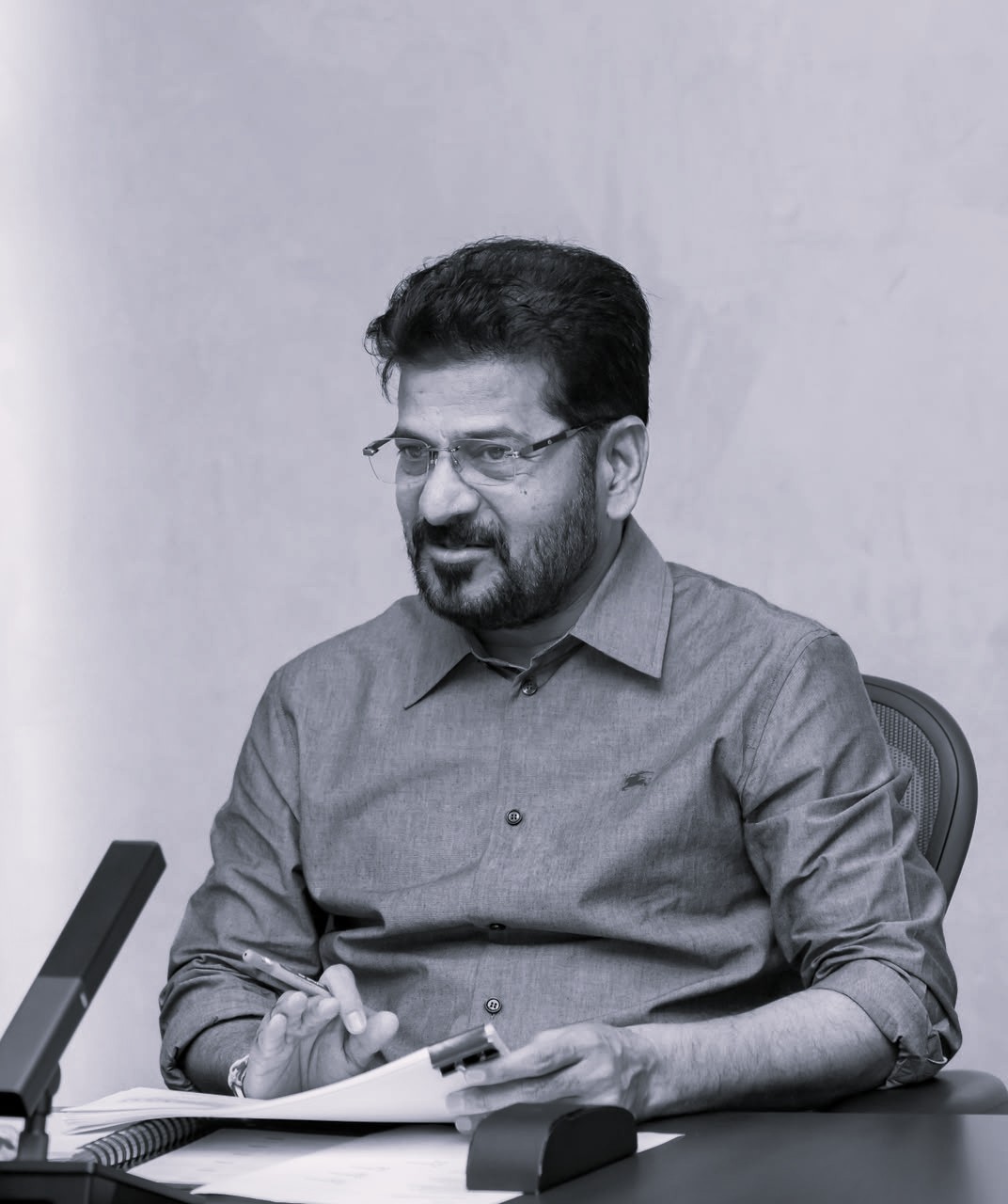
Centre Blocks Revanth Reddy’s US Visit, Questions Grow Over Political Clearance
Telangana Chief Minister A. Revanth Reddy will return to Hyderabad on August 23 after the Ministry of External Affairs refused political clearance for the US leg of his Telangana Rising tour, a decision that has once again brought the Centre’s power over foreign travel by Chief Ministers under scrutiny.
The MEA has said that programmes submitted by Chief Ministers must be appropriate to the office they hold and consistent with the stated purpose of the visit. According to the ministry, Revanth Reddy’s US programme did not satisfy that test, although his UK itinerary was approved.
What remains unexplained is which part of the US schedule the Centre found objectionable.
The Telangana CMO was not entirely forthcoming either. Its reference to clearance being denied from a “political angle” could easily be understood as suggesting partisan interference. In government terminology, however, political clearance is simply the standard expression used for MEA approval of foreign visits by senior public officials. It does not by itself mean that permission was denied for party political reasons.
That distinction matters.
Revanth Reddy’s proposed US programme included engagements with Harvard, MIT, Northeastern University and a Virginia Tech team, along with a Meet and Greet organised by the Indian Overseas Congress in New York on August 26. Whether the Congress related event caused concern, whether the level of some university meetings was considered unsuitable for a Chief Minister, or whether there was another reason altogether has not been disclosed.
Why does a Chief Minister need clearance?
Chief Ministers and state ministers require prior MEA political clearance for foreign visits under Cabinet Secretariat rules. The requirement is not confined to Chief Ministers.
Union ministers, government officials and other holders of public office are also governed by different approval procedures for official overseas travel. MPs need the prescribed parliamentary clearance for official visits.
Judges occupy a somewhat different position. Supreme Court and High Court judges require the relevant approvals for official foreign travel, but courts have held that MEA political clearance should not be demanded merely because a judge is travelling abroad privately.
The underlying principle is that foreign affairs fall within the Union government’s constitutional domain. A Chief Minister meeting foreign governments, universities or corporations overseas is not treated in the same way as an ordinary private traveller.
Revanth is not the first CM to be stopped
There is considerable history behind such decisions.
Delhi Chief Minister Arvind Kejriwal was denied clearance to attend a climate conference in Copenhagen in 2019. The Centre said the gathering was largely meant for mayors and was not considered appropriate for participation at the level of a Chief Minister.
West Bengal Chief Minister Mamata Banerjee was denied permission to attend a peace conference in Rome in 2021, with the MEA again citing the status and nature of the event.
Kejriwal’s proposed Singapore visit for the World Cities Summit in 2022 also became controversial after the clearance process went beyond the deadline.
Punjab Chief Minister Bhagwant Mann was denied permission to travel to Paris for the Olympics in 2024, with security concerns cited in view of his protection category. Mann also faced another denial for a proposed overseas programme in 2026.
The striking feature of the most prominent refusals during the present NDA era is that they have involved Chief Ministers belonging to opposition parties. That naturally raises questions about consistency and about whether an extraordinary power over elected state leaders is being exercised with sufficient transparency.
It would, however, be inaccurate to suggest that such denials began with the Modi government. During the UPA period, Assam Chief Minister Tarun Gogoi, who belonged to the Congress, was denied clearance for proposed visits to the US and Israel. BJP Jharkhand Chief Minister Arjun Munda was also denied permission for a Thailand visit.
Modi’s visa controversy was different
There is also an important historical distinction involving Narendra Modi.
The well known episode occurred in March 2005, when Modi was Gujarat Chief Minister. It was the United States that denied him a diplomatic visa and revoked his existing tourist and business visa.
The Indian government did not stop Modi from travelling. In fact, the Congress led UPA government headed by Manmohan Singh protested the US decision and asked Washington to reconsider it. The US refused to reverse its position.
So Modi’s case was fundamentally different from the present controversy. His travel was blocked by the destination country, not by denial of political clearance from New Delhi.
A missed opportunity for Telangana
What makes the Revanth Reddy episode especially disappointing is the stated purpose of the visit.
His government says it wants to bring prestigious international universities and skill institutions to Hyderabad so that students in Telangana can gain access to world class education without necessarily having to go abroad.
Revanth Reddy himself returned to the classroom earlier this year. In January 2026, he attended Harvard Kennedy School’s Leadership for the 21st Century executive education programme.
There was something genuinely heartening in seeing a sitting Chief Minister becoming a student again, attending an academic programme and exposing himself to new ideas while holding one of the most demanding public offices in the country.
This US visit was intended to take that engagement further. Telangana hoped to explore academic partnerships and institutional collaborations with some of the world’s most prestigious universities.
Officials have been instructed to continue with the US programme and pursue the proposed agreements. Even so, the presence of a Chief Minister carries a different level of institutional weight, particularly when discussions involve universities, investors and long term partnerships.
In that sense, Telangana has lost an opportunity.
The Centre may well have had a legitimate reason for refusing permission. If so, it should say clearly what that reason was. The state government, too, could have been more transparent about the exact wording and context of the denial instead of allowing the phrase “political clearance” to create an impression that may or may not reflect what happened.
For now, one question remains unanswered.
What exactly in Revanth Reddy’s US schedule caused the Centre to say no?
Perhaps, one day, we will know.