
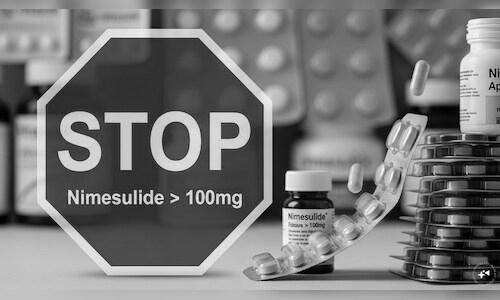
Centre bans high-dose Nimesulide oral drugs over health risk concerns
The Union health ministry has banned the manufacture, sale, and distribution of all oral formulations of the painkiller nimesulide containing more than 100 milligrams in immediate-release form, citing serious risks to human health and the availability of safer alternatives. The decision, effective immediately, follows a recommendation from the Indian Council of Medical Research (ICMR) and consultations with the Drugs Technical Advisory Board (DTAB).
Nimesulide, a non-steroidal anti-inflammatory drug (NSAID) , is widely used in India for short-term relief of pain, fever, and inflammation . Its popularity stems from its effectiveness in several conditions. Typical uses include fever reduction, headaches, dental pain, menstrual cramps , muscle and joint pain such as backaches and osteoarthritis, and post-surgical or injury-related pain. Surveys and market data indicate that millions of people consume nimesulide annually, with daily usage likely reaching hundreds of thousands , although exact figures are not officially published.
The drug is marketed under several popular brand names , including Nise, Nimulid, Nicip, Nimrest, and Nimopen , and is sometimes included in fixed-dose combinations with other pain relievers. The cost of a single nimesulide 100 mg tablet generally ranges from around ₹2 to ₹30 , depending on the brand and formulation, with government schemes offering some combinations for as low as ₹1 per tablet .
The ban was imposed because higher doses of nimesulide, especially above 100 mg, pose serious health risks. These include liver damage (hepatotoxicity), gastrointestinal problems such as nausea, vomiting, and ulcers, kidney impairment, severe allergic reactions, and cardiovascular complications such as high blood pressure and heart issues. Regulators have emphasized that these risks can be fatal in vulnerable individuals.
The ministry emphasized that the continued availability of high-dose nimesulide is not in the public interest , as its use “ is likely to involve risk to human beings .” The ban applies only to oral formulations exceeding 100 mg in immediate-release form for human use; lower-dose products remain legal and accessible.
Under Section 26A of the Drugs and Cosmetics Act, 1940 , the central government has the authority to prohibit drugs deemed unsafe. Regulatory concerns over nimesulide are not new: the drug was previously banned for children under 12 years of age due to liver toxicity. In January 2025, all veterinary formulations were prohibited because of environmental risks , including threats to vulture populations from livestock carcasses treated with the drug.
The government’s latest move reflects an effort to strengthen drug safety standards and protect patients from medicines with serious health risks, while still allowing safer, well-established alternatives for pain and inflammation relief.