
Centre Approves ₹2,183 Crore River Basin Push to Safeguard India’s Water Future
The Centre has proposed to continue the River Basin Management (RBM) Scheme with an enhanced outlay of ₹2,183 crore for the period 2026–27 to 2030–31, signalling a stronger national push toward scientific water governance and long-term infrastructure planning. The scheme, implemented by the Ministry of Jal Shakti during the tenure of the Sixteenth Finance Commission , represents a significant increase from the ₹1,276 crore allocated during the previous phase between 2021–22 and 2025–26. This rise in funding reflects growing recognition of water security as a core economic and environmental priority amid rising population pressure and changing climate patterns.
The River Basin Management Scheme is a central sector programme aimed at integrated planning and sustainable use of water resources at the river basin level. Unlike conventional water projects that focus on individual locations, the RBM framework treats an entire river system including tributaries, groundwater and rainfall patterns as a single interconnected ecosystem. The scheme focuses on preparing basin master plans, conducting scientific surveys and developing detailed project reports for multipurpose water infrastructure such as dams, irrigation systems, reservoirs and flood-control structures. It is implemented through key agencies including the Brahmaputra Board , the Central Water Commission , and the National Water Development Agency , which oversee technical planning, investigation and project preparation across river basins.
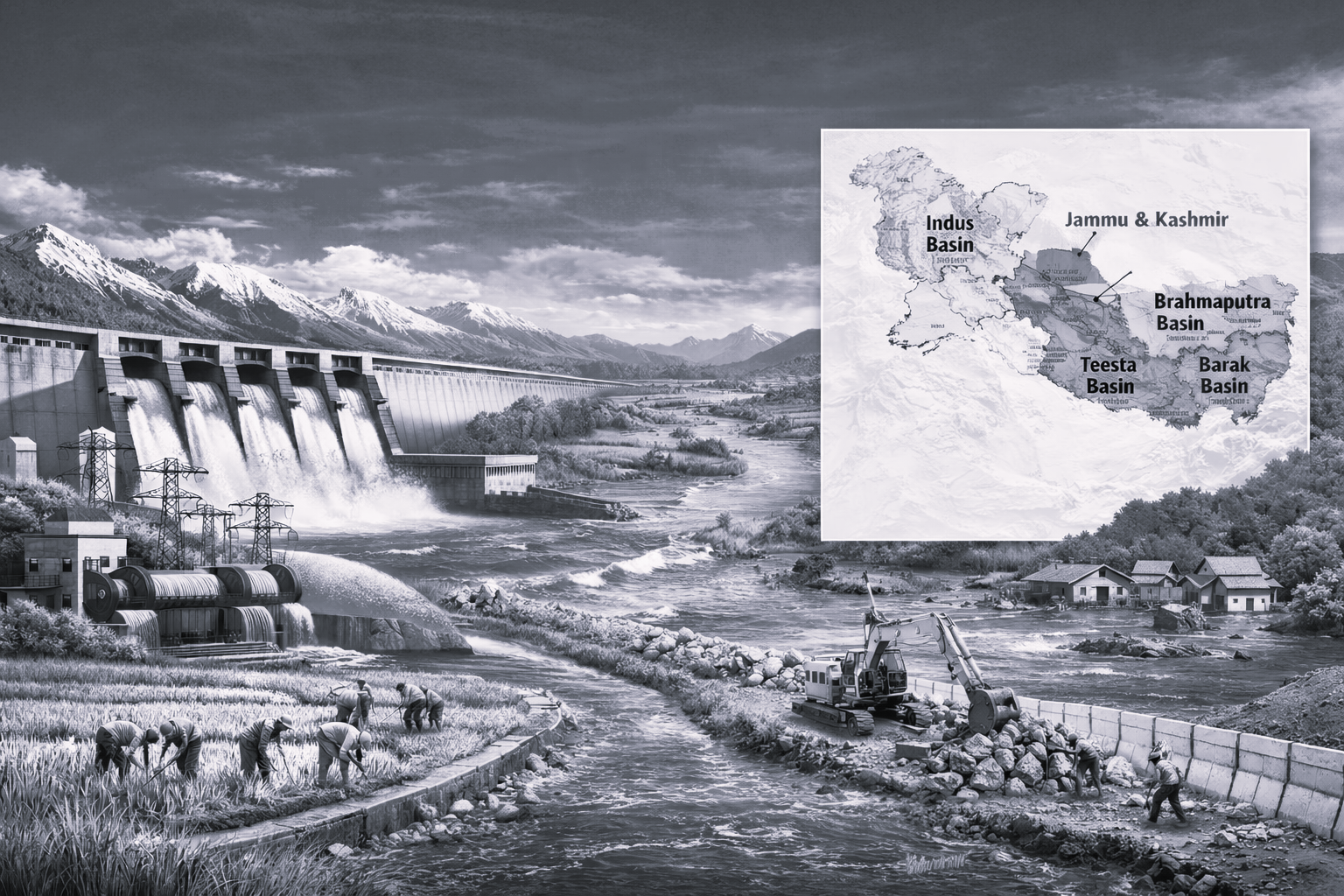
Under the renewed plan, priority will be given to strategically significant yet underdeveloped river basins, particularly in mountainous and northeastern regions. Major river systems under focus include the Brahmaputra River , Barak River, Teesta River and the Indus River basin areas located in Jammu and Kashmir and Ladakh. These basins are considered crucial due to their importance in flood control, cross-border water management and ecological stability. Regions in the northeastern states require special attention due to recurring floods, erosion risks and limited infrastructure development, making basin-level planning essential for long-term sustainability.
The need for continuing the scheme has become increasingly urgent due to mounting pressure on India’s water resources. Rapid population growth, urbanisation and industrial expansion have significantly increased water demand, while uneven rainfall distribution continues to create contrasting situations of floods in some regions and droughts in others. Experts point out that basin-level planning helps balance water availability by enabling storage, diversion and efficient management across regions. Climate change has further intensified water-related risks, with rising temperatures and shifting rainfall patterns increasing the frequency of extreme weather events such as flash floods and prolonged dry spells.
From an economic perspective, the River Basin Management Scheme is expected to strengthen India’s development infrastructure. Improved irrigation networks can enhance agricultural productivity and reduce dependence on monsoon rainfall, thereby supporting rural livelihoods and food security. The scheme also supports hydropower generation in mountainous regions, which contributes to clean energy production and reduces reliance on fossil fuels. Flood management infrastructure developed under the scheme is likely to minimise economic losses caused by seasonal flooding, especially in vulnerable regions where agricultural land and settlements are frequently damaged.
A notable feature of the renewed scheme is the adoption of modern technologies to improve planning accuracy and project efficiency. Tools such as Geographic Information Systems (GIS), remote sensing, LiDAR mapping and drone-based surveys will be used to collect precise hydrological and geographical data. These technologies enable planners to identify flood-prone zones, track river behaviour and design infrastructure with greater accuracy, ultimately reducing delays and improving resource utilisation.
The continuation of the River Basin Management Scheme is also closely aligned with India’s broader national water policy framework led by the Ministry of Jal Shakti, which integrates river management, irrigation and drinking water initiatives under a unified system. Despite its strategic importance, the scheme faces challenges such as coordination between central and state governments, land acquisition hurdles and environmental clearance processes that can delay infrastructure development.
With rising water demand and increasing climate uncertainties, the continuation of the River Basin Management Scheme is widely viewed as a long-term investment in water security and economic resilience. By promoting integrated planning and sustainable development of river systems, the scheme is expected to play a crucial role in supporting agricultural growth, disaster management and environmental sustainability in the years ahead.