
Central Team Inspects Cuddalore As Bird Flu Outbreak Affects One Lakh Chickens
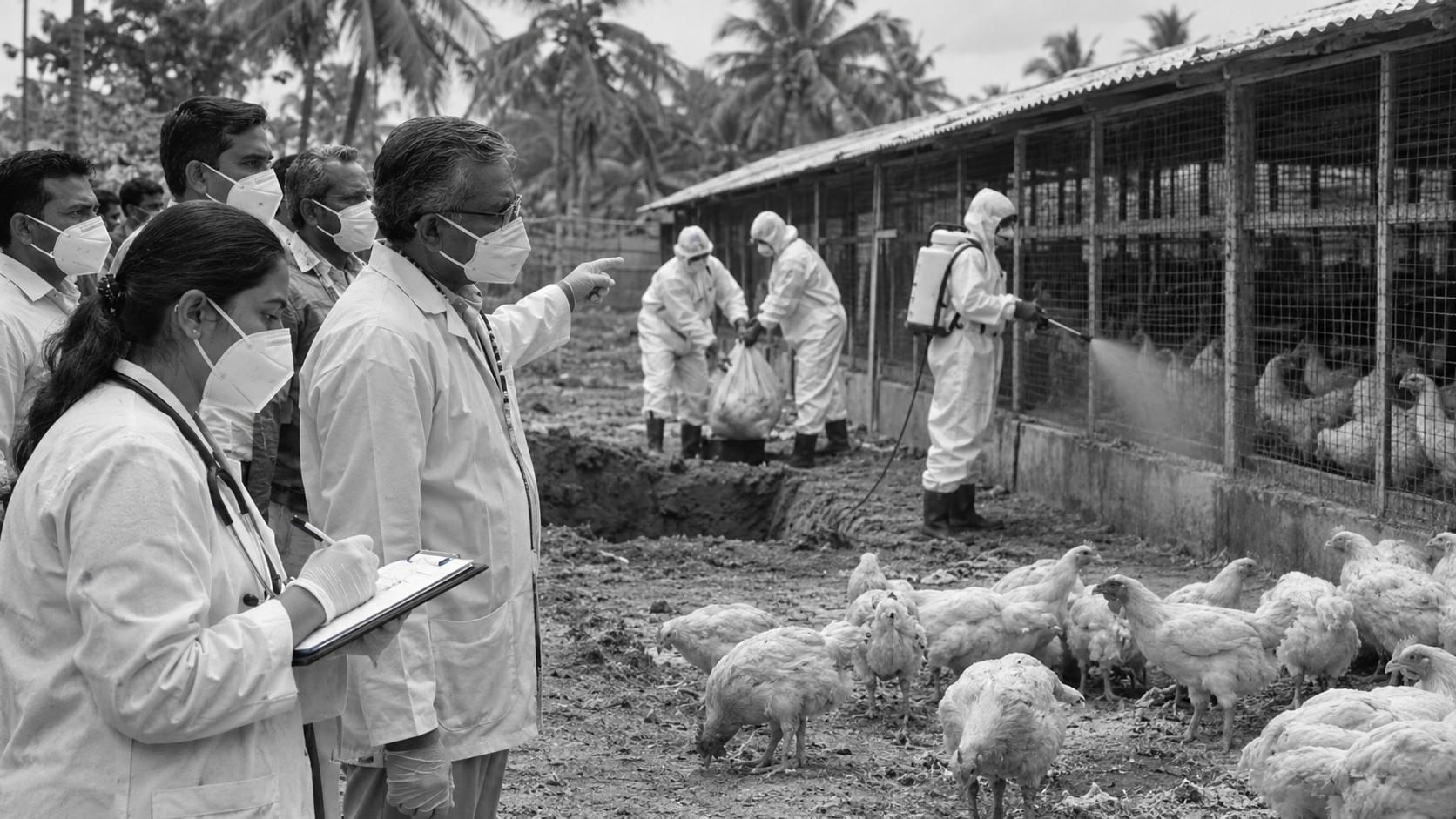
A central government team undertook an inspection in the district on Saturday to review the control measures and steps to prevent the Avian influenza from spreading to humans, as Tamil Nadu intensified surveillance and containment operations following an outbreak of Highly Pathogenic Avian Influenza (H5N1) that has affected nearly one lakh chickens.
A team of doctors from the National Centre for Disease Control (NCDC) is monitoring medical camps and evaluating local health officials' preparedness to identify suspected infections. Authorities have been instructed to conduct swab tests on individuals reporting symptoms such as cough and fever. Tamil Nadu Director of Public Health Dr Somasundaram confirmed that no human infections have been detected so far.
The outbreak was first reported on October 30 following sudden poultry deaths at a farm in Thamanampatti village. Samples sent to the National Institute of High Security Animal Diseases (NIHSAD), Bhopal, tested positive for H5N1 on November 13. By then, 35,647 birds had died across 15 farms, according to the November 14 departmental report. Subsequent reports indicated approximately 40,000 birds had been culled by November 16, while the latest combined estimate of deaths and precautionary culling stands at nearly one lakh.
Affected locations include Kattiyankuppam, Kullanchavadi, Nadukattu and Thyagavalli in Cuddalore district. Authorities have launched containment operations, including culling within a one-kilometre radius of infected premises, scientific deep burial of carcasses, disinfection and restrictions on poultry movement. Nine rapid response teams are conducting surveillance and culling operations. Farmers have also been prohibited from restocking poultry or undertaking broiler breeding in affected zones for three months.
The outbreak has affected Tamil Nadu's wider poultry industry, particularly Namakkal, a major egg-production and export centre. Industry representatives reported a further 50 per cent decline in egg exports following cancellations by buyers in the UAE, Oman and South Africa. Namakkal, which has more than 1,000 layer farms producing around six crore eggs daily, previously exported approximately 25 crore eggs monthly, later declining to 15 crore amid shipping disruptions. The National Egg Coordination Committee reduced its procurement price to Rs 6 per egg against an estimated production cost of Rs 6.50.
H5N1 primarily affects birds and spreads through infected animals and contaminated environments. The World Health Organization (WHO) identifies exposure to infected birds as the principal human-infection risk, although sustained human-to-human transmission has not been established.
Earlier detections at Vandalur Zoo in Chennai and among backyard poultry in Tiruvallur have prompted statewide surveillance. Two consecutive testing rounds at Vandalur Zoo returned negative results, as did samples from 26 animal keepers. Residents have been advised against handling sick or dead birds as authorities continue efforts to prevent human transmission.