
Census 2027: Appointment of enumerators, supervisors to be completed by Jan 15
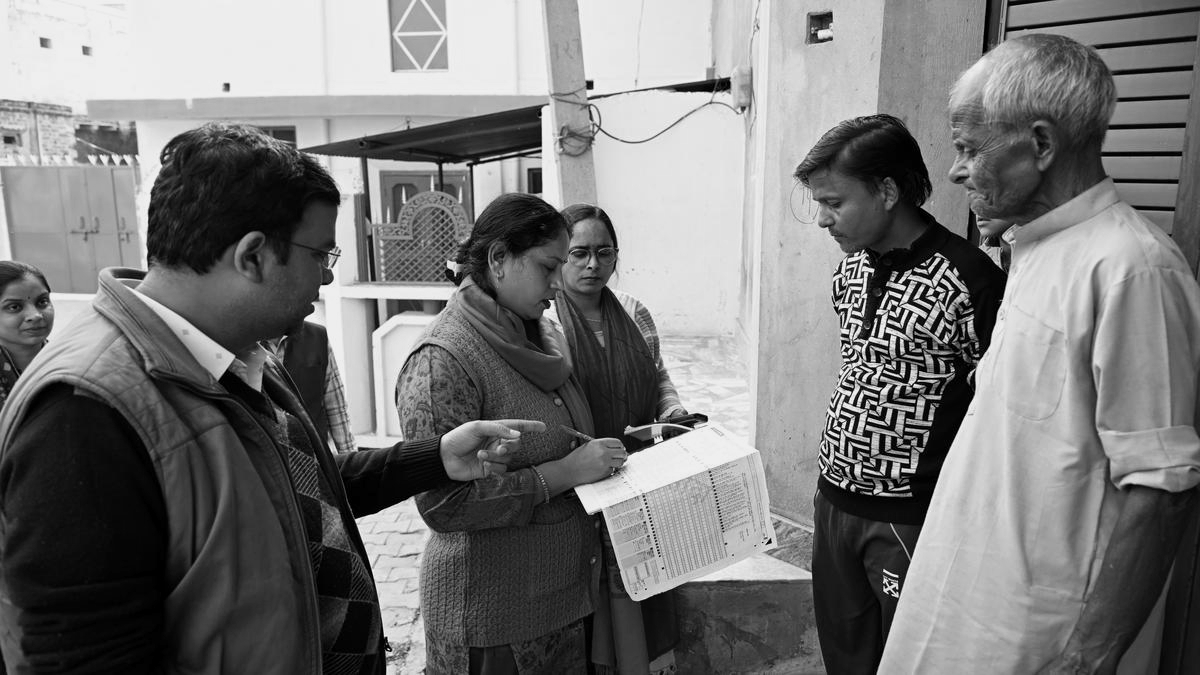
The Registrar General of India (RGI) has instructed all states and Union Territories to complete the appointment of census functionaries by January 15, 2026 , marking the formal start of preparations for Census 2027 , which will be India’s first fully digital, geo-tagged and caste-enumerating population count. The directive was issued through Census Circular No. 5 dated November 26, 2025, following the central government’s notification in the Official Gazette on June 16, 2025 announcing the decision to conduct the next decadal census. Under the Census Rules, 1990, teachers, clerks and other officials of state governments and local bodies are eligible to be appointed as enumerators, while supervisors must be officers senior in rank. This confirms that schoolteachers traditionally the backbone of census fieldwork—will again play a key role, and states such as Telangana have already begun listing government teachers as enumerators for the 2026–27 digital exercise. Each enumerator will handle approximately 700–800 people, with one supervisor appointed for every six enumerators, alongside a 10 per cent reserve workforce to meet unforeseen needs. At senior levels, district collectors and magistrates will act as Principal Census Officers, divisional commissioners will serve as Divisional Census Officers and municipal commissioners will oversee urban enumeration responsibilities.
Census 2027 will be conducted in two phases, as confirmed by the Home Ministry in Parliament. The first phase, the House Listing and Housing Census , will take place over a 30-day period sometime between April and September 2026, depending on each state’s convenience. The second phase, Population Enumeration , will occur in February 2027 with a reference date of 00:00 hours on March 1, 2027. However, Ladakh, the snow-bound areas of Jammu & Kashmir, and the Himalayan states of Himachal Pradesh and Uttarakhand will complete enumeration earlier, in September 2026, using October 1, 2026 as the reference date. The delayed census, originally scheduled for 2021, is finally set to conclude by March 2027 after a six-year postponement caused by the COVID-19 pandemic and logistical disruptions.
For the first time, the entire census will be digital , with enumerators using a mobile app on Android and iOS devices to collect field data. Citizens will also be able to participate through self-enumeration using a dedicated web portal, available in multiple languages including English, Hindi and regional languages. The census will feature geo-tagging of houses and digital mapping, making it India’s first fully geo-referenced population count. A new Census Digital Library has also been created to provide public access to census tables, questionnaires, reports, and methodological documents.
To manage this massive exercise, the RGI has rolled out the Census Management and Monitoring System (CMMS) portal. Through this platform, states and UTs must register all enumerators and supervisors, assign enumeration blocks and supervisory circles, monitor real-time field progress, and manage training schedules. A three-tier training structure is being prepared to equip the nearly 30 lakh functionaries expected to participate across India. Recent government briefings emphasise that freezing administrative boundaries, verifying staff lists especially those of teachers and completing the registration process on the CMMS portal are critical next steps. In parallel, states such as Rajasthan are preparing for a fully digital census with tablets for all enumerators and self-enumeration tools, while Telangana is digitising tens of thousands of enumeration blocks to support the transition.
One of the most significant updates to Census 2027 is the inclusion of caste enumeration , approved by the Cabinet Committee on Political Affairs. This will mark the first nationwide collection of caste-wise data since 1931, with major implications for welfare planning, reservation policies and political representation debates. This major methodological change, combined with digital data collection, self-enumeration and geo-tagging, positions Census 2027 as the most technologically advanced and policy-influential census India has ever undertaken.