
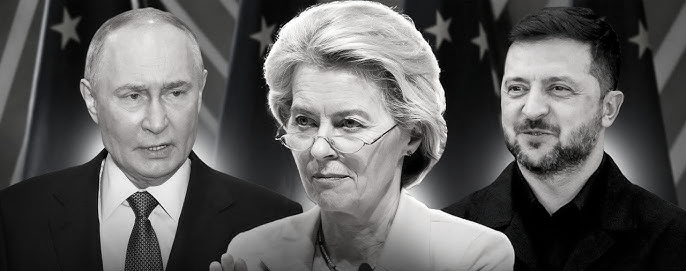
Caution Over Confiscation: EU Grants Ukraine €90 Billion Loan, Leaves Russian Assets Untouched
The European Union on December 19 agreed to extend a €90 billion interest-free loan to Ukraine for 2026–27 , opting for capital-market borrowing rather than the politically and legally contentious seizure of frozen Russian assets , even as the war with Russia continues into its fourth year.
European Council President António Costa announced the decision after marathon talks in Brussels , saying EU leaders had reached consensus on the financial package. “We have a deal. The decision to provide 90 billion euros of support to Ukraine for 2026–27 was approved. We committed, we delivered,” Costa said in a post on social media.
The loan, financed through joint EU borrowing backed by the bloc’s budget , will not be drawn from the EU’s own funds nor from the €210 billion in frozen Russian central bank assets held largely in Belgium . Ukraine is expected to repay the loan only after Russia pays agreed war reparations , with the frozen assets remaining untouched for now but potentially earmarked for repayment at a later stage.
Ukrainian President Volodymyr Zelenskyy welcomed the decision, calling it “ significant support ” for strengthening Ukraine’s resilience. He reiterated Kyiv’s position that frozen Russian assets should eventually be used for Ukraine’s war effort and reconstruction, describing such a move as “ one of the clearest and most morally justified decisions .”
The agreement follows the collapse of a proposed “reparations loan” plan that would have been directly funded by frozen Russian assets. Several EU member states, particularly Belgium , raised concerns over legal exposure and demanded guarantees before allowing the use of those funds. Faced with internal divisions, EU leaders abandoned the proposal and instead opted for borrowing from capital markets.
Former German Chancellor Olaf Scholz said the decision sent a clear message to Moscow. “This war will not be worth it. We will keep Russian assets frozen until Russia has compensated Ukraine,” he said. European Commission President Ursula von der Leyen added that the summit focused on addressing Ukraine’s “pressing financing needs.”
Despite the agreement, divisions within the bloc were evident. Hungary, the Czech Republic and Slovakia were reluctant participants in the joint borrowing mechanism, while Belgium’s objections effectively stalled the asset-backed loan plan. French President Emmanuel Macron described the market-borrowing approach as “ the most realistic and practical way ” forward, and German Chancellor Friedrich Merz said the loan would be sufficient to meet Ukraine’s military and budgetary needs through 2027.
Moscow reacted sharply. Even before the announcement, Russian President Vladimir Putin criticised EU leaders as “subordinate little pigs,” accusing them of blindly following the Biden administration’s policies and warning that relations with Europe would not improve unless current leaders were replaced. Russian state officials have also initiated legal action, with Russia’s central bank filing a lawsuit in Moscow against Euroclear , the Belgium-based institution holding most of the frozen assets.
In addition to the loan package, Zelenskyy said discussions with EU leaders covered future mechanisms for using frozen Russian assets , coordination with the United States , Ukraine’s EU membership prospects , and support for energy infrastructure and reconstruction . He also noted unresolved talks with Washington on a possible settlement, including disputes over the Zaporizhzhya nuclear power plant and Moscow’s demand that Ukraine withdraw from territories it controls in the Donbas region .