
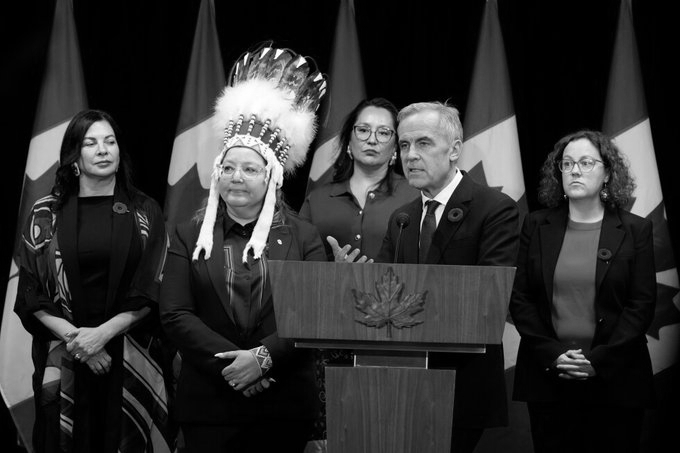
Carney Says Canada Won’t Sign Trump’s August Trade Offer As Talks Continue
Canadian Prime Minister Mark Carney has said Canada will not accept the trade offer presented by US President Donald Trump’s administration in August, insisting that any agreement must protect Canadian interests, sovereignty and key industries. His remarks come as Washington and Ottawa resume discussions amid growing pressure to resolve their trade dispute ahead of the US midterm elections.
Addressing reporters on Monday, Carney said negotiations had intensified slightly, with progress reflecting Washington’s movement towards Canada’s position rather than concessions from Ottawa. He stressed that Canada would evaluate any proposed agreement in its entirety before deciding whether to sign it.
“We had very clear bottom lines, red lines, which meant that we were not willing to sign what was offered in August,” Carney said, adding that Canada remained prepared to sign an agreement that served the interests of all Canadians.
The August negotiations collapsed after the two sides disagreed over tariff relief for medium- and heavy-duty vehicles, including large pickup trucks. Canada wanted these vehicles included in proposed reductions to US automobile tariffs, but Washington rejected the demand. Carney argued that excluding them would disadvantage Canadian manufacturers and undermine the proposed agreement.
Following the breakdown, Trump imposed 50 per cent tariffs on roughly $20 billion worth of Canadian goods, prompting Ottawa to announce retaliatory measures.
The latest developments suggest that negotiations could make progress. A Reuters report on Monday said the two countries were discussing a potential agreement to ease US tariffs on Canadian steel and automobiles, including duties of up to 50 per cent on steel and 25 per cent on cars. However, a deal has not been finalised, and US officials are seeking further concessions.
Trump has said Washington is getting close to an agreement, while White House economic adviser Kevin Hassett has also indicated that the countries could be nearing a deal.
The dispute has become politically significant ahead of the November 3 US midterm elections, with tariffs drawing criticism from some Republican candidates concerned about their impact on businesses and farmers.
Meanwhile, Carney is pursuing trade diversification to reduce Canada's dependence on the United States, including stronger economic partnerships with Europe and other markets.
For Ottawa, the priority remains clear: any deal must meet Canada's conditions rather than simply bring negotiations to an end.