
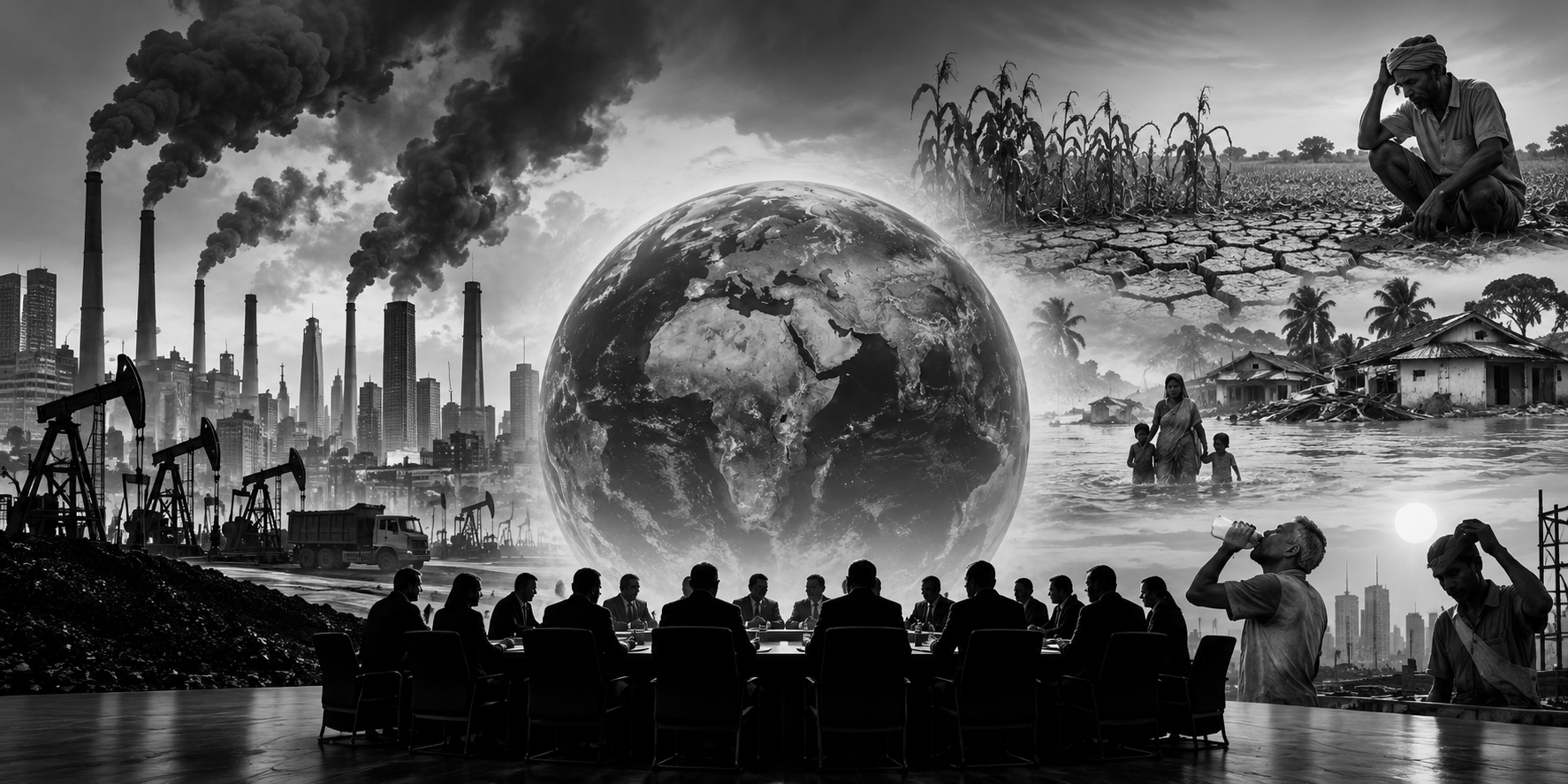
Carbon Debt, Fossil Fuels and the Climate Justice Debate Ahead of COP31
The debate over the future of fossil fuels is set to remain a major issue at COP31, with the recent BRICS New Delhi Declaration highlighting the competing demands of climate action, energy security and economic development. While the bloc backed a “just, orderly, equitable and inclusive” energy transition, it also maintained that fossil fuels would continue to play a role in the energy mix of emerging and developing economies.
With nearly a month to go for the United Nations Climate Change Conference (COP31), the position has brought renewed attention to the concept of “carbon debt” and the broader question of climate justice. The argument is that countries that contributed relatively little to historical greenhouse-gas emissions are now among those facing severe consequences from climate change, including droughts, crop failures, floods, saltwater intrusion and extreme heat.
Pallavi Das, programme lead at the Council on Energy, Environment and Water (CEEW), told PTI Videos that the Industrial Revolution led to extensive use of coal, oil and gas in factories, power plants and industries, allowing developed economies to accumulate a disproportionately large share of historical emissions.
Das said that between 1890 and 2009, the United States emitted about 400 gigatons of CO₂, the European Union around 348 gigatons, and China 220 gigatons, compared with just 53 gigatons from India. By 2019, India's cumulative CO₂ emissions were only around 11 per cent of the US total, she noted.
Sanjay Vashist, Director of the Climate Action Network in South Asia (CANSA), said developed countries had used more than their fair share of atmospheric space by burning fossil fuels while accumulating wealth. He argued that they are now asking developing countries, including BRICS economies, to curb emissions and growth.
The BRICS declaration, however, also calls for emissions reductions and a transition that is “just, orderly, equitable and inclusive.” CEEW's Das said developed economies with relatively stable energy demand may find the transition easier, while developing countries face rapidly rising energy requirements.
Shailly Kedia, Director at TERI, stressed that developing countries do need to transition away from fossil fuels, but warned that carbon debt should not become a justification for unlimited fossil-fuel use.
The issue is further complicated by the shrinking global carbon budget. The latest Global Carbon Budget estimates that humanity had only around 170 billion tonnes of CO₂ remaining from the beginning of 2026 for a 50 per cent chance of limiting warming to 1.5°C - roughly four years of emissions at current levels.
Former Environment Secretary C.K. Mishra said developing countries are carrying a disproportionate burden under the Paris Agreement because promised financial and technological support from developed countries has not materialised sufficiently.
Kedia said Common But Differentiated Responsibilities and Respective Capabilities (CBDR-RC) would remain central at COP31, particularly in discussions on climate finance, adaptation and national circumstances.
COP31, scheduled for November 9-20 in Antalya, Türkiye, will therefore test whether countries can reconcile historical emissions, rising energy demand and the urgent need to reduce global greenhouse-gas emissions while ensuring that the transition remains fair, affordable and inclusive.