
Can't Sleep? Climate Change May Be the Real Reason, New Report Reveals
Climate change is quietly taking a toll on people's sleep, with India emerging as one of the world's biggest hotspots for heat-related sleep loss , according to a new report by Climate Central.
The report found that people across southern India lose between 78 and 91 hours of sleep every year because of increasingly warm nights. Of this, around eight to nine hours annually are directly linked to climate change, making the region one of the worst affected globally.
Among Indian states, Tamil Nadu recorded the highest climate change-driven sleep loss , with residents losing an additional 7.9 hours of sleep per person each year due to rising temperatures.
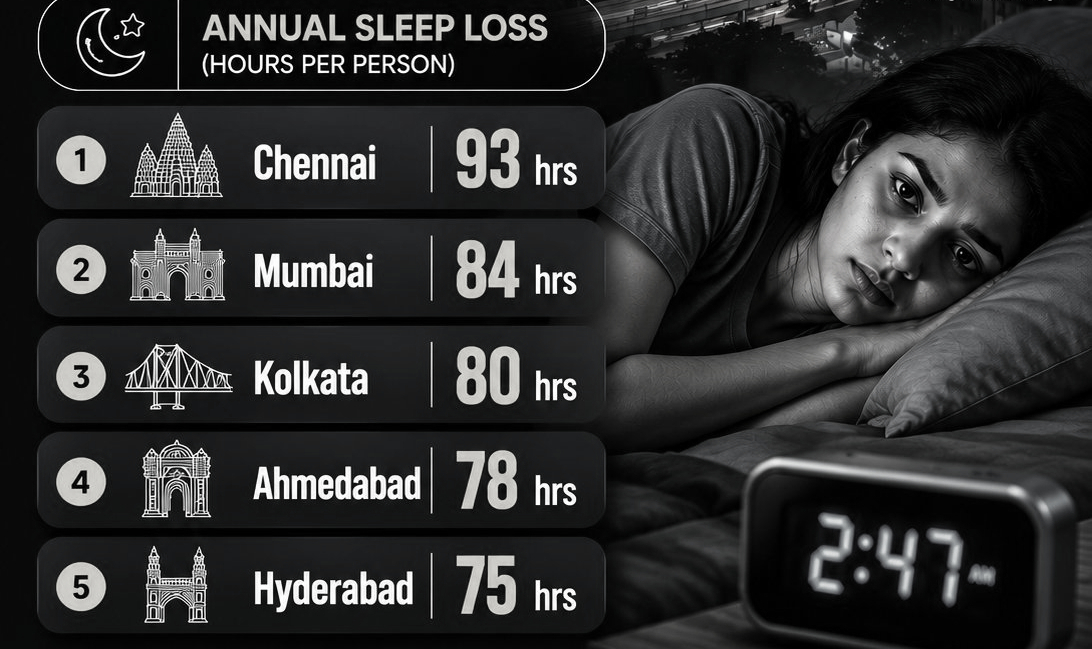
The study analysed 107 Indian cities and found that Chennai recorded the highest overall annual sleep loss at 93 hours , followed by Mumbai with 84 hours and Kolkata with 80 hours . While Bengaluru's total sleep loss was comparatively lower, it showed the strongest climate change impact, with nearly eight hours of sleep lost annually because of human-driven warming.
Across Maharashtra, people lost an average of 76.3 hours of sleep each year , including 5.8 hours linked to climate change . In Uttar Pradesh, residents lost 69 hours annually , with 4.9 hours attributed to climate change .
Globally, the report estimates that the average person lost nearly 56 hours of sleep every year between 2020 and 2025 due to higher night-time temperatures. About six of those hours were directly caused by climate change, accounting for just over 10 per cent of the total heat-related sleep loss.
Researchers also found that climate-related sleep disruption has at least doubled in more than 1,300 major cities worldwide since the early 1970s, highlighting how rising temperatures are increasingly affecting everyday health beyond extreme weather events.
Experts warn that persistent sleep deprivation is linked to serious health risks, including heart disease, high blood pressure, diabetes, weakened immunity, poor mental health, reduced productivity and a higher risk of accidents. Adults generally require seven to nine hours of sleep each night for optimal physical and mental well-being.
The report cautions that as hot nights become more frequent and intense, sleep disruption is likely to become an even bigger public health and economic challenge, particularly in warmer and lower-income regions such as India.