
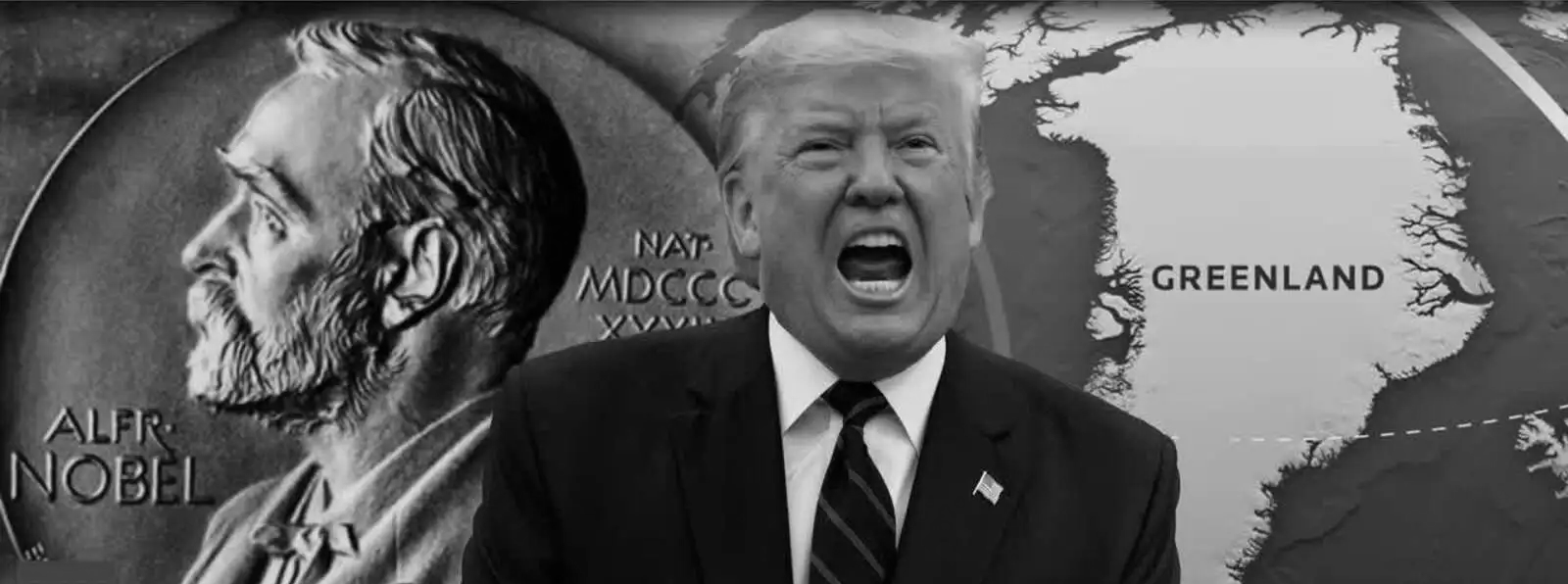
Can threats win a peace prize? Trump’s Norway letter shared with NATO allies over Greenland
US president Donald Trump has sparked renewed international backlash after writing to Norway’s prime minister to complain about not receiving the Nobel Peace Prize, arguing that the snub released him from any duty to “think purely of peace” and allowed him to focus instead on American priorities.
In the letter, which Norwegian Prime Minister Jonas Gahr Støre confirmed receiving, Trump said that “considering your country decided not to give me the Nobel Peace Prize for having stopped 8 wars plus, I no longer feel an obligation to think purely of peace, although it will always be predominant,” adding that he would now concentrate on “what is good and proper for the United States of America.” The remarks reflect a long-standing resentment over the award and an insistence that his foreign policy record merited recognition.
Støre publicly rejected the premise of the complaint, stressing that Norway’s government has no authority over the prize . “I have clearly explained, including to President Trump, what is well known: the Nobel Peace Prize is awarded by an independent Nobel Committee, and not the Norwegian government,” he said, making clear that Oslo cannot grant, deny or influence the honour.
Analysts note that it is highly unlikely Trump was unaware of how the Nobel Peace Prize works. US presidents receive extensive briefings and are supported by layers of advisers, including the State Department, national security officials and legal experts, whose role is precisely to prevent such basic diplomatic missteps . This has fuelled speculation that advice was either ignored or overridden, reinforcing a long standing perception that Trump often relies on instinct, grievance and leverage rather than institutional process.
The episode escalated further after Trump tied his grievance to broader strategic assertions, including Greenland , writing that “the world is not secure unless we have complete and total control of Greenland.” The language alarmed European governments, particularly after reports that the message circulated among NATO capitals , raising concerns about alliance cohesion, sovereignty and the use of economic or security pressure to advance personal or political demands.
Diplomats and analysts argue that attempting to link peace, recognition and coercive leverage exposes a fundamental contradiction. Threatening tariffs, hinting at aid cuts or invoking force may be tools of power politics, but they run counter to the restraint and reconciliation the Nobel Peace Prize is designed to acknowledge. The controversy deepened after Trump accepted a Nobel-linked honour associated with Venezuelan opposition leader María Corina Machado , despite the committee stating that such awards are personal and cannot be transferred, a move critics say underscores selective respect for institutional rules.