
Can Campus Design Prevent Suicides? Lessons from Universities Abroad
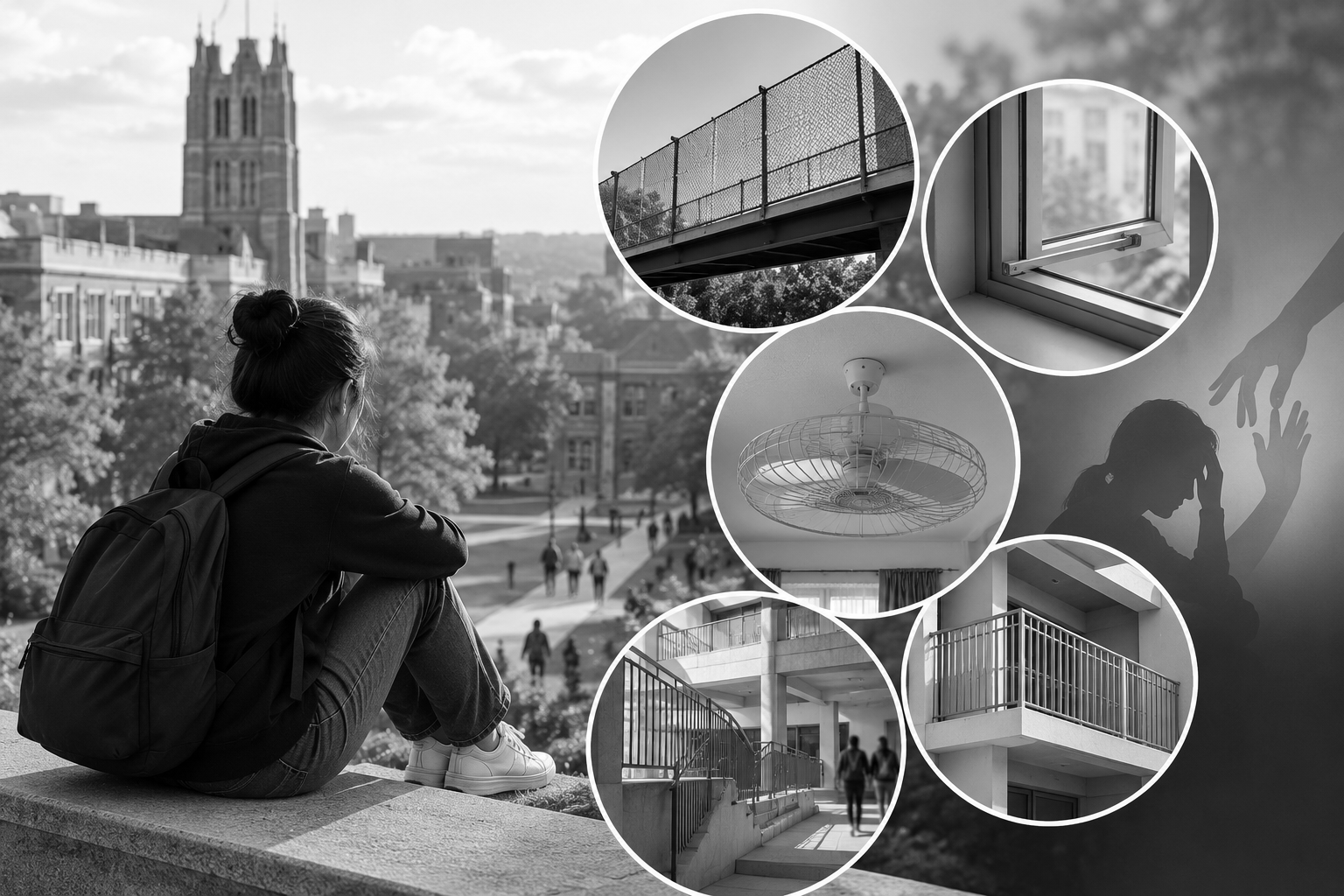
Foreign universities have previously adopted physical changes to campus infrastructure as part of efforts to prevent student suicides, amid a debate in India over removing or modifying ceiling fans in hostels following recent deaths. The University of Houston introduced security fencing and temporary barriers around upper-level balconies, stairwells and sky bridges in 2023 after two students died by suicide. The measures were part of a three-phase renovation of Agnes Arnold Hall, along with initiatives aimed at supporting students' mental and academic well-being.
At Cornell University, a cluster of suicides during the 2009-10 academic year, including three involving students jumping from or near East Hill bridges, prompted the installation of steel-mesh nets on bridges spanning campus gorges. The university later put permanent barriers on eight bridges and fencing around some cliff-edge areas.
Cornell identified restricting access to means as a gap in its suicide-prevention strategy and adopted physical barriers as part of a broader approach. It also tightened access to chemicals, weapons and equipment that could potentially be used for suicide. Harvard University's Means Matter guidelines recommend restricting access to lethal means as one component of a comprehensive campus suicide-prevention strategy. They advise institutions to examine suicide data and assess access to rooftops, balconies, windows, bridges and potentially toxic laboratory substances.
University College London and Brunel University of London have policies requiring window-opening restrictors in student residences. Oxford's Wadham College restricts interference with window restrictors and prohibits access to roofs, parapets and canopies, while balconies have guard rails.
The issue has gained renewed attention in India after an IIT Bombay student died by suicide on September 18, reportedly hanging from a ceiling fan in a hostel room. An IIT Delhi student's death in August had also triggered protests. IIT Bombay and BIT Mesra are considering removing ceiling fans from hostel rooms, echoing measures adopted in Kota after a spate of student suicides.
Psychiatrist Vaishali Shanmugam said restricting access to lethal means is an evidence-based strategy but must not replace meaningful mental-health support. She cautioned that excessive focus on infrastructure could divert attention from academic and social stress, institutional culture, early identification and accessible mental-health care.