
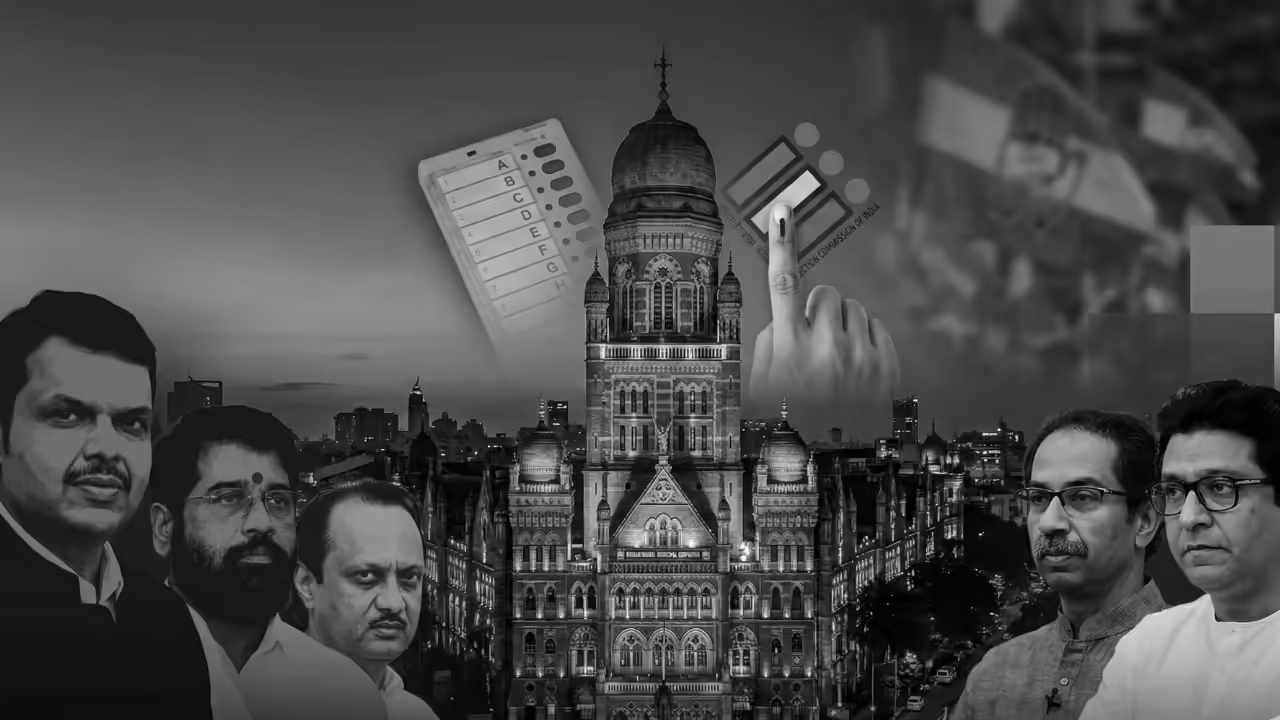
Campaign Ends for Maharashtra’s Long-Pending Civic Elections, Opposition Under Pressure
Campaigning for Maharashtra’s long-overdue civic elections formally ended on Tuesday evening, drawing the curtain on a bruising, often heated campaign ahead of polling on January 15 . The elections, the first major urban political test in the state in years, will decide control of 29 municipal corporations , including the cash-rich Brihanmumbai Municipal Corporation (BMC) and seven other corporations in the Mumbai Metropolitan Region (MMR) .
The polls come after an unusually prolonged delay, with most major civic bodies having been under administrator rule for several years . Municipal terms expired between 2020 and 2022, but elections were repeatedly postponed amid disputes over ward delimitation , OBC reservation norms , and prolonged litigation. The impasse finally ended after the state completed the mandated empirical data exercise on reservations and courts made it clear that administrator rule could not be extended indefinitely .
Fragmented alliances, local battles
Unlike Assembly elections, civic contests in Maharashtra rarely follow a single alliance template and this election has underscored that trend. While the ruling Mahayuti , led by the Bharatiya Janata Party along with the Shiv Sena (Shinde faction) and the Nationalist Congress Party (Ajit Pawar faction) , remains intact at the state level, seat-sharing arrangements vary sharply across cities , with several “friendly fights” among allies.
In Mumbai, the contest has acquired outsized political significance. Uddhav Thackeray ’s Shiv Sena (UBT) has joined hands with Maharashtra Navnirman Sena (MNS) led by Raj Thackeray , ending a long period of rivalry between the Thackeray cousins. For both leaders, the BMC election is widely seen as a face-saving battle , crucial to retaining political relevance in the state’s most visible urban arena.
Elsewhere, equations are equally fluid. In Pune and Pimpri-Chinchwad, the two NCP factions have cooperated tactically, even as they remain on opposite sides of the state government. Across several corporations, local arithmetic has overridden statewide loyalties , producing a patchwork of alliances and rivalries.
High stakes, heightened tensions
The scale of the elections underlines their importance. The 29 corporations include major urban centres such as Mumbai, Pune, Pimpri-Chinchwad, Nagpur, Nashik, Thane and Navi Mumbai, controlling thousands of crores in civic budgets and shaping urban governance across Maharashtra. Of these, eight corporations lie within the MMR , making the Mumbai region the single most decisive political battleground.
The campaign’s closing days were marked by heightened tensions. Enforcement agencies reported large seizures of liquor, drugs and weapons in districts such as Nanded, reflecting official concerns over inducements and voter intimidation. In Mumbai, sharp exchanges over “bogus voters” and the announcement of party squads to monitor polling prompted authorities to roll out heavy security arrangements , including the deployment of over 25,000 police personnel .
Another flashpoint emerged with more than 60 candidates of the ruling coalition being elected unopposed across multiple corporations. The issue drew scrutiny after the State Election Commission sought reports on whether withdrawals were voluntary, amid opposition allegations of pressure and inducements claims the ruling alliance has denied.
With campaigning now over and the 48-hour silence period in force, attention turns to polling day. After years of delay and months of political sparring, Maharashtra’s urban voters will finally have their say on January 15. The results on January 16 will indicate not just who controls the civic bodies, but whether a fragmented opposition can put up a credible show against a confident ruling alliance in the state’s most influential cities.