
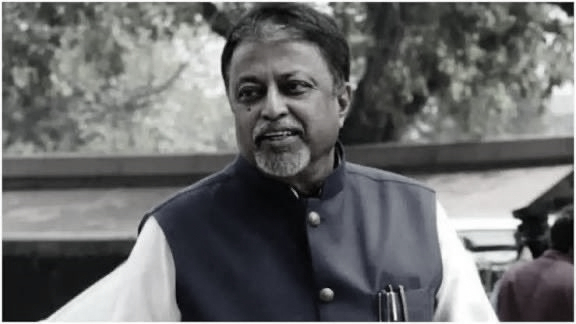
Calcutta High Court disqualifies Mukul Roy as MLA Under Anti-Defection Law
The Calcutta High Court on Thursday cancelled the West Bengal Assembly membership of senior leader Mukul Roy, ruling that he had violated the anti-defection provisions laid out in Schedule 10 of the Indian Constitution.
The verdict marks the first instance in Indian judicial history where a High Court has directly exercised its constitutional authority to disqualify an elected legislator under the anti-defection law, a power that usually lies with the Speaker of the House.
Mukul Roy was elected to the West Bengal Legislative Assembly from the Krishnanagar Uttar constituency in May 2021 on a Bharatiya Janata Party (BJP) ticket. However, a month later, in June 2021, he joined the ruling Trinamool Congress (TMC) in the presence of Chief Minister Mamata Banerjee and TMC national general secretary Abhishek Banerjee, while continuing to hold his position as a BJP-elected MLA.
The court found this to be a clear violation of Schedule 10, which prohibits legislators from defecting to another political party after being elected. Schedule 10, commonly known as the Anti-Defection Law, was added to the Constitution through the 52nd Amendment Act of 1985. It aims to prevent political instability caused by elected representatives switching parties for personal or political gain.
Under this law, a legislator can be disqualified if they voluntarily give up membership of their original party or vote against its directions without permission. The authority to decide such cases usually rests with the Speaker of the Legislative Assembly, but the High Court intervened in Roy’s case after a prolonged delay in action from the Speaker’s office.
In its ruling, the Calcutta High Court stated that Mukul Roy’s act of joining the TMC while holding a BJP seat constituted “a direct breach of constitutional loyalty and party mandate,” warranting his immediate disqualification.
Legal experts have called the judgment a milestone in India’s democratic jurisprudence, emphasizing that it reinforces accountability and discipline among elected representatives.