
Cabinet approves ₹7,280 Cr scheme to promote domestic Rare Earth Magnet Production
The Union Cabinet, chaired by Prime Minister Shri Narendra Modi, has approved a landmark ‘Scheme to Promote Manufacturing of Sintered Rare Earth Permanent Magnets (REPM)’ with a total financial outlay of Rs 7,280 crore. This first-of-its-kind initiative aims to establish 6,000 Metric Tons per Annum (MTPA) of integrated REPM manufacturing in India, enhancing self-reliance and positioning the country as a significant player in the global REPM market.
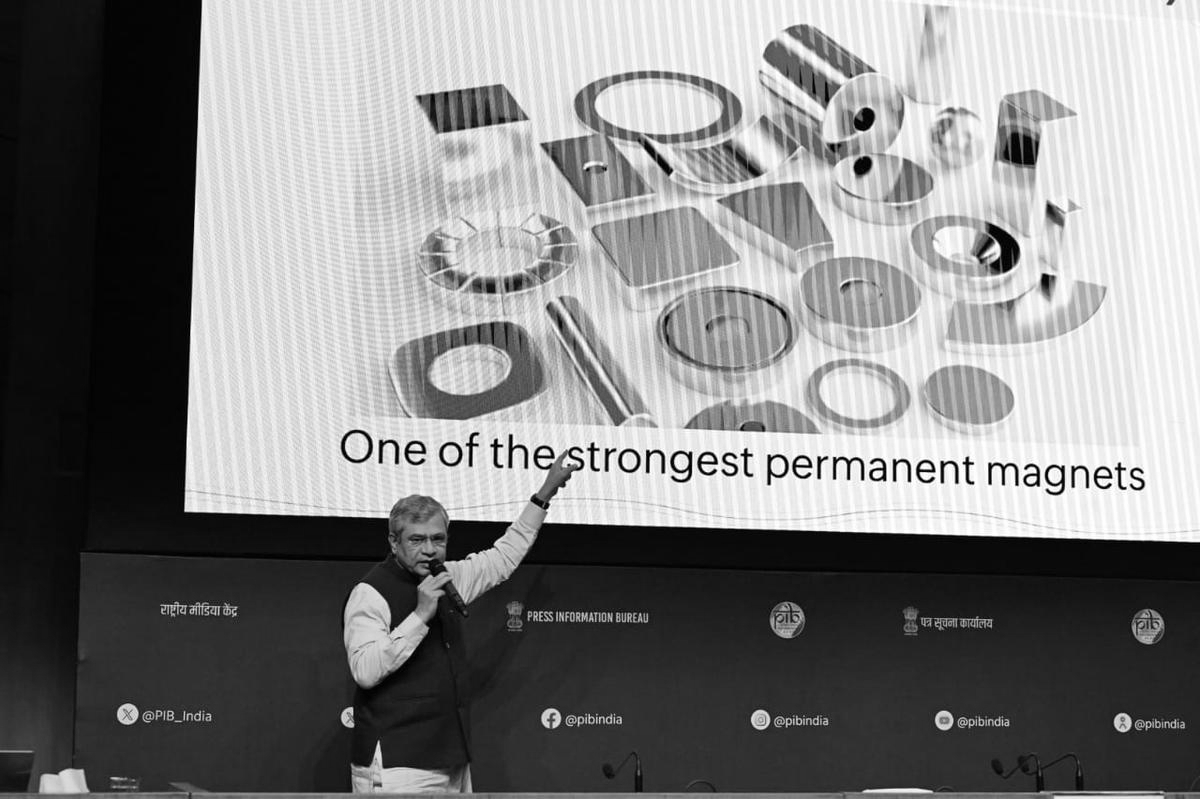
Rare Earth Permanent Magnets are among the strongest types of permanent magnets, playing a crucial role in sectors such as electric vehicles, renewable energy, electronics, aerospace, and defence. At present, India relies heavily on imports to meet its REPM demand. With domestic consumption expected to double by 2030, the scheme seeks to build India’s first integrated REPM manufacturing facilities, spanning the full value chain from rare earth oxides to metals, metals to alloys, and alloys to finished magnets.
The total financial outlay of Rs 7,280 crore includes Rs 6,450 crore in sales-linked incentives over five years, and Rs 750 crore as capital subsidy for setting up the facilities. The scheme will allocate the 6,000 MTPA capacity to five beneficiaries, selected through a global competitive bidding process, with each beneficiary allotted up to 1,200 MTPA. The overall duration of the scheme is seven years, comprising a two-year gestation period for setting up the manufacturing units and a five-year incentive disbursement period on REPM sales.
This initiative is expected to strengthen domestic supply chains for the automotive, aerospace, and defence sectors, while also supporting the Atmanirbhar Bharat Abhiyan and India’s Net Zero 2070 commitment. By promoting indigenous production, the scheme will generate employment, enhance technological self-reliance, and boost India’s competitiveness in global REPM markets.
Government officials highlighted that this scheme represents a significant step towards creating a sustainable and globally competitive industrial ecosystem. It aligns with the vision of Viksit Bharat @2047, ensuring India’s strategic autonomy in critical materials while fostering innovation in high-technology sectors.
With this approval, India takes a major leap in building a robust REPM ecosystem, reducing dependence on imports, and securing supply chains vital for emerging industries, defence applications, and the green energy transition.