
Cabinet Approves ₹2,584 Crore Push for Small Hydro Power, Targets 1,500 MW Expansion
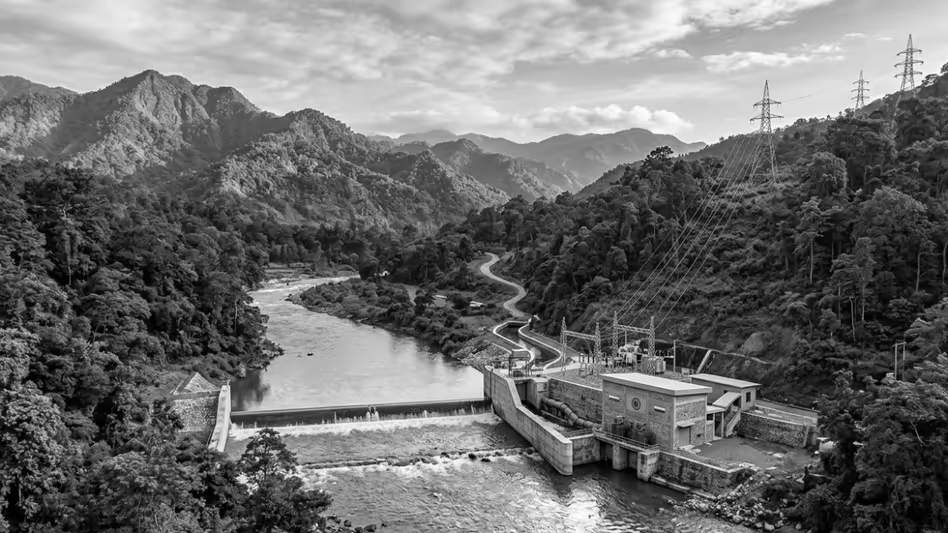
In a significant step towards strengthening India’s clean energy base, the Union Cabinet has approved a ₹2,584.60 crore Small Hydro Power Development Scheme aimed at adding around 1,500 MW of new capacity across the country over the next five years.
The scheme, which will run from financial year 2026 to 2031 , is designed to tap into India’s vast untapped small hydro potential, especially in hilly regions and the North Eastern states, where natural water resources offer strong scope for decentralised power generation.
Small hydro power is considered a key renewable energy source as it delivers reliable, round the clock electricity , unlike solar and wind which depend on weather conditions. It also has a relatively low environmental footprint, making it a stable component of India’s clean energy transition.
At present, India has an installed small hydro capacity of around 5,171 MW , while the total estimated potential stands at 21,133 MW across more than 7,000 identified sites . This means only about one fourth of the potential has been harnessed so far , leaving a large untapped opportunity for future expansion.
Recognising this gap, the government has been steadily promoting the sector through policy support under the Ministry of New and Renewable Energy (MNRE) . Small hydro projects of up to 25 MW capacity are classified as renewable energy projects and are considered especially suitable for remote, hilly, and river rich regions.
The newly approved scheme aims to accelerate this development by supporting project execution, improving financial viability, and strengthening the pipeline of new projects. It also focuses on reducing regional imbalance in energy access by promoting decentralised power generation.
A major emphasis of the scheme is improving electricity access in remote, border, tribal, and hilly regions , while also reducing dependence on long transmission networks. These projects are expected to enhance grid stability and bring power closer to consumption centres.
The government also expects the initiative to generate around 51 lakh person days of employment during construction, along with long term jobs in operation and maintenance.
To encourage participation, the scheme provides structured financial assistance, including higher support for North Eastern and border districts , and additional incentives for other regions. It is also expected to attract nearly ₹15,000 crore in investments into the sector.
Alongside capacity addition, the scheme supports preparation of Detailed Project Reports for around 200 projects , ensuring a strong future pipeline. It also promotes domestic manufacturing of equipment in line with the vision of Atmanirbhar Bharat .
Small hydro power is also important from a sustainability perspective as it requires minimal land, avoids large scale displacement, and helps reduce transmission losses by generating electricity locally.
Regionally, India’s small hydro potential is widely distributed. The Northern and North Eastern regions hold the largest untapped resources due to mountainous terrain, while the Southern and Western regions have higher utilisation levels due to better infrastructure. The Eastern region also offers scope for rural and tribal electrification through small scale projects.
With this new scheme, the government is effectively pushing the sector toward faster expansion, though the long term goal is much larger. India’s broader renewable energy roadmap aims for a 500 GW non fossil fuel capacity by 2030 , and small hydro is expected to play a supporting role in this clean energy mix.
As India continues its transition towards a more sustainable energy system, small hydro power is emerging as a steady and reliable contributor that blends energy security, rural development, and environmental sustainability into one integrated pathway.