
Bye-Bye Didi! BJP’s 207-Seat Tsunami Washes Away 15 Years of Trinamool, The Day Bengal Chose to Rewrite History
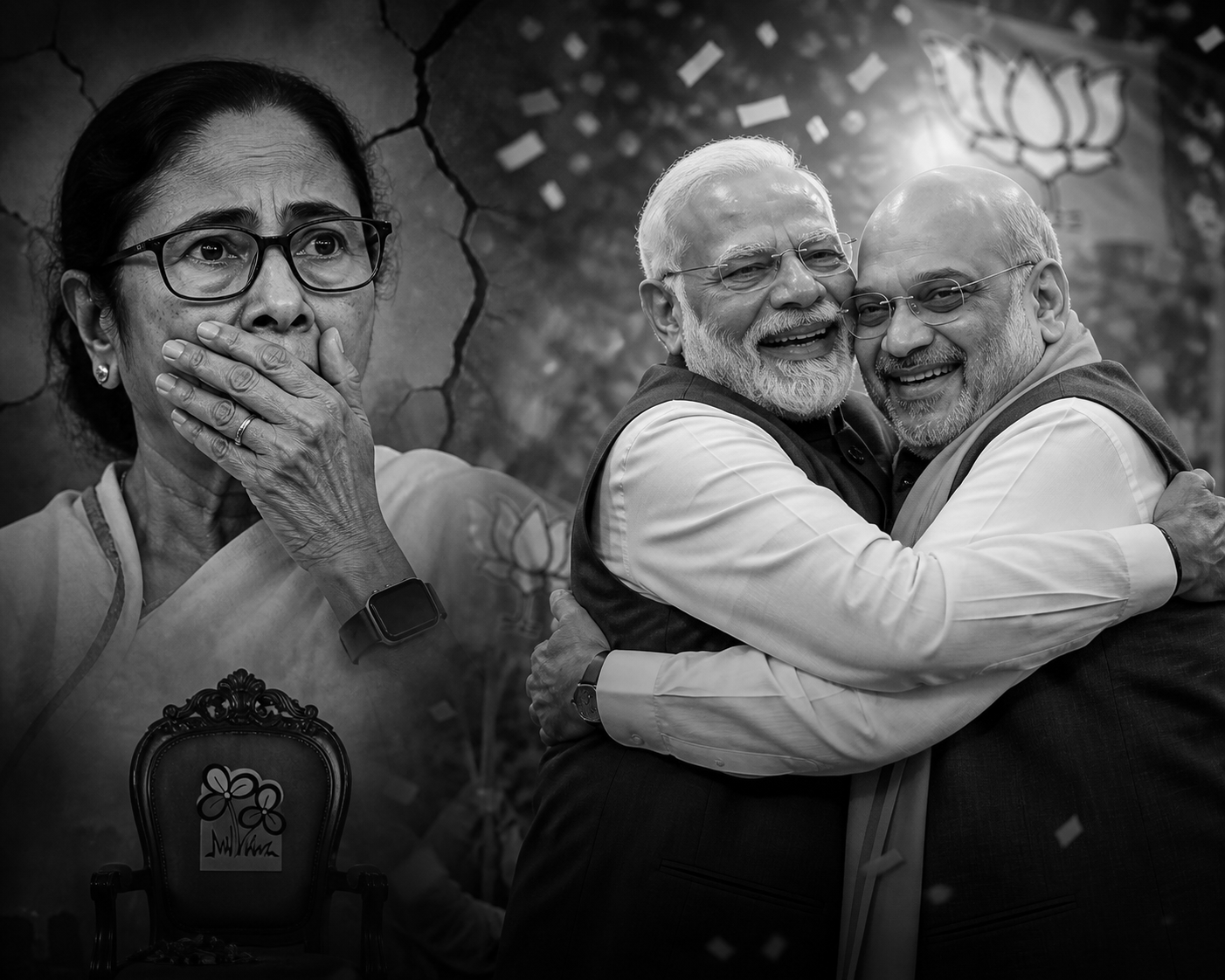
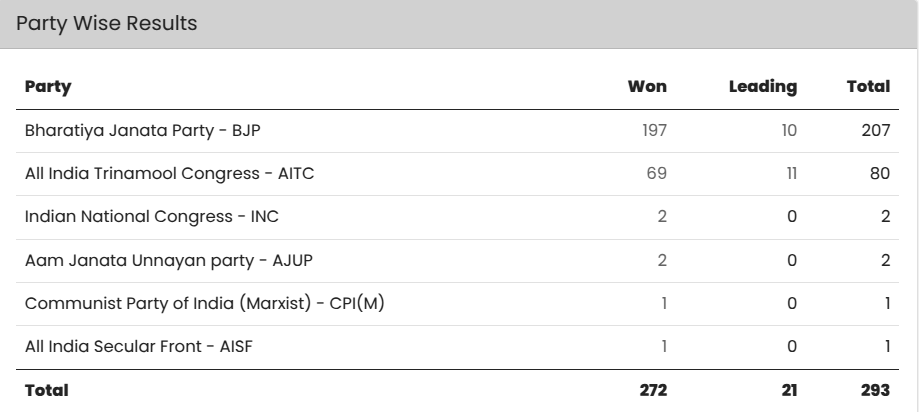
May 4, 2026 will be remembered not just as an election result day, but as the morning West Bengal woke up and chose a completely different story. After fifteen unbroken years of Trinamool Congress dominance, the people of this complex, passionate, and politically combustible state delivered a verdict of historic proportions. The final tally, as per the Election Commission of India , reads: BJP 207 , AITC 80 , INC 2 , AJUP 2 , CPI(M) 1 , and AISF 1 , out of 294 assembly seats, with 184 already formally declared wins for the BJP and 23 more where it held a commanding lead at the close of counting. In a state where the BJP's previous best was 77 seats just five years ago, winning 207 is not a mandate, it is a demolition.
The tremors had been building for years. The campaign was shaped by disputes over electoral rolls, border security, undocumented migration, women's safety, employment, and deep anti-incumbency after 15 years of TMC rule. The pre-poll atmosphere was explosive. Complaints emerged of EVM buttons of opposition candidates being obstructed with tapes and bubble gum, and of housing complexes being locked down by mobs linked to the ruling party in earlier elections. The Election Commission , recognising the gravity of the situation, deployed police officers from other states, including an encounter specialist from Uttar Pradesh, specifically for phase two security management.
The biggest pre-election controversy was the Special Intensive Revision of electoral rolls. Nearly 91 lakh names were deleted from West Bengal's voter list, sharply polarising political discourse. Roughly 65% of those in the undecided deletion category were Muslims, while Dalit Hindus, especially from the Matua community , were also affected in certain districts. The TMC called it a conspiracy to disenfranchise minorities; the BJP called it a necessary clean-up of bogus and illegal entries. Courts intervened, protests erupted, and yet the election recorded a historic voter turnout of 92.93% , the highest ever in the state, surpassing even 2011 when 34 years of Left Front rule fell. Bengal was angry, and it was going to vote.
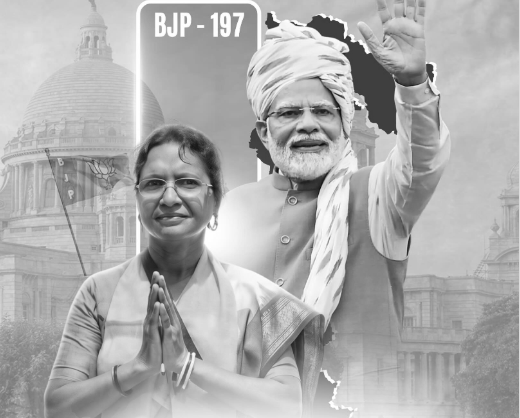
Yet nothing captured the soul of this election more powerfully than what unfolded in Panihati , North 24 Parganas. Ratna Debnath , 54, the mother of the postgraduate trainee doctor whose rape and murder at RG Kar Medical College in 2024 ignited a national movement, stepped into active politics on a BJP ticket, challenging the TMC in a constituency it had held since 2011 under the Ghosh family for five consecutive terms. She directed sharp public criticism at Chief Minister Mamata Banerjee , who also holds the Health Minister portfolio, questioning why the CM failed to protect her daughter, and declared a personal vow not to comb her hair until justice was achieved. Her determination paid off resoundingly: Ratna Debnath won Panihati with a commanding margin of over 20,000 votes against TMC's Tirthankar Ghosh. A mother’s grief had become Bengal’s verdict.
Then came Bhabanipur , Mamata Banerjee’s own stronghold, the seat she had nursed and won twice. Suvendu Adhikari , the BJP’s most formidable face in Bengal, defeated the Chief Minister on her home turf. The same man who had beaten her in Nandigram in 2021 had done it again. ECI round-wise data from Bhabanipur confirms Adhikari pulling ahead from Round 7 onwards and sustaining a growing lead through Round 13, with Mamata trailing by a widening margin as counting closed. It was a personal and political catastrophe for the woman who had defined Bengal politics for a generation.
Corruption and governance failures were dominant opposition themes throughout, especially the school recruitment scam and ongoing central agency investigations, which formed a sustained line of attack on the TMC’s institutional credibility. A restless younger electorate, fed up with stalled jobs, delayed recruitment exams, and fifteen years of the same face at the top, had been pushed past its breaking point. Post-results, clashes erupted between BJP and TMC workers in Bankura, a sobering reminder that Bengal’s political violence does not pause even for verdicts. One seat, Falta, saw re-polling ordered by the ECI due to severe electoral offences during voting, with results for that constituency to be declared on May 24, keeping the final tally at 293 declared seats for now.
Analysts described the West Bengal outcome as by far the most consequential of all results declared on May 4, a day that also brought verdicts in Tamil Nadu , Kerala, Assam, and Puducherry. Tamil Nadu too stood out, with strong anti-incumbency shaping the mandate as the TVK secured its highest-ever majority , signalling a sharp political shift in the state. Across regions, voters had clearly signaled fatigue with entrenched power structures. But it is Bengal that will redefine Indian politics. The BJP has won a state its founders dreamed of but never captured. And at the heart of it all, beneath the data, the deals, and the dynasties, was a mother from Panihati who refused to let her daughter's death mean nothing. She stood, she fought, she won. And on May 4, 2026 , so did an idea of accountability that had echoed across multiple states — from Bengal to Tamil Nadu, where anti-incumbency and political reset defined the verdict of a nation in transition.