
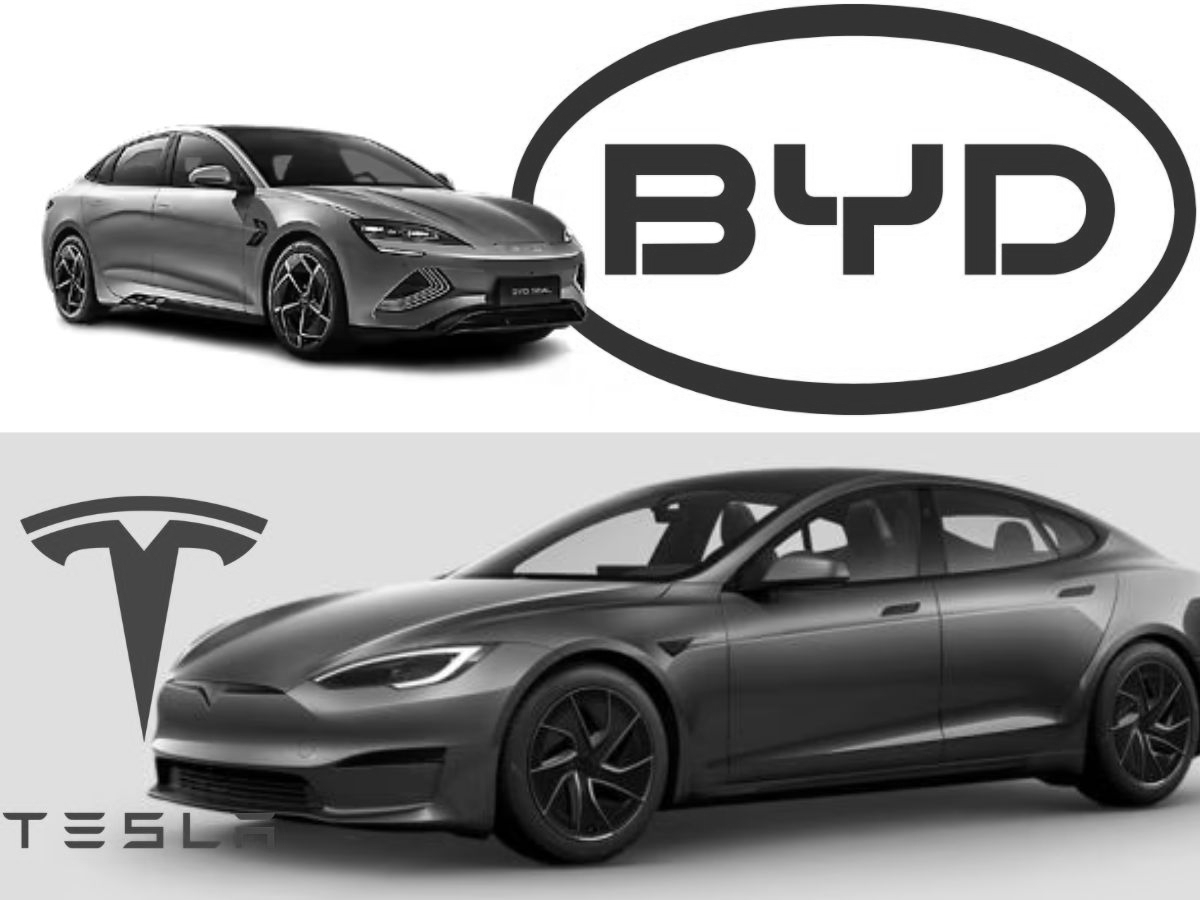
BYD becomes world’s largest EV seller in 2025, overtaking Tesla
BYD (Build Your Dreams) , the Chinese automaker known for its electric vehicles and batteries, has overtaken Tesla to become the world’s largest electric vehicle (EV) seller in 2025, marking a major shift in the global EV market, according to a Global Times report. Founded in 1995, BYD started as a battery manufacturer and has grown into one of the world’s leading EV producers with a wide range of electric cars, buses, and commercial vehicles.
BYD delivered a total of 4.6 million vehicles in 2025, up 7.7 percent from 2024, with 2.25 million EVs sold, a 28 percent increase over the previous year. Tesla, which has long dominated the EV sector, saw its annual deliveries drop to 1.63 million units , down 8.6 percent from 2024, while production fell to 1.73 million units , a decline of 6.7 percent.
Globally, the top EV sellers in 2025 include BYD, followed by Geely (~1.3 million units), Tesla (~985,000 units), and Volkswagen (~854,000 units). BYD’s rise reflects not just higher sales but also the growing strength of Chinese EV manufacturers in production, technology, and supply chains.
Several factors explain BYD’s surge. The company benefits from a strong domestic market, as China is the world’s largest EV market . BYD’s affordable and mid-range models appeal to a wide audience, and government incentives, along with expanding charging infrastructure, have further boosted sales. Its integrated supply chain, including in-house battery production, allows faster and more reliable manufacturing compared to Tesla.
BYD’s broad product portfolio, ranging from compact cars to SUVs and luxury models, also helps capture more customer segments. In addition, exports are growing rapidly, with around 800,000 to 1 million vehicles sold overseas in 2025 to Europe, Southeast Asia, Latin America, and the Middle East, making up roughly 20 percent of total sales, up from less than 10 percent in 2024.
Tesla, meanwhile, faces multiple challenges in regaining the top spot. Production and supply chain constraints slowed deliveries in 2025, while increasing competition from Chinese manufacturers such as BYD, NIO, and Geely, as well as traditional automakers like Volkswagen and Hyundai, is eroding Tesla’s market share. Its premium pricing limits appeal in cost-sensitive markets, and reliance on its Shanghai gigafactory exposes the company to geopolitical and regulatory risks.
Analysts predict that while Tesla remains a global leader in EV innovation, Chinese EV makers like BYD are likely to continue expanding their dominance, supported by integrated supply chains, strong domestic demand, and increasing global exports.
The 2025 results highlight a clear shift in the EV landscape, with China consolidating its position as the world leader in electric mobility and Tesla facing growing pressure to adapt, expand production, and compete in both domestic and international markets.