
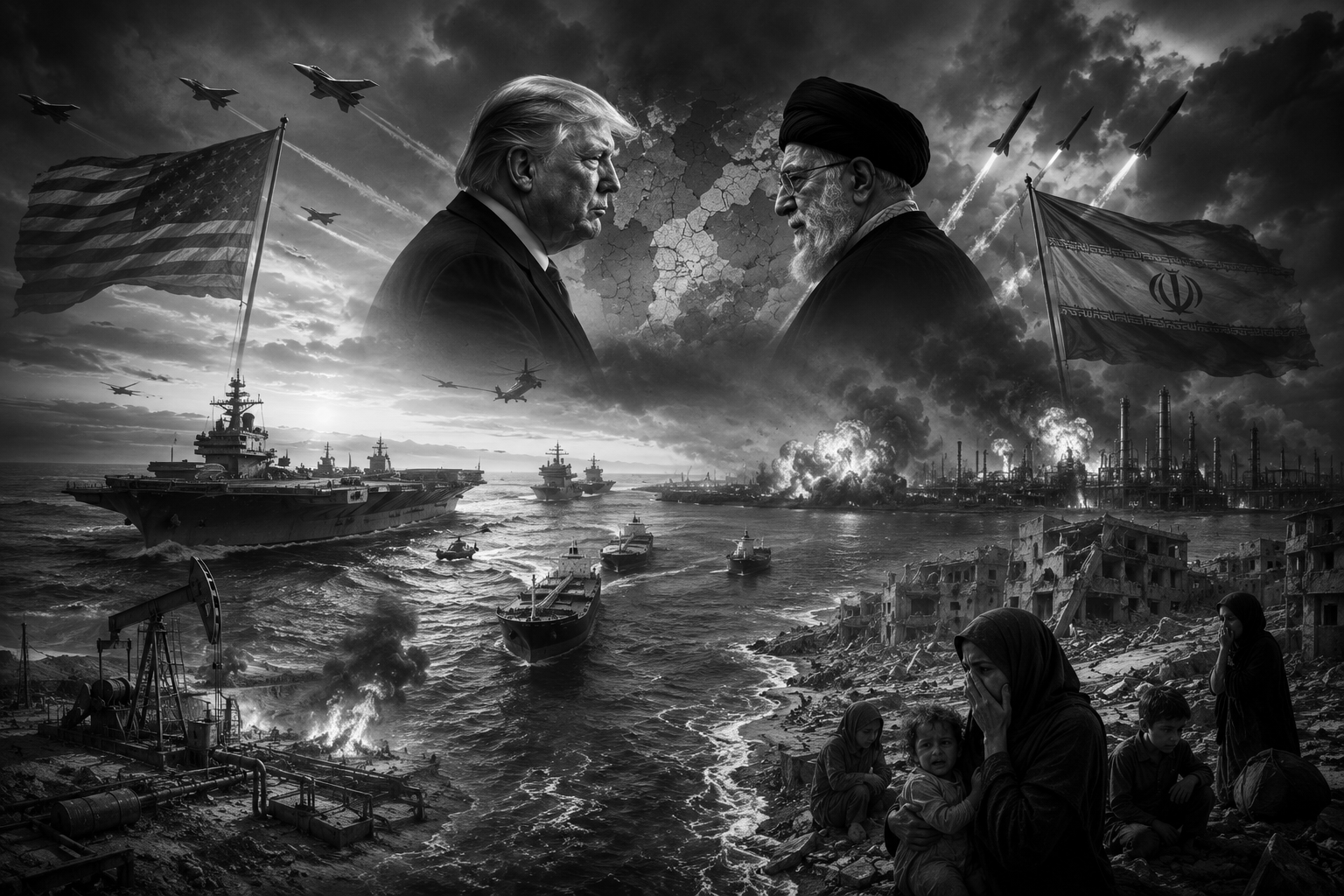
By Day They Negotiate, By Night They Fire Missiles: Welcome to the Iran Ceasefire!
The April ceasefire meant to pause the Iran war is fraying faster than diplomats can mend it. Kuwait's Foreign Ministry on Thursday condemned Iran for what it called "blatant aggression" after the country's air defence systems intercepted ballistic missiles and drones launched by Iran overnight. U.S. Central Command confirmed the attack, labelling it an " egregious ceasefire violation " and vowing to defend allied partners. Iran, for its part, framed the attack as retaliation, insisting it fired on a U.S. base in a Gulf state after American forces struck Iranian positions earlier in the week.
That earlier American action was itself a response to Iranian provocation. U.S. forces intercepted four Iranian one-way attack drones near the Strait of Hormuz and struck a drone control station in Bandar Abbas that was moments away from launching a fifth. Washington called it self-defence . Tehran called it a ceasefire breach . Both are right, in a sense, which is precisely what makes this conflict so dangerous.
President Trump , meanwhile, made his negotiating position unmistakably clear. Speaking at a Cabinet meeting, he declared Iran was " negotiating on fumes ," accusing Tehran of using delay tactics to outwait him, while insisting that midterm elections would not pressure him into a hasty deal. On the nuclear question, the hardest of all hard issues, Trump was equally unambiguous, flatly ruling out sanctions relief in exchange for Iran surrendering its highly enriched uranium stockpile . Iran's parliament security chief fired back, publicly reaffirming that Tehran's right to enrich uranium , maintain stocks, and exercise authority over the Strait of Hormuz are all absolute red lines.
Washington moved simultaneously on the economic front. The Trump administration imposed fresh sanctions on Iran's newly created agency controlling shipping through the Strait of Hormuz, warning that any entity paying Tehran's new transit fees risked exposure to sanctions for effectively bankrolling the Revolutionary Guards . Treasury Secretary Scott Bessent said Washington had already disrupted tens of billions of dollars of revenue from reaching the regime.
The ripple effects are global and worsening. World shares fell Thursday as oil prices climbed more than two dollars a barrel following the latest strikes, with Britain's FTSE 100 slumping 0.9% and Paris's CAC 40 losing 0.4%. Iran's own population has endured months of near-total digital isolation, though authorities this week approved the partial restoration of internet access following an 87-day blackout, albeit with heavy restrictions still in place.
The war's shadow falls far beyond the Gulf. Trump's International Stabilisation Force for Gaza , announced in February as a 20,000-strong peacekeeping body, remains an empty promise three months on, with none of the five countries that pledged troops having delivered any meaningful contribution. The Iran war has made it politically toxic for Arab and Muslim leaders to openly cooperate with Washington and Israel, while the global energy crisis it triggered has drained those nations' resources. Indonesia, which made the largest pledge, has suspended its commitment entirely, citing a distracted Washington and a domestic public furious over soaring fuel prices.
The UN Food and Agriculture Organisation has separately warned that disruptions to Hormuz are already straining global fertiliser supplies, raising the spectre of a food security crisis stretching into 2027 if the waterway is not fully reopened. With talks deadlocked, missiles still flying, and every allied partner in the region buckling under the weight of a war with no end in sight, the ceasefire exists largely in name al