
Build Consensus Before Delimitation: CM Revanth Urges PM, Suggests Hybrid Seat Formula
A fresh political flashpoint is emerging over India’s impending Lok Sabha delimitation , with Telangana Chief Minister Revanth Reddy stepping in with a sharp warning and an alternative roadmap aimed at preserving the country’s federal balance .
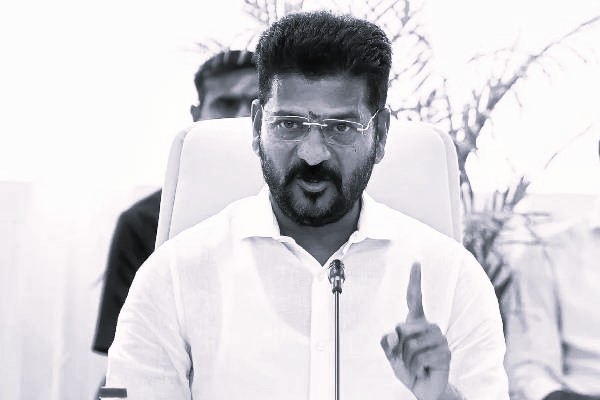
At a high-profile media interaction in the Secretariat, joined by Deputy Chief Minister Bhatti Vikramarka and cabinet colleagues, Reddy cautioned that any population-only seat redistribution could unintentionally redraw India’s political power map tilting it heavily in favour of a few populous states while weakening others that have played a major role in economic growth.
The Chief Minister’s intervention comes at a time when the Union government is preparing for a major electoral restructuring exercise after 2026 , alongside the implementation of 33% women’s reservation in legislatures. While welcoming the move to enhance women’s representation, Reddy drew a clear line arguing that women’s quota and delimitation are separate reforms and should not be bundled together.
According to him, linking these two could delay meaningful representation for women while simultaneously pushing through a complex political rebalancing exercise without adequate debate. “There is already national consensus on women’s reservation. It should not be used as a gateway for structural political changes,” he asserted.
At the heart of Reddy’s concern is the Centre’s reported plan to expand parliamentary seats by up to 50% based solely on population data . He warned that such a formula would penalise states that successfully controlled population growth , particularly in southern India, and could create a long-term political asymmetry within the Union.
To counter this, Reddy unveiled a “hybrid allocation model” a proposal that blends demographic strength with economic performance. Under this framework, half of the additional seats would be distributed based on population , while the remaining half would be allocated using Gross State Domestic Product (GSDP) as the benchmark.
He argued that this model would ensure that states contributing significantly to India’s tax revenues, industrial output, and employment generation are not politically sidelined. “Representation must reflect not just how many people live in a state, but also how much that state contributes to national progress,” he said.
The Chief Minister illustrated the potential imbalance with a simple comparison: if seats are expanded proportionately, a state like Uttar Pradesh could see a massive jump in representation, while states like Kerala would witness only marginal increases thereby widening the gap in political influence. Over time, he warned, this could enable governments to be formed with minimal representation from southern states , raising serious concerns about inclusivity.
Reddy also highlighted that southern states account for a substantial share of India’s economic output , yet risk losing voice in national decision-making under a population-driven formula. Such a shift, he cautioned, could deepen regional disparities and strain the spirit of cooperative federalism .
Calling for a more inclusive approach, the Telangana Chief Minister urged the Centre to initiate wide consultations with all political parties and state governments . He proposed the formation of an expert committee to examine multiple models and recommended convening an all-party meeting to build consensus before moving forward.
He further stressed the importance of timing, noting that the ongoing Census process , expected to conclude by 2028 , should form the basis of any delimitation exercise. Taking rushed decisions without updated data, he warned, could have far-reaching consequences for India’s democratic structure .
Beyond numbers and formulas, Reddy framed the issue as a larger constitutional question whether India’s representation system should evolve to reflect both population realities and development outcomes . His hybrid model, he said, attempts to strike that delicate balance.
In conclusion, he called on the Union government to approach delimitation with neutrality, transparency, and a long-term national vision . In a country as diverse as India, he warned, even the perception of injustice between regions could become a threat to national unity .
“Reforms of this scale must strengthen India’s unity not test it,” he said, urging policymakers to prioritise equity over expediency .