
BRS donations collapse - Fall from ₹580 Crore to ₹15 Crore
The Bharat Rashtra Samithi (BRS), once among India’s richest regional parties, is witnessing a sharp contraction in its financial strength after losing power in Telangana. According to the latest Election Commission of India (ECI) filings, the K. Chandrashekar Rao-led party received just ₹15.09 crore in donations during 2024–25, a drastic fall from the ₹580 crore it had garnered the previous year.
Of the total received last year, ₹15 crore came from electoral trust funds, while the remaining ₹9 lakh were individual contributions. In contrast, during 2023–24, the BRS had collected ₹495 crore through electoral bonds and another ₹85 crore from electoral trusts, totaling nearly ₹580 crore. A year before that, in 2022–23, the party secured a massive ₹683 crore, reflecting its deep corporate donor base at the time.
Between 2019 and 2024, the BRS amassed an estimated ₹1,191 crore through electoral bonds, making it one of the largest regional beneficiaries of the scheme—behind only the BJP, Trinamool Congress, and DMK. In FY 2023–24 alone, the party reportedly received ₹496 crore via electoral bonds, underscoring how crucial the now-scrapped mechanism was to its financial muscle.
Before the introduction of electoral bonds in 2018, the BRS’s funding base was comparatively modest. Records show that in the early phase of the scheme—between October 2018 and April 2019—the party encashed around ₹193 crore in bonds (₹86 crore in late 2018 and ₹107 crore in early 2019). Prior to that, the party’s income came primarily from membership drives, individual donations, and state-level trusts, though consolidated pre-2018 data remains limited.
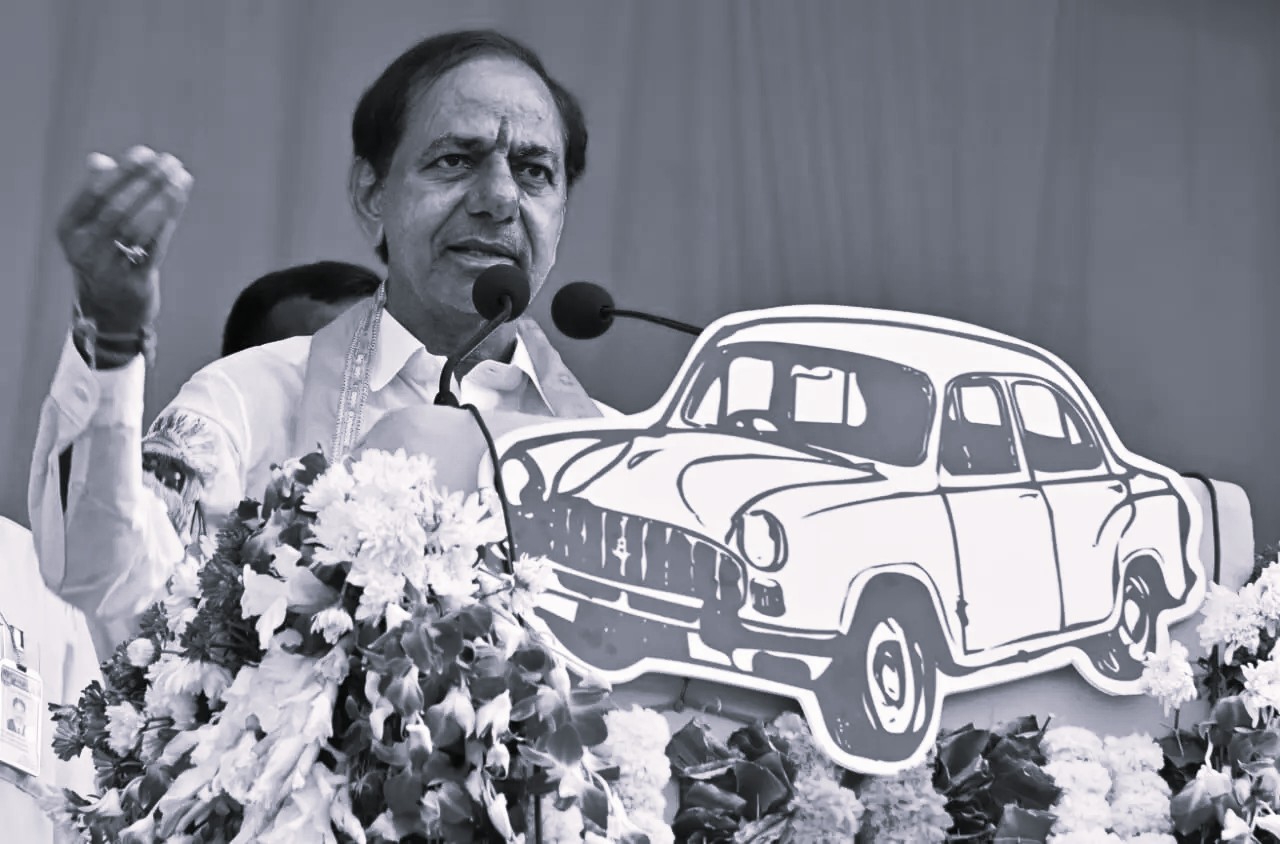
When in power, the BRS regularly held grand party plenaries to boost its cadre morale and outline policy strategies. These events often doubled as displays of organisational strength. At one such plenary, party president K. Chandrashekar Rao (KCR) publicly revealed the party’s assets, underscoring its self-sufficiency and robust financial base. Those days, however, now seem distant as the party faces a funding drought after its 2023 electoral setback.
The sharp fall in donations coincides with the Supreme Court’s February 2024 ruling striking down the Electoral Bond Scheme as unconstitutional. The apex court held that the scheme violated citizens’ right to know who funds political parties, gave the ruling party unfair informational advantage, and allowed unlimited, anonymous corporate donations. Data released subsequently showed that the BJP had cornered over 50% of the ₹12,000 crore raised through bonds, while the BRS was among the top regional gainers.
The ban has disrupted the financial equations of several parties, including the BRS, which had depended heavily on large, undisclosed corporate donations during its years in power. Political analysts note that rebuilding a transparent funding base will be crucial for the party’s revival ahead of the next electoral cycle.
Despite the setback, the BRS continues to remain one of India’s wealthiest regional parties. According to the Association for Democratic Reforms (ADR), the party topped the list of regional outfits in FY 2023–24, declaring an income of ₹685.5 crore, surpassing the Biju Janata Dal (BJD) and Trinamool Congress.
Meanwhile, at the national level, the BJP remains India’s wealthiest political organisation, with declared assets rising from ₹239 crore in 2010 to a staggering ₹9,181 crore in FY 2023–24—a growth of over 3,700% during its tenure in power. The Congress, though far behind, reported assets worth ₹1,045 crore in the same year, much of which is held by its state units through properties such as Pradesh Congress Committee offices and real estate holdings. Both the BJP and Congress have substantial assets owned by their state wings, though these are consolidated in their national financial filings.
For the BRS, once a symbol of Telangana’s political dominance and financial might, the coming years may test whether its organisational strength and grassroots appeal can endure without the steady stream of corporate-backed funds that once defined its success.