
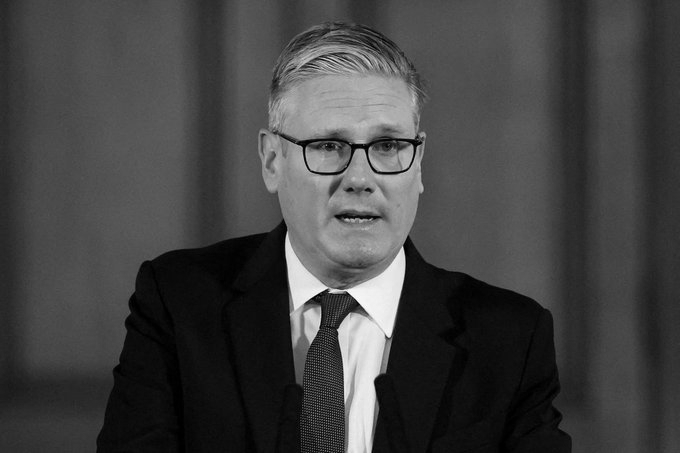
British PM Starmer Vows to ‘Prove Doubters Wrong’ Amid Labour Leadership Pressure
British Prime Minister Keir Starmer on Monday pledged to “prove doubters wrong” and continue leading the country amid mounting criticism within the ruling Labour Party following its poor performance in recent local elections.
In a crucial speech aimed at stabilising his leadership, Starmer said he would not walk away from office or allow Britain to descend into political instability, drawing comparisons with the Opposition Conservatives’ turbulent years in power.
“I’m not going to shy away from the fact that I’ve got some doubters, including in my own party and I have to prove them wrong, and I will,” Keir Starmer said during his address at 10 Downing Street on Monday.
Facing mounting criticism after Labour’s poor local election performance, the British Prime Minister asserted that he would remain in office rather than allow political instability similar to the turmoil seen under Conservative governments.
“I take responsibility for not walking away, not plunging the country into chaos as the Tories did time and time again,” he said, adding that Labour could never afford to repeat such instability.
The speech followed significant gains by the far-right anti-immigration Reform UK in last week’s local elections, intensifying concerns within Labour over the party’s declining support base.
Targeting Reform UK leader Nigel Farage, Starmer accused him of misleading voters during the Brexit campaign and exploiting public frustration through populist politics.
“He’s not just a grifter, but a chancer,” Starmer said, warning that Britain faced “dangerous opponents” and cautioning that failure to respond effectively could push the country “down a very dark path”.
He described the political moment as “a battle for the soul of our nation”.
The address came amid growing unrest within Labour, with several party members questioning Starmer’s leadership and electoral strategy after the setback.
Labour MP Catherine West publicly called for a leadership transition timeline, saying she was gathering support from MPs to press for the election of a new leader by September.
“I am hereby giving notice to No. 10 that I am collecting names of Labour MPs to call on the Prime Minister to set a timetable for the election of a new leader in September,” she said.
Meanwhile, Deputy Prime Minister Angela Rayner admitted that Labour needed to regain public confidence during her speech at the Communications Workers Union conference.
“We as a party have to do better than this,” Rayner said, urging Labour leaders to place “the common interest ahead of factionalism”.
She also stressed the importance of trade unions in reconnecting the party with working-class voters and countering the growing influence of right-wing politics.
Her remarks supporting Andy Burnham’s return to Parliament further fuelled speculation over possible future leadership changes within Labour.
Although Starmer has avoided an immediate challenge, pressure on his leadership continues to mount. Under Labour Party rules, at least 81 MPs would be needed to formally trigger a leadership contest, a threshold that currently appears unlikely to be reached.