
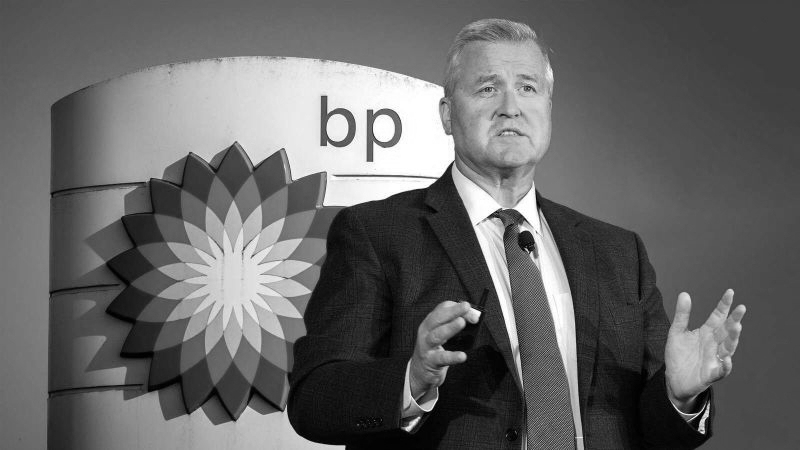
British Petroleum Board Removes Chairman Albert Manifold Over Governance Issues
Global energy giant BP, originally known as British Petroleum , has been plunged into fresh uncertainty after abruptly removing its chairman Albert Manifold over serious concerns related to “governance standards, oversight and conduct.” The unexpected leadership shake-up has rattled investors, intensified scrutiny of BP’s corporate culture and reignited questions over the company’s long-term strategic direction.
Founded in 1909 as the Anglo-Persian Oil Company , BP later became the Anglo-Iranian Oil Company before officially adopting the name British Petroleum in 1954. Over the years, the company transitioned to using the shorter brand identity “BP” globally and grew into one of the world’s largest oil and gas “supermajors,” operating across nearly 60 countries.
BP’s board announced that Manifold would step down with immediate effect, less than a year after taking over the role in October 2025. The company simultaneously named Ian Tyler as interim chair while initiating the search for a permanent successor. Although BP did not publicly disclose the exact allegations, reports indicate that internal complaints regarding Manifold’s conduct and management style played a significant role in the board’s unanimous decision.
The development triggered a sharp reaction in financial markets, with BP shares falling nearly 6 percent before trading opened on the New York Stock Exchange. Analysts said the sudden exit has created fresh uncertainty at a time when the company is already facing investor pressure over performance and strategy.
Manifold, former CEO of Irish building materials group CRH, had been viewed as a strong turnaround figure capable of restoring shareholder confidence. During his short tenure, BP accelerated its renewed focus on oil and gas production after scaling back parts of its earlier renewable energy ambitions. The company had previously attempted to position itself as a leader in the global clean energy transition under former CEO Bernard Looney , but weak returns and pressure from shareholders forced a strategic reset toward traditional fossil fuel operations.
The latest controversy also revives concerns over BP’s governance record. In 2023, Bernard Looney resigned after failing to fully disclose personal relationships with colleagues, creating another major leadership crisis for the company. Industry experts now warn that repeated turmoil at the top level could damage investor confidence and raise broader concerns about board oversight.
BP continues to operate under the shadow of the 2010 Deepwater Horizon disaster in the Gulf of Mexico, one of the worst environmental catastrophes in oil industry history. The explosion killed workers, caused massive ecological damage and forced BP to pay billions of dollars in compensation and cleanup costs.
The company now faces mounting pressure to stabilize leadership, rebuild credibility and reassure investors amid growing uncertainty in the global energy sector.