
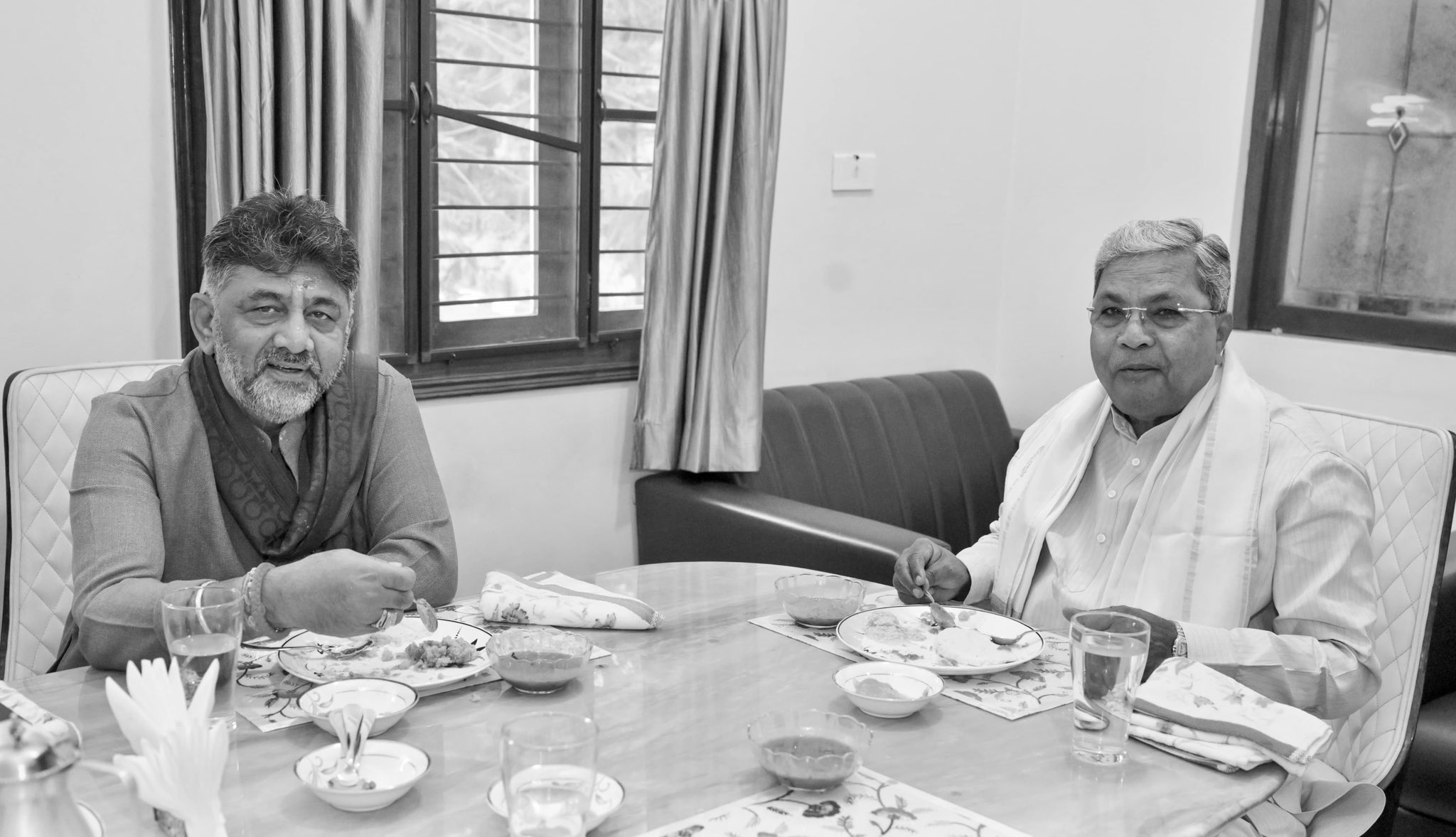
Breakfast Politics: Siddaramaiah, Shivakumar serve unity on a plate
Karnataka’s political landscape turned livelier on Saturday as Chief Minister Siddaramaiah and Deputy Chief Minister D.K. Shivakumar attempted to project a united front over breakfast at the Chief Minister’s ‘Kaveri’ residence, even as the Opposition sharpened its attacks and internal questions within the Congress continued to simmer beneath the surface. The much-publicised spread of idli, vada, upma and sambar came after the Congress high command intervened directly, instructing both leaders to put an end to the leadership dispute that has overshadowed the government since it completed 2.5 years in office on November 20. While Siddaramaiah dismissed the controversy as confusion created in the public domain, both leaders insisted there were no differences and that they would abide by the party’s central leadership. Though the breakfast produced temporary calm, political observers noted that the truce appeared tactical rather than a long-term resolution.
The JD(S), sensing an opportunity, intensified its criticism and mocked the optics of the meeting. Party leaders, including Nikhil Kumaraswamy, argued that unity was being displayed “only for breakfast” and accused the Congress of being too consumed by internal power equations to address Karnataka’s mounting challenges. Their criticism touched a growing nerve in the state: farmer distress and inadequate drought relief. Several drought-hit regions have seen protests in recent weeks, with farmers pointing to falling crop prices and delays in compensation. The Opposition is now weaving these issues into a narrative that governance has taken a back seat while Congress leadership debates dominate political energy.
Underlying the present tension is the long-rumoured but never officially acknowledged 2.5-year rotational Chief Minister arrangement, which Shivakumar’s supporters believe was promised to him when the Congress returned to power in 2023. Siddaramaiah, meanwhile, has consistently maintained he has been given a full-term mandate. This unresolved ambiguity continues to generate friction and has repeatedly forced the high command into firefighting mode. Reports suggest Congress president Mallikarjun Kharge and Rahul Gandhi will hold further consultations with MLAs before finalising the party’s internal roadmap, a decision that could influence not only the stability of the government but also the party’s preparations for the 2028 Assembly elections. Siddaramaiah’s age he will be 80 by the next election adds another layer to the equation, making leadership continuity, transition planning and caste arithmetic central strategic questions for the party.
The BJP, meanwhile, dismissed the breakfast diplomacy as “political theatre” and warned that it was prepared to challenge the government in the winter session in Belagavi. It has hinted at using procedural tools including a possible no-confidence motion to exploit any signs of internal fracture. In response, both Siddaramaiah and Shivakumar stressed that the government was fully prepared for the session and would counter any move by the Opposition with confidence. For now, the Congress’s public messaging has been consistent: both leaders will work together, respect the high command’s guidance and focus on governance.
Yet despite the reassurances, the leadership issue remains unresolved and continues to shape Karnataka’s political environment. To party workers, the breakfast meeting served as reassurance that the top two leaders remain aligned. To the Opposition, it was a fresh opportunity to highlight Congress’s internal contradictions. And to voters particularly farmers facing mounting hardships it raised the question of whether political optics were overshadowing urgent policy needs. While Saturday’s meeting has bought the Congress some time, the real test lies in whether the party can shift the narrative from internal turbulence to effective governance. Until a clear roadmap emerges from the high command and tangible progress is seen on ground-level issues, Karnataka is likely to witness continued political turbulence and intensified scrutiny as the state moves towards the next electoral cycle.