
Bosnian Serb Leaders Meet Putin Days Before Bosnia Election
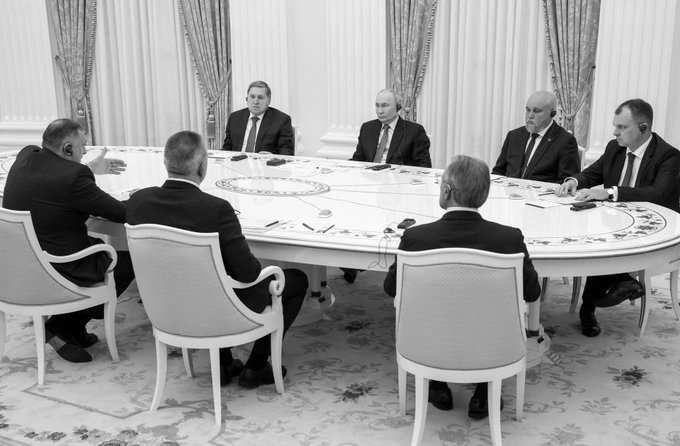
Bosnian Serb leader Milorad Dodik and Republika Srpska Prime Minister Savo Minic met Russian President Vladimir Putin in Moscow on Tuesday, just days before Bosnia and Herzegovina’s October 4 general election. The meeting came amid continued tensions over Russia’s ties with the Serb-led entity and Dodik’s calls for greater autonomy.
Dodik and Minic met Putin at the Kremlin, with Bosnian Serb broadcaster RTRS reporting that the Russian president expressed support for the ruling political forces in Republika Srpska. Putin said Moscow wanted stability in the region and a fairer approach towards Serbs, while opposing what he described as outside interference.
The meeting took place five days before voters in Bosnia and Herzegovina go to the polls. Around 3.4 million voters are expected to elect the country’s three-member presidency, the central parliament and institutions in its two constituent entities.
Dodik, a staunchly pro-Russian politician and leader of the Alliance of Independent Social Democrats, has remained a dominant figure in Republika Srpska politics despite being barred from holding public office in Bosnia. He has repeatedly advocated greater autonomy for the Serb entity and has clashed with Western officials overseeing the country’s post-war political system.
Dodik has also maintained close relations with Moscow and has travelled to Russia ahead of previous elections. The United States imposed sanctions on him during the Biden administration, while his separatist rhetoric has raised concerns among Western officials about renewed instability in the Balkans.
During Tuesday’s meeting, Putin said Russia and Republika Srpska had close relations and that Moscow would continue political and economic cooperation with the entity. Putin also said Russia would continue supporting Republika Srpska on international platforms, including the United Nations Security Council.
Dodik said Bosnia and Herzegovina had not imposed sanctions on Russia because of opposition from Republika Srpska and that the entity remained opposed to NATO integration. He also said Republika Srpska would continue resisting proposals to introduce visas for Russian citizens.
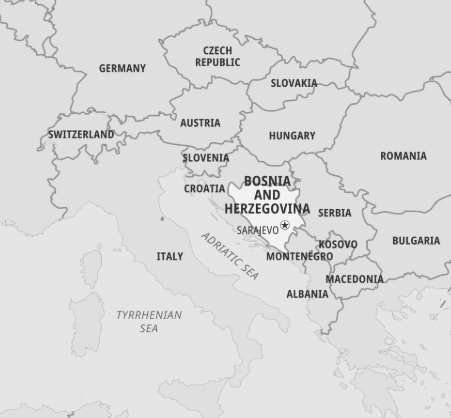
The election comes as Bosnia continues to struggle with deep ethnic divisions and a complex political structure established under the 1995 Dayton peace agreement, which ended the 1992-95 war. The country is divided into Republika Srpska and the Federation of Bosnia and Herzegovina, with joint central institutions linking the two entities.
The Federation is predominantly made up of Bosniaks and Croats, while Republika Srpska is predominantly Serb. Bosnia has formally sought European Union membership, but its accession process has progressed slowly amid political disputes and institutional tensions.
War-era divisions have also resurfaced ahead of the vote following public tributes to former Bosnian Serb military commander Ratko Mladic, who died in August while serving a life sentence for genocide and other war crimes. Bosnian Serb officials attended his funeral in Belgrade, drawing criticism from the European Union.
Mladic was convicted by a United Nations tribunal over the 1995 Srebrenica massacre, in which more than 8,000 Bosniak men and boys were killed, as well as other atrocities committed during the Bosnian war.
The 1992-95 conflict began after Bosnia declared independence from Yugoslavia, followed by an armed campaign by Bosnian Serbs seeking to establish their own state and join Serbia. More than 100,000 people were killed and millions were displaced during the war.