
Bonalu 2026: Hyderabad’s Grand Finale Brings Centuries-Old Mahankali Traditions Alive
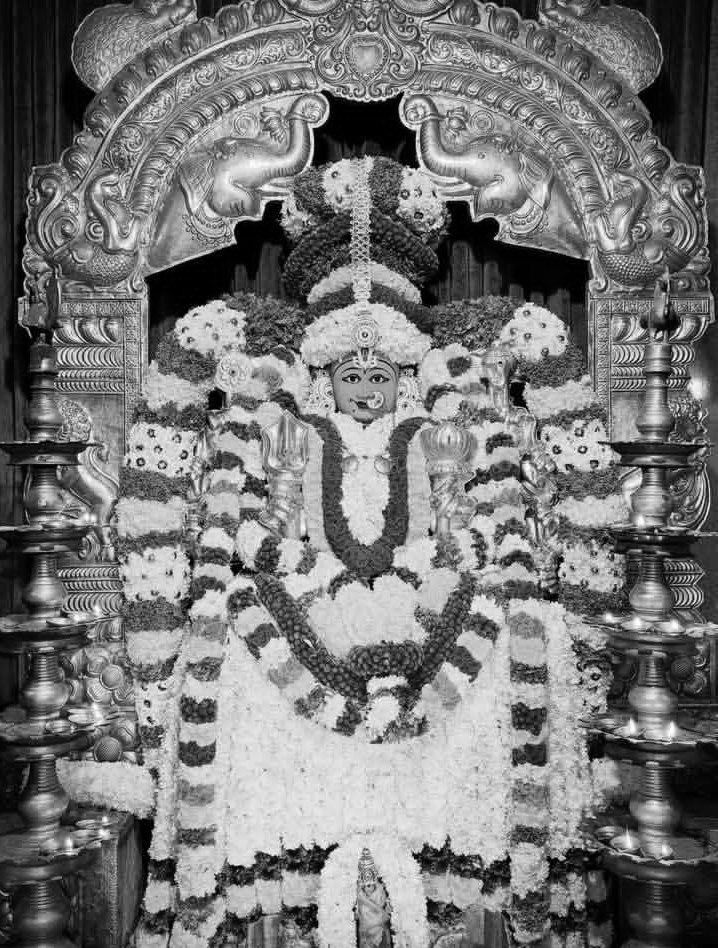
Telangana’s iconic Bonalu festival reaches its grandest phase today, with Hyderabad’s historic Old City witnessing elaborate celebrations dedicated to Goddess Mahankali. The final major Sunday of the 2026 festival is being marked by Bonam offerings, colourful processions, traditional music and the energetic presence of Pothuraju, with the concluding Rangam oracle ritual and Ghatam procession scheduled for August 10.
Celebrated during Ashada Masam, Bonalu is one of Telangana’s most distinctive religious and cultural festivals. Though observed across the state, Hyderabad and Secunderabad remain the traditional centres of the festivities, with historic Mahankali temples drawing thousands of devotees during the season.
The two-day finale of August 9 and 10 brings together the festival’s most prominent religious ceremonies and folk traditions. While today’s celebrations focus on major temple offerings and processions, Monday will witness the traditional Rangam ritual and the ceremonial Ghatam procession that formally bring the festival cycle to a close.
Bonalu has a strong historical connection with Hyderabad. According to the Hyderabad District administration, the festival’s origins are traditionally traced to 1813, when a serious plague outbreak reportedly affected Hyderabad and Secunderabad.
The traditional account links the emergence of Bonalu to a military battalion from Hyderabad that was stationed in Ujjain, in present-day Madhya Pradesh, during the period. Concerned about the epidemic back home, the soldiers are said to have prayed to Goddess Mahakali at the Mahakali temple in Ujjain.
They reportedly vowed that if Hyderabad was protected from the epidemic, they would bring the Goddess’s presence back to the city and establish a shrine in her honour. Following their return, an idol was installed in Secunderabad, and devotees began offering food to the Goddess in thanksgiving.
The practice gradually evolved into an annual festival and spread through Hyderabad and Secunderabad before becoming deeply rooted across Telangana.
The 1813 account is principally based on traditional and official narratives, and historical descriptions of Bonalu contain variations regarding its precise origins. Nevertheless, the association with the epidemic and the soldiers’ prayers remains the best-known origin story of Hyderabad’s Bonalu tradition.
Over the decades, Bonalu developed from a local religious observance into a major expression of Telangana’s cultural identity. The Telangana government has recognised it as the State Festival.
The name Bonalu is derived from Bonam, which itself comes from Bhojanam, meaning food or meal.
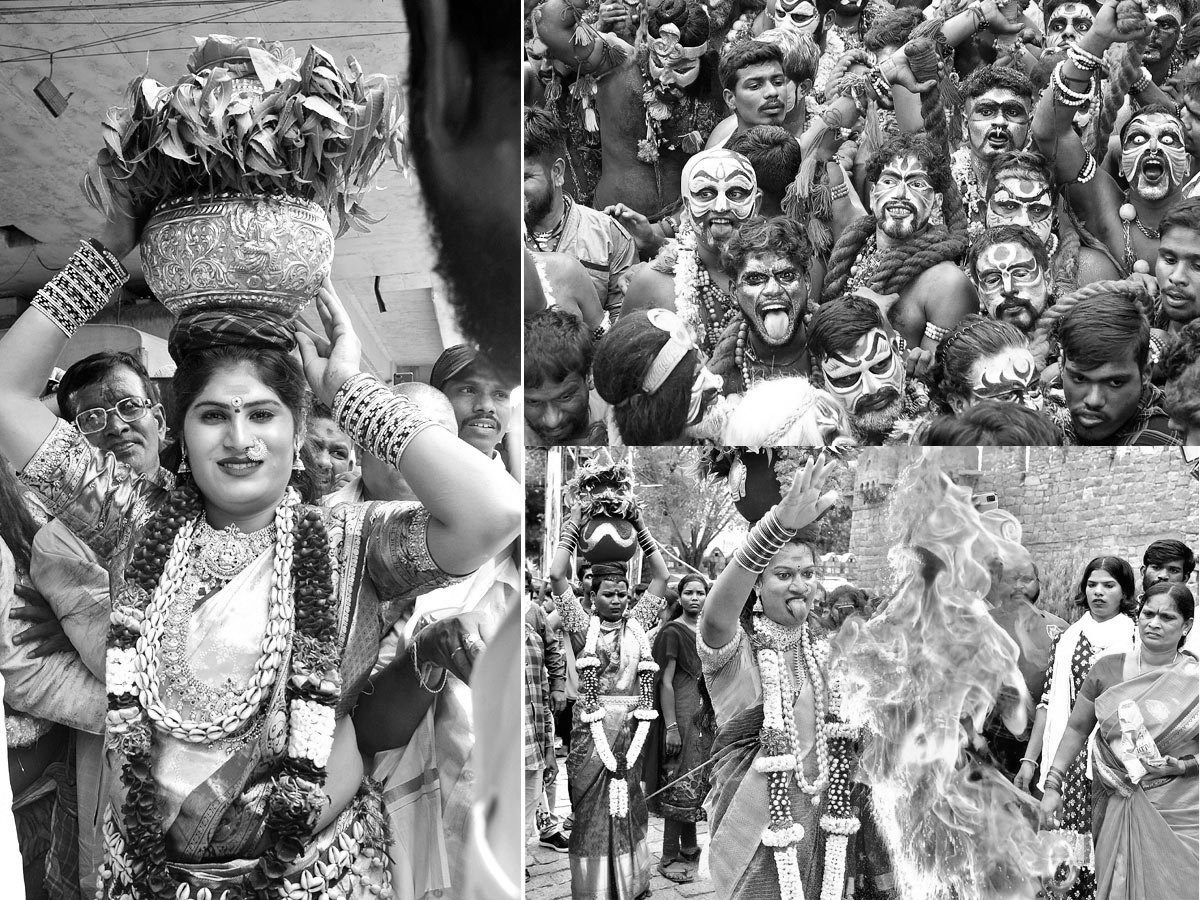
Women play a central role in the festival by preparing rice cooked with milk and jaggery and carrying it to the temple in decorated pots. The vessels are traditionally adorned with turmeric, vermilion and neem leaves, with a small lamp often placed on top.
The offering represents thanksgiving to Goddess Mahankali. Devotees seek protection from disease and misfortune and pray for prosperity, good health and the well-being of their families and communities.
The procession of women carrying decorated Bonams has become one of the most recognisable images of Telangana’s cultural heritage. It also highlights the important role of women in maintaining and transmitting Bonalu traditions.
For many families, preparation of the Bonam is itself a sacred household ritual. The practice is passed from mothers and grandmothers to younger generations, helping preserve the festival’s traditions beyond the temple.
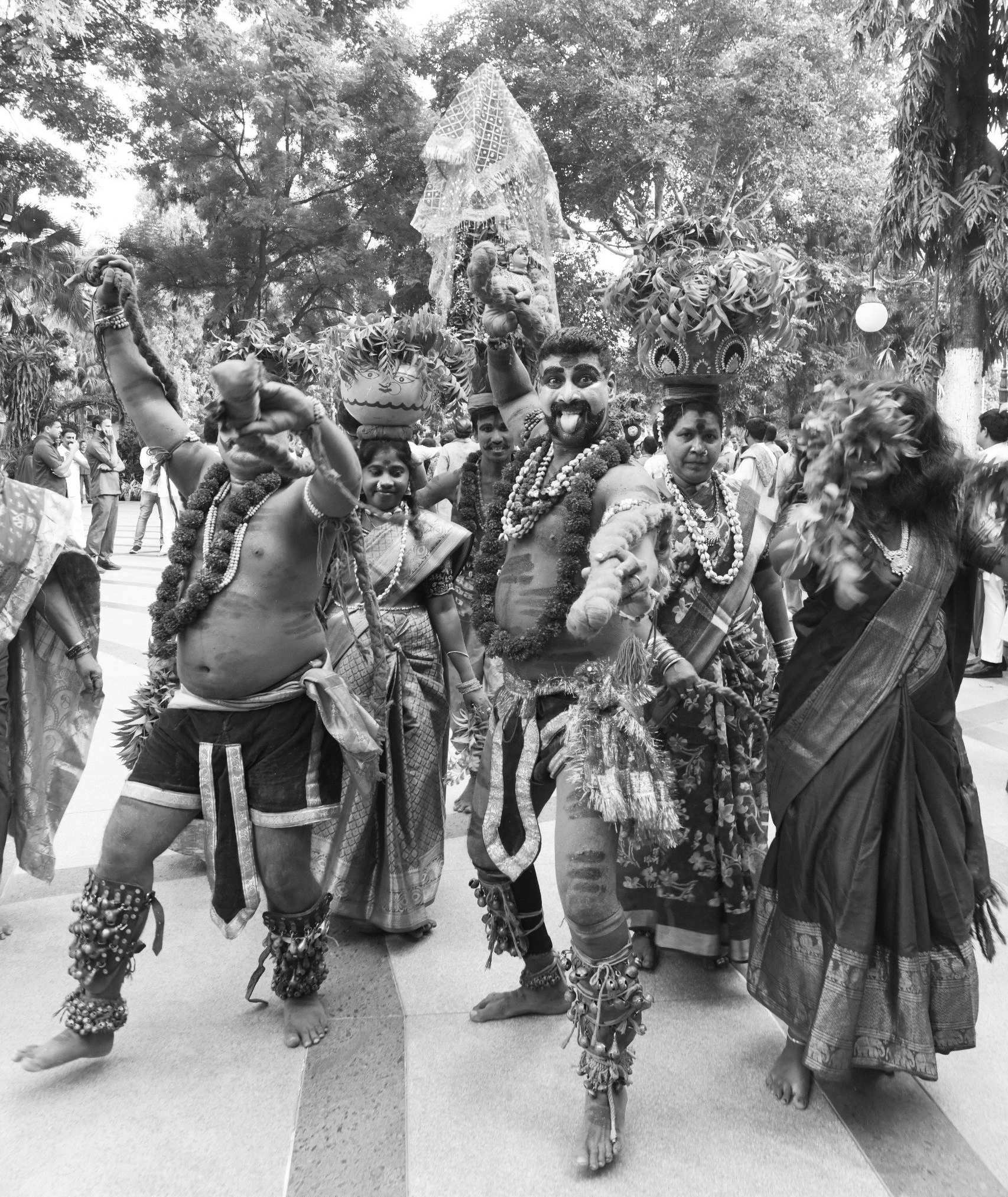
No major Bonalu procession is complete without Pothuraju, traditionally regarded as the brother and protector of Goddess Mahankali.
Pothuraju is usually seen leading or accompanying processions, dancing energetically to the beat of drums. His traditional appearance, vigorous movements and association with the Goddess give the processions their distinctive visual and cultural character.
Religiously, Pothuraju is regarded as a guardian figure who protects the Goddess and her devotees and drives away evil forces. Culturally, his performances preserve Telangana’s folk dance, percussion and street-procession traditions.
His presence demonstrates the unique way in which Bonalu combines formal Goddess worship with folk beliefs and community performance.
Hyderabad’s Old City temples occupy a special place in the preservation of Bonalu.
Major centres include the Lal Darwaza Mahankali Temple, Akkanna Madanna Mahankali Temple in Haribowli and Muthyalamma Temple in Shah Ali Banda. Their annual celebrations have become synonymous with Hyderabad’s traditional Bonalu festivities.
These temples serve as more than places of worship. They function as living cultural institutions, where rituals and customs are practised and passed from one generation to another.
Temple committees, priests, families, performers and local residents collectively preserve traditions related to Bonam preparation, devotional offerings, music, processions and ceremonial practices.
The Old City also takes the festival beyond temple walls. Streets around the shrines become centres of community participation, with drums, devotional music, folk performances, decorated offerings and processions bringing entire neighbourhoods together.
This public participation is one of the reasons Bonalu remains a living tradition rather than merely a historical or religious observance.
Today, August 9, marks the final major Sunday of Bonalu 2026.
The focus is on Hyderabad’s Old City, where prominent Mahankali temples are witnessing large gatherings of devotees. Women are carrying Bonams to the temples, while processions feature Pothuraju, drummers, folk performers and traditional ceremonial elements.
The final Sunday is significant because it represents the culmination of the major weekly celebrations that have taken place during the Bonalu season.
The festival traditionally unfolds over successive Sundays, with different parts of Hyderabad and Secunderabad observing their own major temple celebrations. The final Sunday brings the season to one of its most visible and crowded phases.
The atmosphere in the Old City combines religious devotion with neighbourhood participation. Streets around the temples become vibrant spaces of music, dance and procession, while devotees offer prayers and seek the blessings of Goddess Mahankali.
The final chapter of Bonalu continues on August 10 with the traditional Rangam oracle ceremony.
Rangam is one of the festival’s most distinctive rituals. A woman believed to be invoking or representing the Goddess stands on a raised platform and delivers predictions or warnings about the year ahead.
Devotees traditionally regard the words spoken during Rangam as a form of divine communication. The predictions may be interpreted in relation to rainfall, agriculture, public welfare and the general fortunes of the community.
Rangam therefore serves a different purpose from Bonam. While Bonam expresses gratitude and devotion, Rangam is associated with divine guidance and the community’s hopes and concerns for the future.
The ritual also preserves an important aspect of Telangana’s folk-belief system, demonstrating how Bonalu combines formal religious worship with longstanding local traditions.
The other major event on August 10 is the Ghatam procession.
The Ghatam is a decorated copper pot representing the Goddess. It is carried through the streets in a ceremonial procession accompanied by drums, music, dancers and devotees.
The Akkanna Madanna Mahankali Temple has a particularly prominent Ghatam tradition. The Matheswari Ghatam is traditionally taken through the Old City in an elaborate procession before being carried towards Nayapul for immersion.
The procession carries symbolic meaning. The Goddess, represented by the Ghatam, is taken from the temple into the wider community before the immersion marks the end of the festival cycle.
The Ghatam procession therefore serves as both a religious ceremony and a spectacular public expression of Hyderabad’s cultural heritage.
The two days together constitute the grand finale of Bonalu 2026.
August 9 represents the culmination of the festival’s major Sunday celebrations, particularly the large-scale Bonam offerings and processions in the Old City. August 10 then shifts the focus to the concluding rituals of Rangam and the Ghatam procession.
The distinction is important: August 9 is the final major Sunday celebration, while August 10 completes the concluding ritual cycle.
Together, the two days bring together almost every defining element of Bonalu devotion to Mahankali, women's Bonam offerings, Pothuraju performances, drums and folk traditions, the Rangam oracle and the Ghatam procession.
Bonalu is more than a temple festival. It represents a powerful combination of Shakti worship, folk traditions, women's participation, music, dance and community identity.
Its rituals have survived because they are practised in homes, temples and neighbourhood streets rather than being confined to religious texts or formal institutions.
Families continue to prepare Bonams according to traditional customs. Temple communities maintain ceremonial practices. Performers preserve folk music and dance. Devotees participate in processions and pass their experiences to younger generations.
This intergenerational transmission has allowed Bonalu to remain deeply embedded in Telangana society.
The Old City temples are particularly important in this process. By continuing to conduct traditional ceremonies in historic settings and involving entire neighbourhoods, they serve as custodians of Hyderabad’s living Bonalu heritage.
The historical evolution of Bonalu also reflects the changing relationship between religion, society and the city.
According to the traditional account, the festival emerged from prayers and thanksgiving associated with an epidemic in the early 19th century. Over generations, that observance grew into a large public celebration involving temples, families, neighbourhoods and entire cities.
The transformation illustrates how cultural traditions can adapt while retaining their central religious meaning.
Today, Bonalu is simultaneously a festival of faith, thanksgiving, folk culture and Telangana identity.
As Hyderabad celebrates the final major Sunday of Bonalu 2026 today, the focus is not only on the rituals taking place inside temples but also on the cultural traditions unfolding across the Old City streets.
The decorated Bonams carried by women, the rhythmic drums accompanying processions, the energetic movements of Pothuraju and the devotion of thousands of worshippers collectively create the distinctive atmosphere of the festival.
Tomorrow’s Rangam ceremony and Ghatam procession will then bring the annual cycle to its ceremonial conclusion.
For Hyderabad, Bonalu is therefore far more than an annual religious event. It is a living connection between history, faith, folk traditions and community life.
From the traditional story of its origins in an epidemic-era prayer to the grand processions of the modern Old City, Bonalu has evolved while retaining its essential character. Its enduring strength lies in the people who continue to practise, celebrate and pass on its customs.
As the August 9–10 finale unfolds, Hyderabad once again demonstrates why Bonalu remains one of Telangana’s most powerful expressions of religious devotion and cultural identity.