
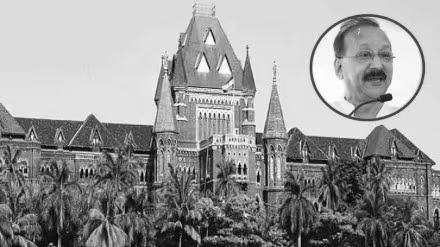
Bombay high court grants first bail in Siddique murder case, cites lack of direct role
The Bombay high court on Monday granted bail to Akashdeep Karaj Singh , an accused in the murder of Congress leader and former MLA Baba Siddique , making him the first accused to get bail in the high-profile case. A bench of Justice Neela Gokhale directed that Singh must not leave Mumbai until the trial concludes and must comply with strict reporting conditions imposed by the court.
Granting relief, the court observed that the prosecution had failed to assign Singh any specific role in either planning or executing the murder. “There is no direct material to establish the applicant’s involvement in the actual commission of the offence,” the court noted, adding that prolonged incarceration without trial violated the accused’s fundamental right to personal liberty . The bench also took into account that the trial was unlikely to commence in the near future.
Singh, a 22-year-old resident of Punjab, was arrested in November 2024, nearly a month after Siddique, 66, was shot dead by three assailants outside his son Zeeshan Siddique’s office in Mumbai’s Bandra East area on the night of October 12, 2024. The killing triggered widespread political outrage and led to a large-scale, multi-agency investigation.
According to police chargesheets and court records, Singh is not among the shooters, spotters, planners, financiers or senior gang handlers. Investigators have placed him in the category of logistics and peripheral coordination support , alleging that his involvement was limited to maintaining contact with key accused and facilitating communication. The prosecution primarily relied on call detail records and association-based evidence, without attributing any direct operational role such as arranging weapons, tracking the victim, funding the attack, or coordinating the shooters.
In his bail plea, Singh claimed that he had been falsely implicated and that the allegations against him were vague, baseless and unsupported by concrete evidence. He argued that mere association with alleged members of an organised crime syndicate could not justify prolonged incarceration, particularly when no overt act was attributed to him. His counsel further submitted that continued custody without trial amounted to punishment before conviction.
Opposing bail, the prosecution argued that the murder was part of a meticulously planned conspiracy orchestrated by an organised crime network linked to the Lawrence Bishnoi gang . In January this year, Mumbai Police filed a chargesheet naming Anmol Bishnoi as a wanted accused, alleging that he masterminded the conspiracy to eliminate Siddique to instil fear and establish dominance within the criminal underworld. Investigators claimed the operation involved inter-state coordination, encrypted communications, financial transfers, and a structured execution plan.
So far, police have arrested 26 accused in the case and booked them under the stringent Maharashtra Control of Organised Crime Act (MCOCA) . Of these, three are identified as shooters, while others allegedly acted as spotters, logistics handlers, financial conduits and senior conspirators. Courts had earlier denied bail to most accused citing the gravity of the offence and the scale of the conspiracy.
In addition to those arrested, two accused - Shubham Rameshwar Lonkar and Mohammad Yasin Akhtar - remain absconding , with non-bailable warrants issued against them. Police say both are believed to have played key coordination and logistical roles and that efforts to trace and arrest them are ongoing.