
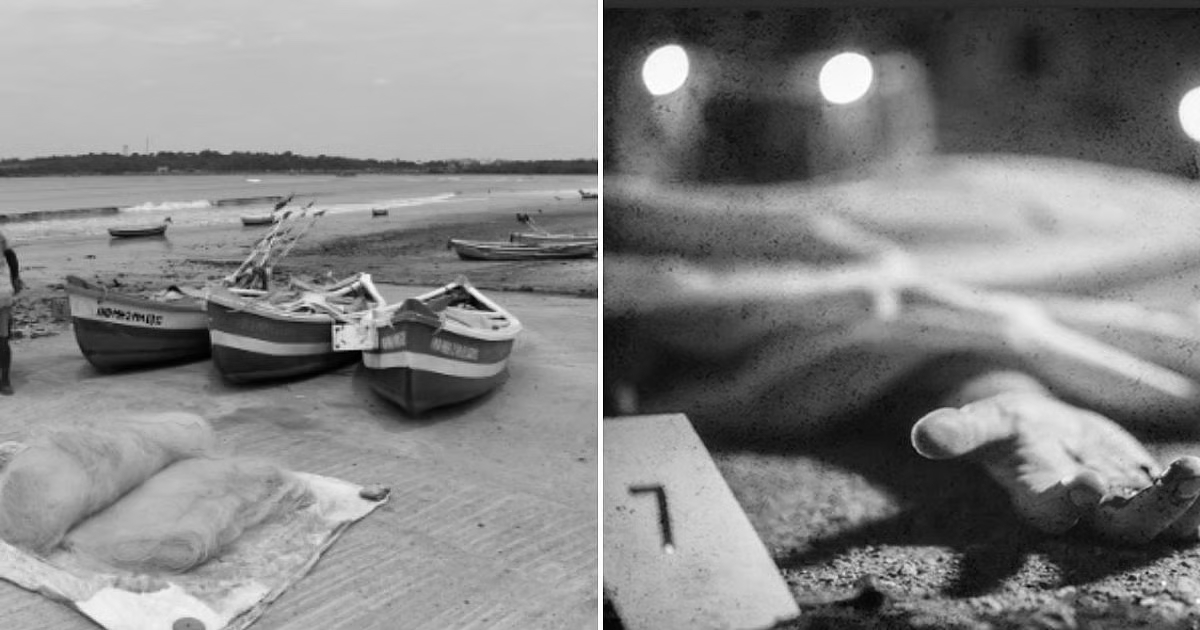
Body of fisherman who died in Pak jail brought back to his hometown in Gujarat
The body of Bhagabhai Bambhaniya , a 36‑year‑old fisherman from Chikhli village in Una taluka, Gir Somnath district, who died in a Pakistani jail last month despite having completed his sentence nearly three years ago, was brought home on Saturday, officials said.
Bambhaniya died of cardiac arrest at a jail in Karachi on January 16, according to OA Makrani, a fisheries official from Jafrabad. “His body was handed over to a team from the fisheries department at the Indo‑Pakistan border in Wagah, Punjab. It was then flown to Ahmedabad and transported by road to his native village,” Makrani said.
Bambhaniya was apprehended by Pakistani authorities on February 18, 2022, after his fishing boat inadvertently crossed the international maritime boundary during a fishing trip in the Arabian Sea off Gujarat’s coast. Though he completed his sentence in 2022, he remained in detention until his sudden death, officials said.
His case has reignited concerns about the plight of Indian fishermen held in Pakistan for similar inadvertent boundary violations. Peace activists and families have criticized the prolonged detention as a violation of the bilateral Agreement on Consular Access, 2008 , which India and Pakistan signed to ensure the timely consular access, verification, and repatriation of each other’s nationals detained in the other country . Under the agreement, once a person’s nationality is confirmed and their sentence completed, they should be released and repatriated within one month . In practice, however, delays in verification and administrative procedures often extend detention, as authorities on both sides coordinate documentation, approvals, and logistics for repatriation.
The issue drew renewed public attention after fishermen’s families from Diu wrote to External Affairs Minister S. Jaishankar in December 2025, urging intervention to secure release and repatriation of detained fishermen. The letter noted that most of the incarcerated fishermen were from Gujarat, Diu, and Maharashtra, with around 160 having completed their sentences and confirmed as Indian nationals.
While no public reply has been issued to that specific letter, the Ministry of External Affairs under Jaishankar has formally raised the matter with Pakistan, calling repeatedly for faster release and repatriation of Indian fishermen who have served their terms and for improved consular access and welfare provisions for detainees.
Under the 2008 agreement , India and Pakistan exchange lists of civilian prisoners and fishermen in each other’s custody twice a year , on January 1 and July 1, through diplomatic channels in New Delhi and Islamabad. In the most recent exchange on January 1, 2026, Pakistan listed 199 fishermen and 58 civilian prisoners believed to be Indian, while India shared details of its detainees. New Delhi urged Islamabad to expedite repatriation of 167 Indian fishermen and civilian prisoners who have completed their sentences and provide consular access to those still held. Officials also pressed for the return of confiscated fishing boats.
Since 2014, thousands of fishermen have been repatriated from Pakistan — an estimated 2,661 Indian fishermen and 71 civilian prisoners returned home through sustained diplomatic efforts, including approximately 500 fishermen since 2023 . Periodically, small groups are released; most recently, seven Indians were repatriated after completing their jail terms in late 2025, including two who had been swept across the border in floods.
Despite these returns, large numbers remain in custody because of persistent delays in verification and repatriation processes. As of early 2026, around 198 Indian fishermen , including 19 from Maharashtra, were reported in Karachi’s Malir Jail. Many have finished their sentences but are still awaiting repatriation, a situation that families and activists have described as bureaucratic and inhumane.
The crisis has taken a serious human toll , with several fishermen, including Gaurav Ram Anand in 2025 , dying in Pakistani custody over the years. Relatives point to poor navigational equipment, unclear maritime boundaries, and administrative delays as recurring factors trapping fishermen in prolonged detention. Bambhaniya’s death, amid ongoing diplomatic exchanges and periodic releases, underscores the urgent need for stronger cooperation between India and Pakistan to prevent further loss of life and ensure humane treatment of detainees.