
Blueprint for real-world AI development unveiled
A new framework designed to transform how artificial intelligence (AI) learns and operates in the real world has been unveiled by researchers at the University of Sheffield and the Alan Turing Institute.
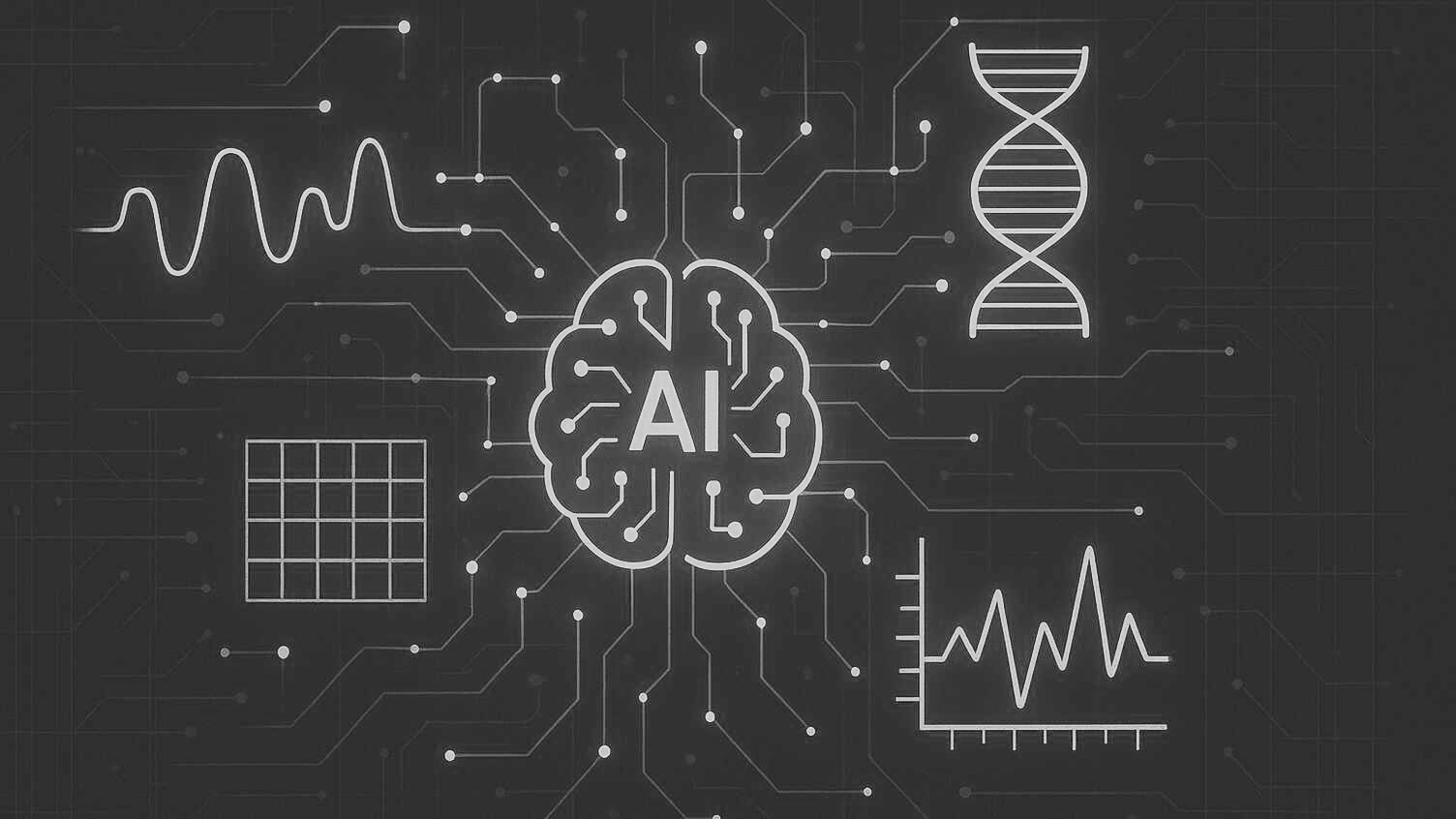
Published in Nature Machine Intelligence, the framework serves as a blueprint for building and deploying multimodal AI systems advanced models capable of learning from multiple forms of data such as text, images, sound, and sensor readings. It has been designed to make AI technologies more practical, ethical, and effective in addressing real-world challenges.
Expanding Beyond Vision and Language :
Most AI systems today, including popular large language and image-recognition models, rely on a single type of data. Even among multimodal systems, nearly 89 per cent of research published in 2024 was found to focus only on vision and language. This narrow scope, according to the study, has limited AI’s potential to deal with complex and unpredictable real-world situations.
By contrast, the proposed framework encourages a broader approach to learning. Integrating visual, sensor, and environmental data could help self-driving cars operate more safely under varied conditions, while combining medical, clinical, and genomic data could improve diagnostic accuracy and accelerate drug discovery.
A Step Toward Practical, Reliable AI :
It was observed by Professor Haiping Lu, who led the study from the University of Sheffield’s School of Computer Science and Centre for Machine Intelligence, that although AI has made significant progress in language and vision, the real world remains far richer and more complex. It was further noted that addressing global challenges such as pandemics, sustainable energy, and climate change would require multimodal AI systems that draw upon a wider range of data and expertise.
The framework has been presented as a deployment roadmap to help developers and researchers build AI systems that are safe, reliable, and effective outside laboratory environments. The study illustrates its application through three major areas: pandemic response, autonomous vehicle design, and climate change adaptation with contributions from 48 experts representing 22 institutions across the United Kingdom and abroad.
Integrating with Current AI Technologies :
Although rooted in the same machine learning and deep learning principles as existing AI systems, multimodal AI represents a more advanced evolution. Like current models, it depends on large datasets and computational training, but it extends this learning process by combining multiple input sources much as humans integrate information from sight, sound, and touch to interpret their surroundings.
This multidimensional approach allows AI to form a more complete and contextual understanding of its environment, thereby reducing bias and improving decision accuracy.
Driving Collaborative Innovation :
The initiative originated from the Alan Turing Institute’s Meta-learning for Multimodal Data Interest Group, led by Professor Lu, which has brought together experts from multiple disciplines to advance multimodal research. The collaboration also inspired the creation of the UK Open Multimodal AI Network (UKOMAIN) a £1.8 million project funded by the Engineering and Physical Sciences Research Council (EPSRC) to strengthen the UK’s leadership in deployment-oriented AI innovation.
Dr Louisa van Zeeland, Research Lead at the Alan Turing Institute, stated that by integrating large and diverse datasets through multimodal AI, a new benchmark was being set for environmental forecasting. It was added that this advanced modelling approach would enable the generation of predictions across varied spatial and temporal scales, leading to measurable impacts in fields ranging from Arctic conservation to agricultural resilience.
A New Direction for the AI Era :
Experts have regarded the Sheffield-Turing framework as a significant milestone in the evolution of artificial intelligence, marking a shift from data-limited systems to AI capable of processing and understanding the world through multiple dimensions of information.
In an era where AI is increasingly embedded in healthcare, mobility, and environmental management, this multimodal blueprint represents a crucial step toward making AI smarter, safer, and more adaptable to the complexities of the real world.