
BJP Shakes Up Its Power Structure: Irani And Madhav Make The Cut, Malviya Back To The Pavilion
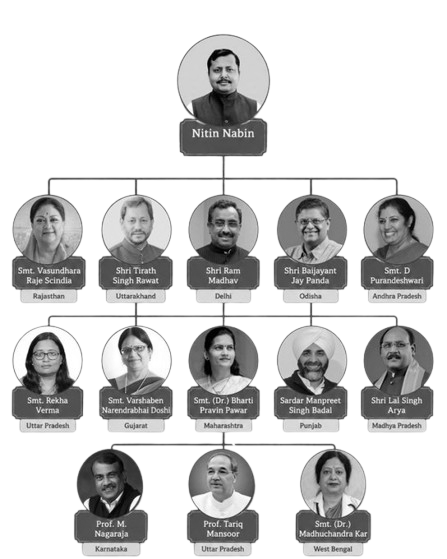
The BJP has unveiled a significantly reshaped national organisational team, bringing back several prominent leaders while making room for a fresh set of faces across key posts. The changes signal a major organisational reset ahead of crucial state elections, with 13 vice-presidents, eight general secretaries and 16 national secretaries forming the core of the new lineup. Among the vice-presidents, four, Vasundhara Raje, Baijayant Jay Panda, Rekha Verma and Tariq Mansoor, have been retained, while nine new leaders, including Ram Madhav and Tirath Singh Rawat, have been inducted.
Among the general secretaries, only Vinod Tawde and Sunil Bansal survive from the previous team, joined by Smriti Irani, Biplab Kumar Deb, Satish Poonia, Gajendra Patel, Harish Dwivedi and Sanjay Bhatia. B L Santhosh retains his position as general secretary (organisation), while Union minister Piyush Goyal, the only sitting Cabinet minister in the lineup, becomes national treasurer.
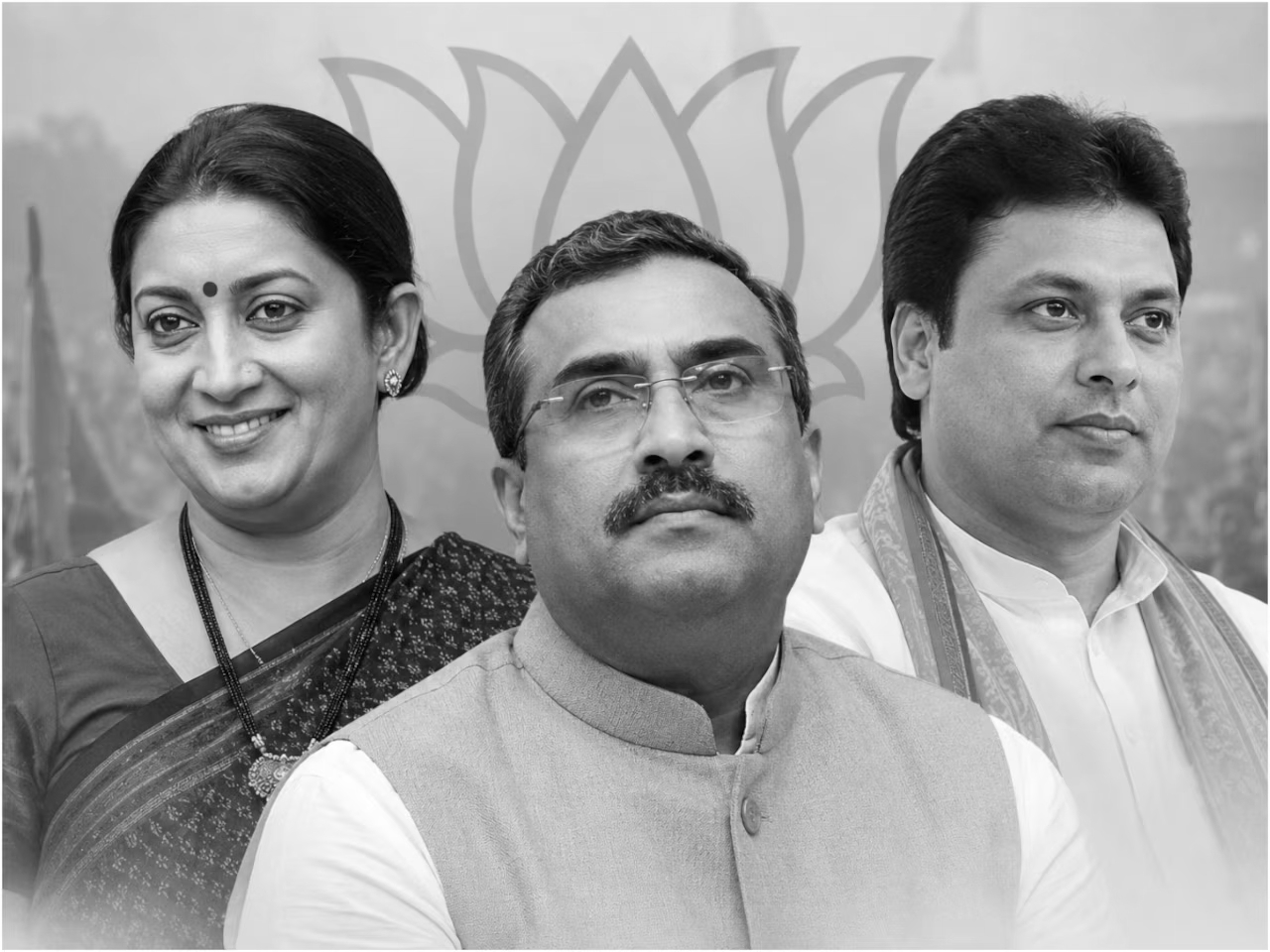
The comebacks form one of the biggest stories in the reshuffle. Irani, whose profile dipped after her 2024 Amethi defeat to Congress's Kishori Lal Sharma, returns to the party's top organisational tier. Madhav, dropped from the general secretary team in 2020 after the collapse of the BJP-PDP alliance in Jammu and Kashmir, is back as vice-president.
Deb, who was removed as Tripura chief minister in 2022, and Rawat, whose 2021 Uttarakhand stint lasted less than four months, have also been rehabilitated. Poonia, removed as Rajasthan BJP chief ahead of the 2023 Assembly polls, returns to a key national role.
On the social-media side, Priti Gandhi and Haryana's Arun Yadav return as social-media co-convenors alongside Shivanand Dwivedi and Alok Bhatt.
The reshuffle has also seen several senior leaders dropped. Seven vice-presidents — Saudan Singh, Saroj Pandey, DK Aruna, M Chuba Ao, Abdulla Kutty, Laxmikant Bajpai and Lata Usendi — have been removed, along with general secretaries Arun Singh, Dushyant Kumar Gautam, Tarun Chugh and Radha Mohan Das Agarwal. The BJP has given no public reasons for the changes, in keeping with its usual organisational practice.
The most consequential exit is Amit Malviya, who has been removed after 11 years at the helm of the BJP's IT cell. He has been replaced by Chhattisgarh's Deepak Mhaskey. The change comes amid criticism that the party's digital machinery struggled to keep pace with the Gen Z-driven Cockroach Janta Party protests over the NEET paper leak and CBSE marking irregularities, which put Education Minister Dharmendra Pradhan under sustained pressure. Malviya, however, congratulated his successors on social media and described the appointments as timely.
The BJP has also changed the leadership of its minority morcha, handing charge to Kunwar Basit Ali in place of Jamal Siddiqui. Sandeep Pathak, who recently quit the Aam Aadmi Party, has been appointed national secretary, drawing attention amid speculation over whether another AAP defector, Raghav Chadha, could eventually find a place in the Union Cabinet. That possibility, however, remains unconfirmed.
The new team also reflects an effort at regional and social representation. According to the party's count, it includes 10 women and six leaders from minority communities, with representation from 23 states and Union territories. A dedicated North-East coordination cell under Sambit Patra and four tribal representatives have also been included. Yet, with the average age of the team reported at around 60, the reshuffle does not entirely match the "youth revamp" narrative that preceded it.
The timing also appears linked to concerns over the BJP's eroding urban vote share. The party's defeat in the Bankipur assembly bypoll, an urban Patna seat it had held for more than 30 years and which Nabin vacated after becoming BJP president, reportedly prompted an internal review that fed into the organisational overhaul.
The reshuffle now clears the path for a much-anticipated Union Cabinet rejig, which has been the subject of speculation since June. Sources say the government reshuffle was held back until the party's organisational structure was finalised. Earlier reports had suggested possible portfolio changes, including Piyush Goyal taking on a more prominent financial role, Nirmala Sitharaman moving to Education and former RBI governor Shaktikanta Das potentially entering the government. Hardeep Singh Puri's portfolio has also been the subject of speculation.
The fallout from the NEET and CBSE controversies, which led to Dharmendra Pradhan’s resignation as Education Minister, remains an important backdrop to the BJP’s organisational reset. With Assembly elections in Uttar Pradesh and other states approaching, the reshuffle could be the first step towards a broader political and governmental overhaul in the weeks ahead.