
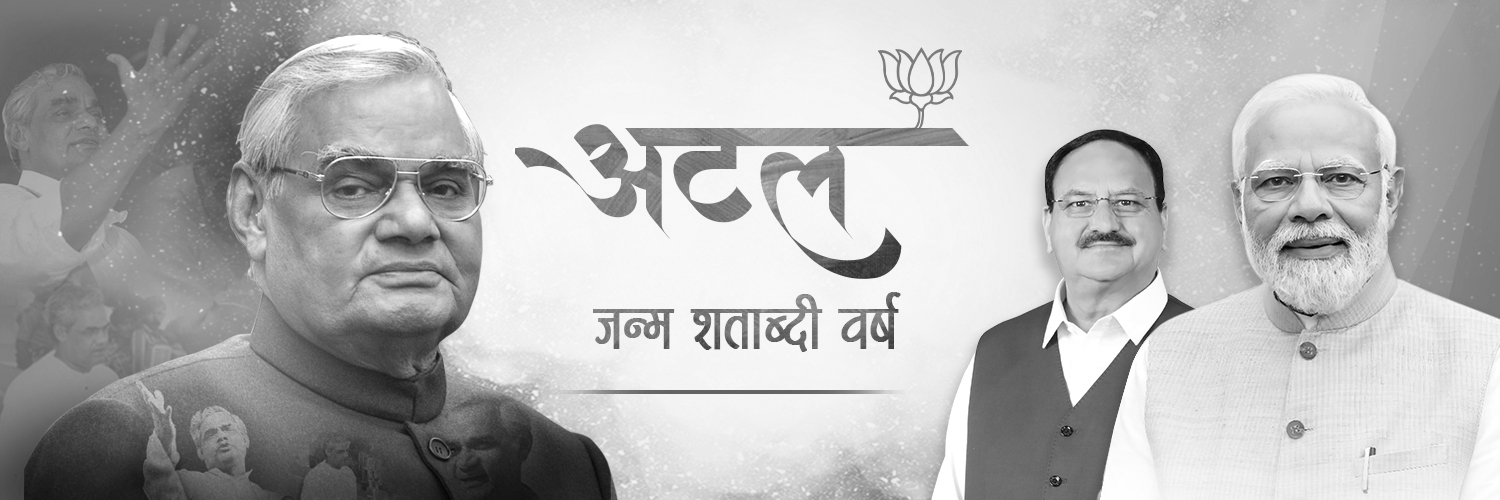
BJP is world’s largest political party: JP Nadda
Bharatiya Janata Party (BJP) president JP Nadda declared the party the world’s largest political organization, with 14 crore members, including 2 crore active ones at BJP Saradhyam Public Meeting in Visakhapatnam, Andhra Pradesh. Highlighting its parliamentary strength 240 Lok Sabha MPs, 1,500 MLAs, and over 170 MLCs Nadda praised the Narendra Modi-led National Democratic Alliance (NDA) as "responsible and responsive," contrasting it with past regimes accused of corruption and non-performance. He emphasized the BJP’s ideological foundation and cited Rs 15,000 crore allocated for Andhra Pradesh’s Amaravati capital as proof of development focus. This article traces the BJP’s rise from its 1980 formation, its RSS ties, financial growth, electoral performance, southern expansion efforts, northern challenges, social media dominance, and prospects for the 2029 elections.
Formation and early years
The BJP’s origins lie in the Rashtriya Swayamsevak Sangh (RSS), founded in 1925 by Keshav Baliram Hedgewar to promote Hindu unity amid colonial and communal tensions. The RSS’s Hindutva ideology, articulated by VD Savarkar, shaped its political arm. In 1951, Shyama Prasad Mukherjee, a former Hindu Mahasabha leader and Nehru’s cabinet minister, founded the Bharatiya Jana Sangh (BJS) after resigning over the Delhi Pact with Pakistan. The BJS, advocating national integration and opposing Article 370, won three Lok Sabha seats in 1952. After Mukherjee’s death in 1953, Deendayal Upadhyaya led the BJS, crafting "Integral Humanism," blending Hindu values with economic self-reliance. The BJS peaked at 35 seats in 1967, forming non-Congress state governments.
During the 1975-1977 Emergency, BJS leaders like Atal Bihari Vajpayee and LK Advani joined the Janata Party coalition, defeating Congress in 1977. However, disputes over RSS ties collapsed the coalition by 1979. On April 6, 1980, Vajpayee founded the BJP in Delhi, initially embracing "Gandhian socialism" before reverting to Integral Humanism. Founders included Advani, Murli Manohar Joshi, and RSS-linked figures like Kushabhau Thakre. The party’s early years were tough, securing only two seats in 1984 amid a Congress sympathy wave post-Indira Gandhi’s assassination.
RSS - The ideological anchor
The RSS has been the BJP’s backbone, providing cadres without formal control. Banned briefly after Gandhi’s 1948 assassination, it regrouped under MS Golwalkar. The BJS was its explicit political wing, with Upadhyaya as a pracharak. Post-1980, RSS chief Balasaheb Deoras mobilized swayamsevaks for the BJP, boosting its ranks. The 1990 Ram Janmabhoomi movement, led by Advani’s Rath Yatra and backed by RSS affiliates like Vishwa Hindu Parishad, catapulted the BJP from 2 seats (1984) to 85 (1989). Today, RSS shakhas enable booth-level campaigns, as seen in Haryana’s 2024 win. Critics call this "far-right" influence, but it underpins the BJP’s ideological coherence, aligning with Nadda’s claim of an "ideological base."
Stalwarts - shaping the BJP
The BJP’s legacy rests on key leaders. Shyama Prasad Mukherjee’s 1951 BJS founding set the stage, his death galvanizing anti-appeasement sentiment. Deendayal Upadhyaya’s Integral Humanism remains the party’s philosophical core. Atal Bihari Vajpayee, the BJP’s first president and PM (1996, 1998-2004), broadened its appeal with reforms like the Golden Quadrilateral. LK Advani’s 1990 Rath Yatra ignited Hindutva, boosting seats to 120 by 1991. Narendra Modi and Amit Shah, since 2014, centralized control, with Modi’s Gujarat model and Shah’s UP strategy (73/80 seats in 2014) redefining the party. These leaders, as Nadda notes, delivered "politics of performance" against Congress’s "forgotten promises."
Pre-Modi governance - coalition era
Before Modi’s 2014 majority, the BJP relied on coalitions. In 1996, Vajpayee’s 161-seat BJP formed a 13-day government. The 1998-1999 NDA, with 182 seats, collapsed due to AIADMK’s exit. The 1999-2004 NDA, post-Kargil, governed fully with 294 seats, driving reforms. Losses in 2004 (138 seats) and 2009 (116 seats) reflected campaign missteps. State wins (e.g., Gujarat 1995) built credibility, leading to Nadda’s reported 240 MPs, 1,500 MLAs, and 170 MLCs, with NDA in 20 states and BJP in 13.
Membership and bonds
Membership surged from 5 crore (2014) to 14 crore (2024, per Nadda), outstripping global peers. Assets grew from Rs 527 crore (2014) to over Rs 2,000 crore (2023), with liabilities at Rs 300-400 crore. Electoral bonds (2018-2024) brought Rs 6,060 crore to the BJP (47% of Rs 16,518 crore total), dwarfing Congress’s Rs 1,422 crore. Donors like Future Gaming fueled campaigns until the Supreme Court scrapped the scheme in 2024. In 2014, income was Rs 709 crore; by 2019, it hit Rs 1,392 crore (50%+ from bonds); by 2023, it reached Rs 2,360 crore (55% bonds), per ADR reports, enabling robust campaigns.
Modi-Shah revolution - A modern machine
Modi and Shah transformed the BJP into a tech-savvy juggernaut. Modi’s 2014 campaign, leveraging Shah’s micro-targeting in UP, secured 282 seats. Tools like the NAAPP app and data analytics enhanced voter outreach. Shah’s aggressive tactics (e.g., UP’s 2017 PDA strategy) and Modi’s "Chowkidar" campaign in 2019 (303 seats) fused Hindutva with development. Despite 2024’s 240 seats, the NDA’s 293 ensured stability, cementing a "Modi-centric" era with a 45% vote share in 2019.
Electoral performance
The BJP’s electoral journey shows adaptability. From 2 seats (7.74%, 1984) to 85 (11.36%, 1989) via Ram Janmabhoomi, it reached 182 seats (25.59%, 1998). Losses in 2004 (138 seats, 22.16%) and 2009 (116 seats, 18.80%) preceded Modi’s 2014 (282 seats, 31.34%) and 2019 (303 seats, 37.70%) peaks. In 2024, 240 seats (36.56%) reflected northern losses but NDA stability. Southern gains Kerala’s first seat, Tamil Nadu’s 11.24% vote share offset UP’s drop (62 to 33 seats). CSDS data shows rural-urban consolidation, though Muslims and Yadavs resist.
Southern push vs. Northern slips
The BJP’s southern foray Kerala’s Thrissur seat, Tamil Nadu’s vote share rise, and Andhra alliances shows progress but faces cultural barriers. Northern losses in UP, Rajasthan, and Maharashtra (92 seats down from 2019) stem from anti-incumbency and opposition caste strategies. Post-2024 bypolls signal recovery, but 2025 polls (Delhi, Bihar) are critical.
2029 prospects - NDA’s path forward
Will the NDA govern in 2029? Shah claims victory, citing 240 seats outpolling INDIA’s 234. Welfare, infrastructure, and Modi’s appeal bolster chances, but coalition fragility and opposition gains (Congress at 99 seats) pose risks. State polls will shape momentum for a potential 300+ seats.
Social Media - Polarization and strategy
The BJP’s IT Cell, with 150,000+ workers, drives polarization via WhatsApp and X, blending Modi-centric reels with divisive narratives (e.g., "Vote Jihad"). In 2024, "Modi Ka Parivar" countered losses. Strategies include multilingual content, analytics, and hashtags like #ViksitBharat. The BJP outpaces Congress’s revitalized digital push (e.g., Rahul Gandhi’s videos) by 23.54% in engagement, using trolls and fake handles to dominate discourse.
JP Nadda’s Visakhapatnam speech reflects the BJP’s evolution from Mukherjee’s 1951 vision to Modi’s digital-age dominance. With 14 crore members, financial heft, and social media prowess, it balances southern gains with northern recovery. As 2029 looms, the BJP’s ideological and electoral might faces tests, but its transformative impact on Indian politics endures.