
BIMSTEC Adopts Delhi Declaration, Targets Terror Networks, Drug Trafficking and Cross-Border Crime
The BIMSTEC countries have adopted the Delhi Declaration, committing to stronger regional cooperation against cross-border terrorism, narcotics smuggling, human trafficking, cybercrime and money laundering, while approving five initiatives aimed at making the Bay of Bengal region more secure.
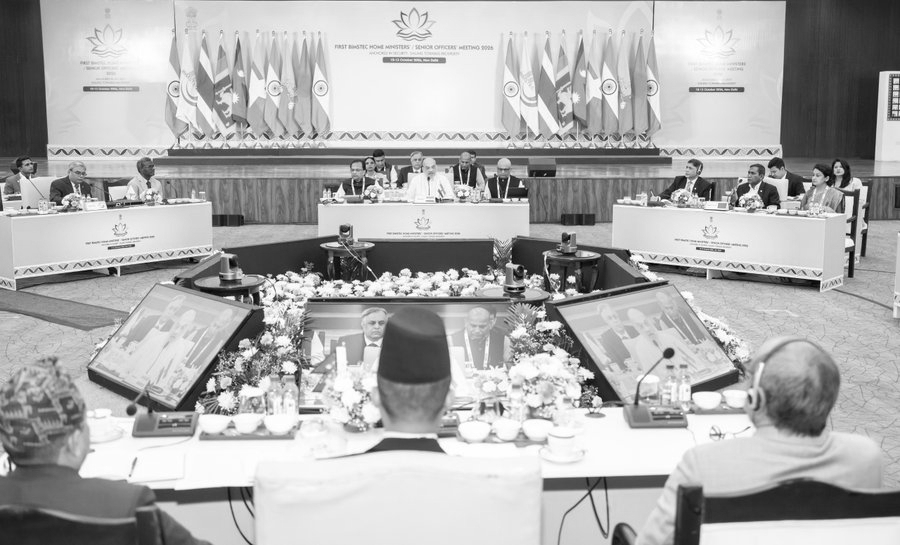
The declaration was adopted on Tuesday at the first BIMSTEC Home Ministers’ Meeting in New Delhi, chaired by Union Home Minister Amit Shah. It calls for coordinated action against terrorist networks, their financing and recruitment, and the growing range of transnational crimes that no country can effectively tackle alone.
The grouping strongly condemned terrorism and violent extremism in all forms, including cross-border terrorism, irrespective of who commits such acts or their stated objectives. It called for the implementation of United Nations Security Council sanctions, including measures under the 1267 Sanctions Committee, and urged member countries to ensure that those responsible for terrorist attacks are brought to justice.
The declaration also underlined the need to prevent the misuse of emerging technologies for terrorist activities, including recruitment and financing. It stressed that security cooperation must respect national sovereignty, territorial integrity, political independence and non-interference in internal affairs.
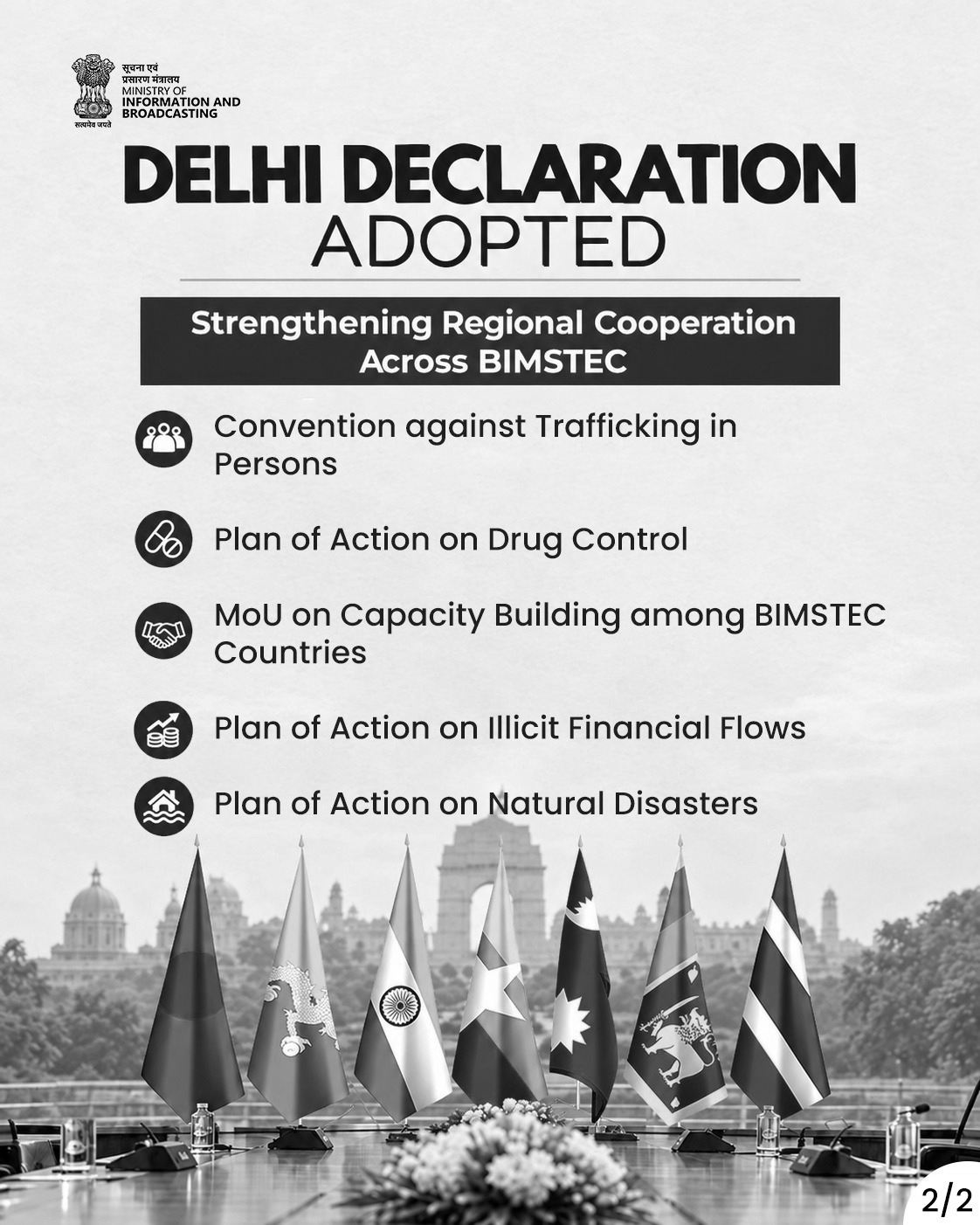
Beyond counter-terrorism, the meeting approved five major initiatives: a convention against human trafficking, a plan of action on drug control, a memorandum of understanding on combating money laundering and terror financing, a plan to prevent illicit financial flows, and an action plan to strengthen regional preparedness for natural disasters.
The human-trafficking convention seeks to improve prevention, prosecution and victim rehabilitation. Particular attention was drawn to people trafficked and forced to participate in online scams, highlighting the connection between human exploitation and cross-border cybercrime.
The financial-crime measures provide for greater cooperation in financial intelligence, investigations, asset recovery and anti-money-laundering efforts. The drug-control plan targets the illicit trade in narcotics, psychotropic substances and precursor chemicals.
Disaster preparedness is another priority for the seven-member grouping, comprising Bangladesh, Bhutan, India, Myanmar, Nepal, Sri Lanka and Thailand. The approved action plan envisages cooperation on early-warning systems, disaster mapping, joint exercises, training and tsunami-risk reduction. India also proposed a BIMSTEC Centre for Disaster Management in Jamnagar, Gujarat.
India reiterated its willingness to share expertise in police training, counter-terrorism operations and forensic investigations. The declaration also called for stronger intelligence sharing, mutual legal assistance, extradition and capacity-building.
However, the effectiveness of these commitments will depend on their implementation. The adoption of plans and agreements marks a step towards regional cooperation, but sustained coordination, information exchange and enforcement will be essential to translating them into tangible security gains.